In summary:
- Shift your mindset from a tourist buying souvenirs to a patron supporting a cultural legacy.
- Learn to distinguish authentic, handmade crafts from mass-produced items by using your senses and asking the right questions.
- Explore specific, multi-generational workshops for crafts like mahjong tiles, name seals, and embroidered slippers.
- Navigate creative hubs like PMQ with a strategy to discover emerging designers and unique pieces.
- Understand that patronage can also mean participating in cultural traditions, like sponsoring a temple incense coil.
For the conscientious traveler, the allure of Hong Kong extends far beyond its dazzling skyline and culinary delights. It lies hidden in the quiet clatter of mahjong tiles, the scent of sandalwood from a temple, and the intricate stitch of an embroidered slipper. Yet, navigating the city’s vibrant markets can feel like a hunt for a needle in a haystack, where mass-produced trinkets often drown out the whispers of true craftsmanship. Many guides point you toward the usual markets, but they rarely equip you with the knowledge to discern the authentic from the imitation.
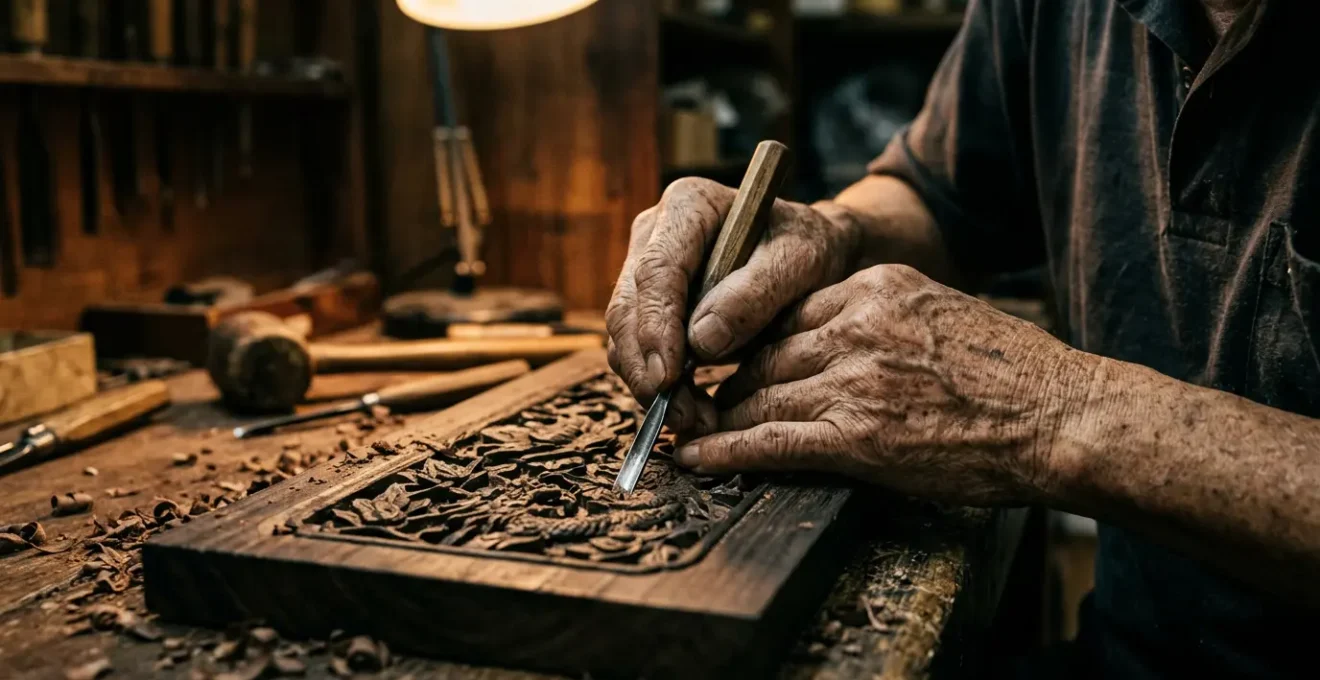
The common approach is to collect objects. But what if the true value wasn’t in the object itself, but in the story it tells and the tradition it helps to keep alive? This isn’t just about avoiding the typical souvenir trap. It’s about a fundamental shift in perspective: from being a consumer to becoming a patron. It’s about understanding the cultural dialogue that happens when you commission a piece from a master carver or learn the symbolism behind a design from a third-generation artisan. This is the difference between buying a memory and preserving a legacy.
This guide abandons the generic lists and instead offers a strategic path to becoming an active supporter of Hong Kong’s artisanal soul. We will explore the stories behind dying arts, provide actionable advice for commissioning personal treasures, and offer a framework for identifying the genuine “maker’s mark.” You will learn not only where to look but, more importantly, *how* to see.
Contents: A Patron’s Guide to Hong Kong’s Artisanal Soul
- Why Is Hand-Carved Mahjong a Dying Art and Where to Buy It?
- How to Commission a Personalized Name Seal on Man Wa Lane?
- Where to Buy Traditional Embroidered Slippers That Are Stylish?
- How to Navigate the PMQ Complex to Find Emerging Designers?
- The Fragility Risk: How to Pack Handmade Ceramics for the Flight?
- The Souvenir Trap: Distinguishing Authentic Crafts from Mass Production
- How to Sponsor a Giant Incense Coil for Good Luck?
- How to Map Your Own Route to See the Best Hollywood Road Murals?
Why Is Hand-Carved Mahjong a Dying Art and Where to Buy It?
The rhythmic click-clack of mahjong tiles is an iconic sound of Hong Kong, but the hands that carve these pieces are vanishing. Hand-carved mahjong is a perfect example of an “artisanal legacy” on the brink. The primary threat is economic; machine-made sets are overwhelmingly cheaper. According to one of the city’s last carvers, machine-made tiles cost only $40 USD per set, a staggering ten times less than a handmade equivalent. This price pressure has reduced the number of master carvers to a mere handful.
Choosing to buy a hand-carved set is an act of direct cultural preservation. These are not just game pieces; they are functional sculptures, each tile bearing the unique, subtle imperfections that prove it was shaped by a human hand. The depth of the carving is deeper, the characters feel more alive, and the material—often high-quality acrylic or even bone—has a satisfying weight and coolness that plastic cannot replicate. Supporting this craft means investing in an heirloom that carries the story of a city’s social fabric.
To find a genuine set, you must go to one of the last remaining workshops. Bui Kee Mahjong at 235 Temple Street in Jordan is a revered institution. Be prepared for the investment: a true hand-carved set costs around HK$4,000–$5,500 and takes about a week to complete, so you must order it in advance. When you do, you are not just buying a game; you are commissioning a piece of Hong Kong’s history and helping ensure this art form has a future.
How to Commission a Personalized Name Seal on Man Wa Lane?
Moving from preserving a shared tradition to creating a personal one, commissioning a name seal, or “chop,” is one of the most meaningful acts of patronage you can undertake in Hong Kong. Tucked away in Sheung Wan is Man Wa Lane, also known as “Chop Alley,” a street lined with small stalls where masters have been carving these personal emblems for decades. A name seal is more than a signature; it is a piece of art that represents your identity, traditionally used on documents, letters, and artwork.
The process is a beautiful cultural dialogue. You don’t simply buy a seal off the shelf; you collaborate with the artisan. You’ll discuss the translation of your name into Chinese characters (or use your English name), choose a script style (from ancient seal script to modern calligraphy), and select a stone. The choice of material is deeply symbolic and personal, reflecting the purpose of the seal and the personality of its owner.
The material you choose carries its own story and significance, influencing both the aesthetic and the price. As this overview of local crafts highlights, each stone has unique properties.
| Material | Symbolism | Price Range | Best For |
|---|---|---|---|
| Jade | Purity & Protection | HK$500-2000 | Important documents |
| Soapstone | Flexibility | HK$100-300 | Beginners |
| Agate | Strength & Courage | HK$300-800 | Business use |
| Marble | Elegance | HK$200-500 | Artistic work |
Once you’ve made your choices, the artisan will meticulously carve your unique design, a process that can take anywhere from a few hours to a day. The resulting object is a deeply personal piece of heirloom-quality art that connects you directly to a centuries-old tradition.
Where to Buy Traditional Embroidered Slippers That Are Stylish?
Traditional embroidered slippers are a testament to how heritage crafts can evolve to remain relevant and stylish. These beautiful shoes, adorned with symbolic motifs, are a perfect example of wearable art. The key is to find workshops where the embroidery is still done by hand, a painstaking process that infuses each pair with a unique character that machines cannot replicate. Look for symbols like the phoenix for good fortune, peonies for prosperity, or bats for happiness.
When searching for authentic slippers, it’s crucial to understand the difference in construction. Traditionally, slippers for indoor use had cardboard soles, making them delicate. Modern artisans, however, have adapted the craft, creating versions with durable rubber soles suitable for outdoor wear. This thoughtful evolution allows the tradition to thrive in a contemporary context. A single pair of intricately hand-embroidered slippers can take an artisan several months to create, so a custom order is a true investment in their skill.
Case Study: Sindart 1958: Three Generations of Craftsmanship
To witness this living heritage, seek out Sindart 1958 in Jordan. Opened in 1958, this small shop is now run by Miru Wong, the founder’s granddaughter. She continues the family tradition while also innovating with new designs. Miru’s dedication to preserving the craft extends beyond sales; she also teaches the art of embroidery in weekly workshops, creating a direct bridge between the past and the future, as noted by guides on Hong Kong’s craft scene. Visiting Sindart is more than a shopping trip; it’s an opportunity to connect with a family’s multi-generational passion.
Beyond dedicated shops like Sindart, you can also explore Cat Street (Upper Lascar Row) for vintage or antique embroidered slippers, which offer a different kind of connection to the past. These older pieces tell a story of a time gone by and showcase historical embroidery techniques.
How to Navigate the PMQ Complex to Find Emerging Designers?
While steeped in tradition, Hong Kong’s craft scene is also forward-looking. The epicenter of this modern movement is PMQ (the former Police Married Quarters) in Central. This sprawling heritage building has been transformed into a vibrant creative hub, but its scale can be intimidating. According to visitor information, it houses over 100 design galleries, shops, and studios across its two main blocks, Staunton and Hollywood. To truly discover its gems, you need a strategy.
Forget aimless wandering. The best approach is to treat PMQ like a curated museum. Start at the G/F Info Centre in the Staunton building to grab a map and check for any temporary exhibitions or pop-up events. Most studios open after 12 PM, so a post-lunch visit is ideal. Don’t just stick to the ground floor; some of the most innovative work is found on the upper levels. For example, you can find workshops like Obellery (Unit H403), known for its contemporary custom jewelry, or unique leather goods at studios like SAPH (Unit H403).
The spirit of PMQ is discovery. Be curious, step into the open studios, and engage with the artists. Many are “alumni” of PMQ’s incubation programs who have gone on to open their own shops in creative neighborhoods like Sheung Wan and Sham Shui Po. By visiting PMQ, you are not just shopping; you are tapping into the pulse of Hong Kong’s next generation of master artisans and supporting designers at the start of their journey. Before you go, check PMQ’s official website for their event calendar to catch special markets or exhibitions.
The Fragility Risk: How to Pack Handmade Ceramics for the Flight?
You’ve found the perfect, one-of-a-kind ceramic piece—a beautiful culmination of your patronage. Now comes the most nerve-wracking part: getting it home in one piece. The delicate nature of handmade pottery and ceramics requires careful planning. While many artisans are masters of packing and may even offer shipping services (the safest option), learning to pack it yourself is a valuable skill for any collector.
The gold standard for protecting fragile items is the “box-in-a-box” method. This technique creates a shock-absorbing buffer that protects the piece from the inevitable bumps and jostles of travel. The principle is to isolate the item from the outer walls of your luggage. For extremely high-value or irreplaceable pieces, the best advice is always the simplest: use your carry-on luggage. Even if it’s bulky, the peace of mind is worth navigating size restrictions.
Here is a professional method for ensuring your treasured ceramic arrives safely:
- Wrap Securely: Start by wrapping each individual ceramic piece thoroughly in several layers of bubble wrap. Use tape to secure the wrap so it doesn’t come undone.
- The Inner Box: Place the bubble-wrapped item inside a small, sturdy cardboard box that is just large enough to hold it snugly. Fill any empty space within this small box with additional padding like crumpled paper or more bubble wrap to prevent any movement.
- Create the Buffer: Place this small, packed box in the center of your larger suitcase. “Float” it by surrounding it on all sides—top, bottom, and all four sides—with soft clothing, towels, or other non-breakable items.
- Ask the Artisan: Don’t hesitate to ask the artist or shop owner for help. They are experienced in this and often have the ideal packing materials on hand.
- Check Insurance: Before you even travel, it’s wise to check if your travel insurance policy has coverage for “art” or “fragile goods” to understand your options in a worst-case scenario.
The Souvenir Trap: Distinguishing Authentic Crafts from Mass Production
The greatest challenge for a conscientious patron is learning to see the difference between a genuinely handmade item and a convincing, mass-produced fake. The “souvenir trap” is easy to fall into, especially in bustling markets where the line between tourist-grade trinkets and real crafts can be blurry. The key is not to rely on sight alone, but to engage all your senses and your curiosity. An authentic piece carries what can be called the “maker’s mark”—the subtle variations and imperfections that are the signature of a human creator.
Price is often the first indicator. If a supposedly handmade item is incredibly cheap, it’s a red flag. True craftsmanship requires time, skill, and quality materials, which is naturally reflected in the cost. Beyond price, you need to become a detective of details. Avoid shops located directly at major tourist landmarks and instead venture into side streets and local neighborhoods where artisans are more likely to have their workshops. Most importantly, don’t be afraid to talk to the vendor. Ask them about the person who made the item, where their workshop is, and the process involved. A seller of authentic goods will be proud to share these stories.
This process of authentication becomes a rewarding part of the experience, connecting you more deeply with the objects you choose to bring home.
Your Authenticity Checklist: The Five Senses Test
- LOOK for Imperfections: Search for minor, unique variations. A hand-painted line will never be perfectly straight like a machine’s. A hand-carved edge may have a slightly different feel from another. These are not flaws; they are proof of authenticity.
- TOUCH the Material: Feel the difference between authentic and synthetic materials. Genuine jade feels cool and smooth to the touch, while plastic feels warm and light. Real silk is soft and has a subtle texture, unlike slippery polyester.
- LISTEN to the Sound: Materials have their own voice. High-quality jade, for example, is known to produce a clear, high-pitched ringing sound when gently tapped, unlike the dull thud of glass or polymer.
- SMELL for Authenticity: Your nose can detect real materials. The rich scent of real leather, the earthy smell of unvarnished wood, or the natural aroma of plant fibers are hard to fake.
- ASK about the Story: Inquire about the maker, their workshop, and their process. A genuine seller will have a story to tell. A lack of answers or vague responses is a significant warning sign.
How to Sponsor a Giant Incense Coil for Good Luck?
Conscientious patronage isn’t always about acquiring an object. Sometimes, the most profound way to support local culture is to participate in its living traditions. One of the most visually stunning and spiritually significant traditions in Hong Kong is the sponsorship of giant, cone-shaped incense coils in temples. These massive coils, which can burn for several weeks, are hung from the ceiling, filling the air with fragrant smoke that carries prayers and wishes to the heavens.
This practice is prominently seen at historic sites like the Man Mo Temple on Hollywood Road or the Hung Shing Temple in Wan Chai. By sponsoring a coil, you are not just making a donation; you are actively participating in a ritual that has been part of the city’s spiritual life for generations. Your contribution directly supports the temple’s maintenance and its role as a community anchor. It’s an act that leaves no physical trace in your luggage but creates a lasting spiritual and cultural connection.
Sponsoring a coil is a straightforward and welcoming process for visitors. Follow these steps to take part in this beautiful tradition:
- Visit a Temple: Go to a temple known for this practice, such as Man Mo Temple.
- Purchase Sponsorship: Find the temple office, where you can sponsor a coil. Prices typically range from HK$300 to HK$1,000, depending on the size of the coil.
- Write Your Wish: You will be given a piece of red paper. On it, you can write your name and your wish or prayer for good fortune, health, or success. Staff are often on hand to help with calligraphy if you wish.
- Attach and Hang: A temple attendant will attach your red paper to the bottom of a giant incense coil and hang it in a designated area.
- Observe Etiquette: When taking photos, be respectful. Use silent mode, avoid using flash, and focus on the architectural details and the incense rather than on individuals who are there to worship, as advised by cultural guides like National Geographic’s travel features.
Key takeaways
- True patronage is about supporting the artisan and their story, not just acquiring an object.
- Develop your senses to distinguish the “maker’s mark” of a handmade item from a mass-produced souvenir.
- The most rewarding experiences often come from commissioning a personal piece or participating in a living cultural tradition.
How to Map Your Own Route to See the Best Hollywood Road Murals?
The ultimate form of patronage is appreciation, and some of Hong Kong’s most vibrant art cannot be bought at all. The streets of Central and Sheung Wan, particularly around Hollywood Road, have become an open-air gallery of stunning murals and street art. This art is free for all to enjoy, and creating your own walking tour to discover these pieces is a perfect way to spend an afternoon immersing yourself in the city’s creative energy. This is about appreciating art for its own sake, a final step in shifting from consumer to true arts supporter.
Rather than following a rigid tour, the joy is in the discovery. However, a little structure can help. A great starting point is near Man Mo Temple on Hollywood Road. From there, your main goal is to explore the steep ladder streets and narrow alleys that connect Hollywood Road to Queen’s Road Central. The most famous mural is Alex Croft’s colourful townhouse painting on Graham Street, an essential photo stop. But don’t let that be your only destination.
Use your phone’s map to navigate the grid, but allow yourself to get wonderfully lost. Look for art in unexpected places: on roll-down shutters, in hidden alcoves, and down quiet side streets. Some key streets to explore include:
- Graham Street: Home to the iconic townhouse mural.
- Peel Street and Elgin Street: Known for their dynamic and often-changing graffiti.
- Tai Ping Shan Street: A quieter, trendy area with more subtle and artistic murals.
This self-guided exploration is the embodiment of a patron’s mindset: you are actively seeking out and appreciating creativity, contributing to the vibrant atmosphere simply with your presence and interest.
Embrace your role as a patron on your next journey. By seeking out these authentic experiences, you transform your travels from simple sightseeing into a meaningful cultural exchange, ensuring that Hong Kong’s precious artisanal soul continues to thrive for generations to come.