Culture & Heritage
Cultural heritage represents the living thread connecting past generations to our present experiences. When we travel, we step into stories shaped by centuries of human creativity, resilience, and expression. From ancient temples standing against the test of time to the rhythm of traditional music echoing through village squares, cultural heritage transforms ordinary trips into profound journeys of understanding.
Yet many travelers struggle to distinguish between superficial tourism and meaningful cultural engagement. What makes a site truly significant? How can we experience traditions without commodifying them? This exploration reveals the foundations of cultural heritage travel, offering practical insights into recognizing, respecting, and contributing to the preservation of humanity’s shared legacy. Whether you’re drawn to architectural marvels or the subtle art of local craftsmanship, understanding these principles will fundamentally change how you experience the world.
What Forms Does Cultural Heritage Take?
Cultural heritage manifests in diverse forms, each offering unique windows into human civilization. Recognizing these categories helps travelers identify meaningful experiences and understand what they’re truly encountering during their journeys.
Tangible Heritage: The Physical Testimony
Tangible heritage encompasses everything we can touch, see, and physically preserve. Monuments, archaeological sites, and historic buildings form the most recognizable category—think of Cambodia’s Angkor Wat, Peru’s Machu Picchu, or Italy’s Colosseum. These structures tell stories through architecture, revealing ancient engineering knowledge, aesthetic values, and social hierarchies.
But tangible heritage extends beyond grand monuments. Artworks, manuscripts, tools, and everyday objects housed in museums provide intimate glimpses into daily life across eras. A ceramic pot from the Song Dynasty reveals as much about cultural values as a palace complex. When traveling, seeking both monumental and modest physical artifacts creates a more complete understanding of cultural continuity.
Intangible Heritage: Living Traditions
Intangible heritage comprises the practices, expressions, knowledge, and skills communities recognize as part of their cultural identity. This includes oral traditions, performing arts, social practices, rituals, festive events, and traditional craftsmanship. Unlike stone temples, these elements survive only through continuous practice and transmission between generations.
Consider flamenco in Spain, not merely as entertainment but as a complex system of musical knowledge, emotional expression, and community identity. Or the Japanese tea ceremony, where precise movements embody philosophical principles refined over centuries. These traditions remain vibrant precisely because communities actively maintain them, adapting when necessary while preserving core elements.
Natural Heritage: Landscapes With Cultural Meaning
Some landscapes transcend scenic beauty to embody cultural significance. Sacred mountains, ancestral lands, and culturally modified ecosystems represent where nature and culture intertwine. Australia’s Uluru holds profound spiritual meaning for Indigenous peoples, transforming a geological formation into a cultural landmark inseparable from traditional knowledge systems.
Agricultural landscapes shaped by generations—terraced rice fields in the Philippines, olive groves in the Mediterranean, or traditional irrigation systems in the Middle East—demonstrate how cultural practices create and sustain environments. Recognizing these spaces as heritage sites acknowledges the sophisticated ecological knowledge embedded in traditional land management.
Why Cultural Heritage Matters for Thoughtful Travelers
Understanding cultural heritage fundamentally transforms travel from consumption to connection. Rather than collecting destinations like stamps in a passport, heritage-conscious travelers engage with the layers of meaning embedded in places and practices.
Cultural heritage provides context that deepens appreciation. Walking through Istanbul’s Hagia Sophia without understanding its transformation from Byzantine cathedral to Ottoman mosque to museum (and back to mosque) means missing the architectural palimpsest that makes it extraordinary. Knowledge transforms observation into comprehension, allowing travelers to recognize subtle details that reveal larger historical narratives.
Heritage awareness also cultivates empathy and global citizenship. Experiencing how different cultures solved universal challenges—governance, spirituality, artistic expression, community organization—reveals both human diversity and commonality. A traveler who understands that cultural heritage represents living communities, not museum exhibits, naturally approaches destinations with greater respect and curiosity.
From a practical perspective, heritage knowledge enhances travel planning. Recognizing which sites face threats from overtourism, environmental damage, or conflict allows travelers to make informed choices about timing, behavior, and financial support. It shifts the question from « What can I get from this place? » to « How can I experience this place responsibly? »
How to Experience Cultural Heritage Authentically
Authentic cultural engagement requires intentionality and preparation. These approaches help travelers move beyond surface-level encounters toward meaningful understanding.
Research Before You Arrive
Meaningful heritage experiences begin before departure. Understanding basic historical context, significant cultural values, and current preservation challenges allows you to ask better questions and recognize what you’re witnessing. Read beyond guidebooks—seek local historians, cultural documentaries, and indigenous perspectives.
Learning even basic phrases in the local language demonstrates respect and often unlocks conversations with community members who serve as living bearers of tradition. A few words can transform a transaction into an exchange, revealing stories that no guidebook contains.
Choose Local Guides and Community-Based Experiences
Local guides offer perspectives that international tour operators cannot replicate. A guide whose grandmother practiced traditional weaving brings personal narrative and embodied knowledge to the experience. Community-based tourism initiatives often directly support heritage preservation while providing income to tradition-bearers.
Seek experiences where communities control the narrative about their own culture. This might mean attending a performance organized by cultural practitioners rather than a tourist-oriented « folklore show, » or visiting a family-run traditional restaurant instead of a themed chain establishment.
Observe Respectfully and Ask Permission
Not all cultural expressions are meant for outside consumption. Sacred ceremonies, private rituals, and community-specific practices deserve respectful distance unless explicitly welcomed. Always ask permission before photographing people, religious sites, or cultural practices. Some moments are meant to be experienced, not documented for social media.
Pay attention to local protocols: appropriate dress at religious sites, restricted areas in heritage buildings, or specific behaviors during traditional events. These rules aren’t arbitrary obstacles but expressions of cultural values that maintain the integrity of heritage sites and practices.
Contributing to Cultural Heritage Preservation
Travelers possess more agency in heritage preservation than many realize. Your choices directly impact whether cultural traditions thrive or deteriorate under tourism pressure.
Financial support matters significantly. Paying fair prices for traditional crafts, attending cultural performances, and choosing accommodations that employ local craftspeople for maintenance and decoration all channel resources toward preservation. Conversely, bargaining aggressively for handmade goods or seeking the cheapest possible options often undermines the economic viability of traditional practices.
Responsible behavior at heritage sites prevents physical degradation. Following designated paths, refraining from touching ancient surfaces, and avoiding overcrowded sites during peak times all reduce wear on irreplaceable structures. Popular sites like Machu Picchu or Venice face existential threats from visitor volume—choosing less-visited alternatives or visiting during shoulder seasons helps distribute impact.
Advocacy extends your influence beyond individual trips. Supporting organizations working on heritage preservation, sharing educational content about threatened sites, and making informed consumer choices about cultural products all contribute to a global preservation ecosystem. When travelers demand ethical cultural experiences, the tourism industry adapts to supply them.
Perhaps most importantly, carrying forward what you learn transforms cultural heritage from abstract concept to personal value. Sharing stories about the communities you’ve encountered, the traditions you’ve witnessed, and the importance of preservation creates ripple effects. Each thoughtful traveler becomes an ambassador for cultural understanding, helping ensure that heritage remains vibrant for future generations.
Cultural heritage in travel offers far more than beautiful photographs or memorable experiences—it provides pathways to understanding human creativity across time and geography. By approaching heritage with curiosity, respect, and commitment to preservation, we transform ourselves from tourists into students of humanity’s collective story, ensuring these treasures endure for those who will travel after us.
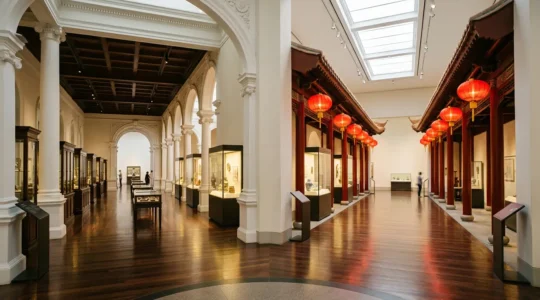
British Colony or Chinese Territory: How Museums Present Conflicting Narratives?
Hong Kong’s museums are not passive archives but active battlegrounds where the city’s identity is constantly being redefined through curatorial choices. The colonial-era « barren rock to metropolis » story is being systematically replaced by a narrative emphasizing a « monolithically Chinese » identity…
Lire la suite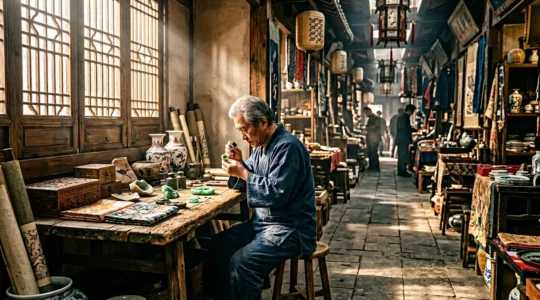
An Appraiser’s Guide: How to Identify Authentic Cultural Artifacts in Antique Markets?
Authenticating an artifact is less about finding a single ‘tell’ and more about reading a consistent story across its material, history, and wear. Learn to use sensory tests that machines can’t easily fake, like the cool touch of real jade…
Lire la suite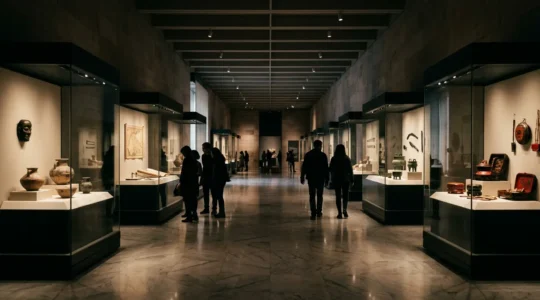
Why Is the Hong Kong Story Exhibit Essential for Understanding the City?
The Hong Kong Story exhibit is the single most important primer for any cultural traveler, transforming a visit from mere sightseeing into a deep understanding of the city’s soul. It decodes the « East meets West » cliché into a tangible, explorable…
Lire la suite
Tai Hang Fire Dragon Dance: How to Witness This Mid-Autumn Spectacle?
In summary: The Fire Dragon Dance is not a parade; it’s a purifying ritual best experienced by immersing yourself in its smoke-filled, spiritual atmosphere. Secure the best vantage point on Wun Sha Street, but the true event begins hours earlier…
Lire la suite
How to Appreciate Cantonese Opera Without Understanding a Word
The language barrier is the most common fear preventing culture lovers from experiencing Cantonese opera. But the secret isn’t in understanding the dialogue; it’s in learning to read the rich symbolic code embedded in the performance. This guide provides the…
Lire la suite
Visiting Man Mo Temple: A Guide to Its Rituals and Sacred Etiquette
In summary: Man Mo Temple is a living place of worship; respectful participation is valued over passive observation. Key rituals include sponsoring incense coils for long-term wishes and using « kau chim » fortune sticks for specific questions. The heavy incense smoke…
Lire la suite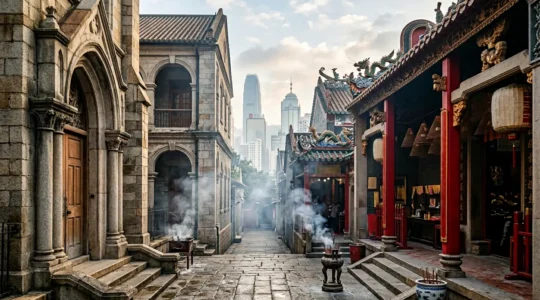
Colonial Architecture vs Chinese Temples: How to Understand Hong Kong’s Dual Soul?
Hong Kong’s architecture is not a simple « East meets West » fusion but a readable text of ongoing power negotiations and contested identity. Colonial structures and Chinese heritage sites are not separate attractions but participants in an architectural dialogue about history…
Lire la suite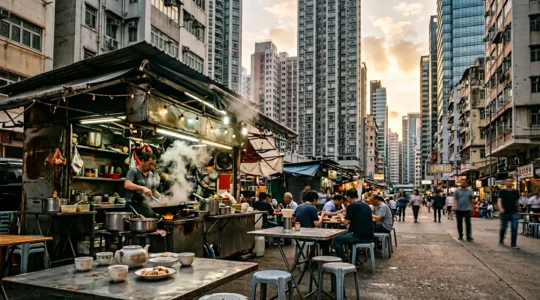
Why Hong Kong’s Culinary Heritage Goes Beyond Michelin Stars
Contrary to the focus on fine dining, Hong Kong’s true culinary heritage is a living archive of social history, resilience, and community rituals that Michelin stars often overlook. The city’s most iconic beverage, silk-stocking milk tea, is recognized as Intangible…
Lire la suite
Why Tai O Fishing Village Is Vanishing and How to Visit Before It’s Lost Forever
Visiting Tai O is no longer a simple day trip; it’s an intervention in a community at a critical tipping point. The iconic stilt houses face an existential threat from rising sea levels, with some residents already spending life savings…
Lire la suite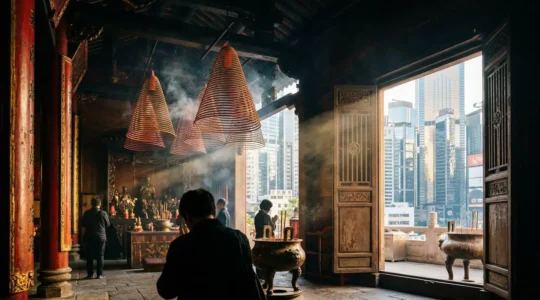
Beyond the Skyline: A Cultural Traveler’s Guide to Ancient Traditions in Modern Hong Kong
Many travelers see Hong Kong’s traditions as quaint photo-ops. The reality is that each ritual, from the smoke-filled temples to the very shape of skyscrapers, operates on a deep ‘spiritual grammar’. Understanding this hidden cultural logic is the key to…
Lire la suite