The secret to finding a great boutique guesthouse isn’t just reading reviews; it’s learning to decode the property’s hidden clues about its quality, design, and business model.
- Legitimacy is paramount: Always start by verifying the guesthouse’s official license, a non-negotiable sign of safety and accountability.
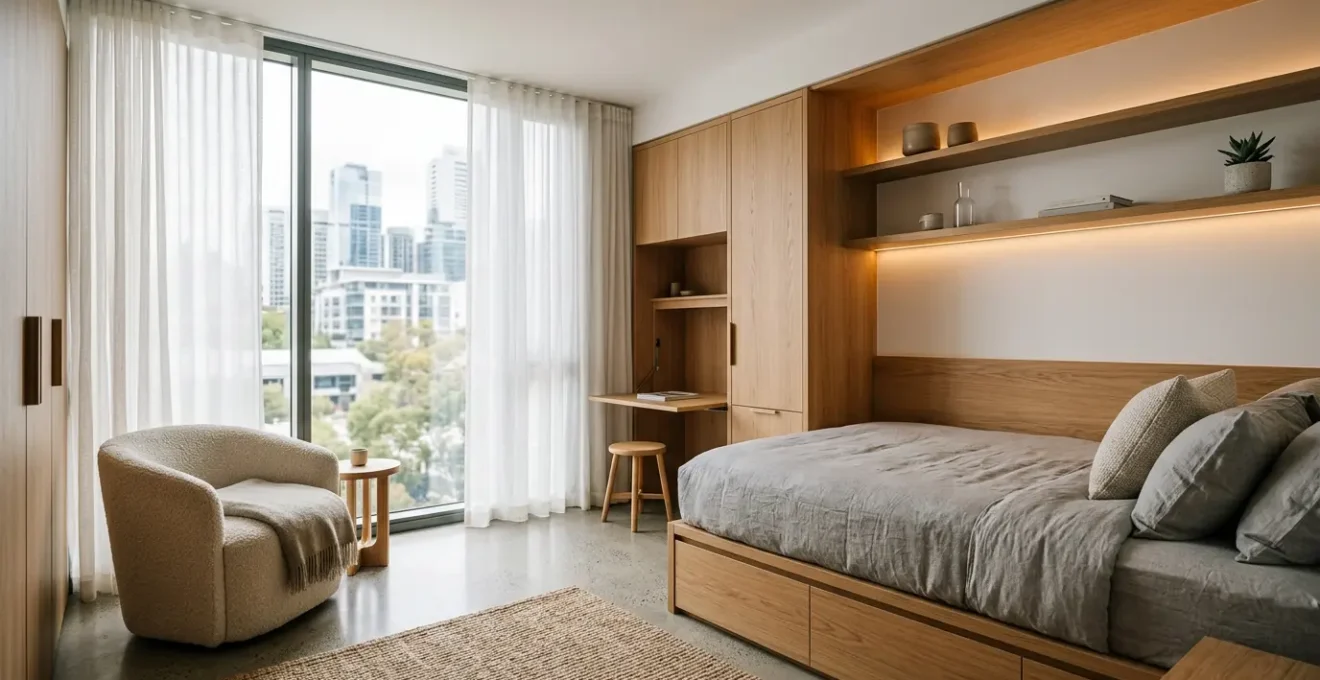
- Space tells a story: Analyze how a small room uses smart design, vertical storage, and light to feel expansive, not just cramped.
Recommendation: Shift your focus from photos and price to analyzing the building’s infrastructure, the owner’s design intent, and the trade-offs being made. This “hotel hunter” mindset will consistently lead you to authentic gems.
You’re a traveler with a keen eye for design, but a budget that screams “practical.” The dream is simple: a place with character, a story, and a soul—without the five-star price tag or the anonymous vibe of a chain hotel. You crave the unique charm of a boutique guesthouse. Yet, the hunt is fraught with peril. For every stylish, hidden gem, there’s a cleverly photographed closet, a firetrap with a fancy logo, or a property that’s more shabby than chic.
The standard advice is always the same: scour reviews, zoom in on photos, and pray. But this approach is a gamble. It treats you like a passive consumer, not the savvy hunter you are. What if the real key wasn’t in what other people say, but in what the building itself tells you? What if you could learn to read the architectural DNA, the business model trade-offs, and the spatial language of a guesthouse to determine its quality before you ever book?
This guide abandons the guesswork. It’s not about finding a room; it’s about mastering the art of the hunt. We will dissect infamous-yet-popular complexes, learn how to verify credentials, decode the secrets of micro-rooms, and understand why some properties are deliberately located off the beaten path. By the end, you’ll be able to spot the difference between a genuine design-led haven and a well-marketed facade, armed with a new way of seeing.
In this guide, we’ll explore the essential skills every boutique hotel hunter needs. Follow along as we break down the clues that separate the truly chic from the deceptively shabby, giving you a framework for your next adventure.
Summary: A Hunter’s Guide to Vetting Boutique Guesthouses
- Chungking Mansions: Safe Adventure or Dangerous Trap for Tourists?
- How to Check if Your Guesthouse Is Officially Licensed?
- How Does Smart Design Make Micro-Rooms Feel Larger?
- The Elevator Wait: Why High-Floor Guesthouses Can Be Frustrating?
- Where to Put Your Suitcase When the Room Is Just a Bed?
- Why Are YHA Hostels Often Located Far From the City Center?
- How to Navigate the PMQ Complex to Find Emerging Designers?
- Why Are the Pang Uk Stilt Houses Built Above the Water?
Chungking Mansions: Safe Adventure or Dangerous Trap for Tourists?
To become a master hotel hunter, you must first understand the ultimate paradox: a place like Hong Kong’s Chungking Mansions. It’s a sprawling, 17-story complex that is simultaneously a backpacker’s rite of passage and a potential safety nightmare. With over 10,000 people passing through its doors daily, this “city within a city” houses dozens of independent, ultra-budget guesthouses packed side-by-side. Some are clean, secure, and offer incredible value; others are exactly the kind of trap you want to avoid. This environment is the perfect training ground for honing your risk-assessment skills.
The key is to move beyond the building’s notorious reputation and evaluate the specific guesthouse on its own merits. Is the entrance well-lit? Are there security guards and functioning CCTV cameras in the hallways and elevators? Recent reviews that specifically mention security measures or recent renovations are far more valuable than decade-old horror stories. The building itself is a chaotic ecosystem, but a reliable guesthouse within it will create a bubble of safety and order. Learning to spot these bubbles is the first skill of the hotel hunter.
This environment forces you to look for micro-indicators of safety that you might otherwise overlook. A clean, well-maintained elevator lobby on a specific floor, clear fire escape signage, and 24-hour reception are all clues that a particular operator is professional and trustworthy, even if they operate within a chaotic shell. Assessing these factors requires a proactive, investigative mindset, not a passive one.
Action Plan: Your Guesthouse Safety Audit
- Research recent reviews specifically mentioning security presence and 24/7 monitoring.
- Verify the exact floor and unit number of your guesthouse; higher floors tend to be quieter.
- Check for surveillance camera coverage in elevators and corridors by analyzing guest photos.
- Look for mentions of fire safety improvements and clear, unobstructed escape routes.
- Cross-reference the specific guesthouse name with local tourism or licensing databases.
Ultimately, a place like Chungking Mansions teaches you that a building’s address doesn’t define the quality of the business inside. It forces you to become an active investigator, seeking proof of safety rather than assuming it exists.
How to Check if Your Guesthouse Is Officially Licensed?
After assessing on-the-ground risks, the single most important step in vetting any boutique guesthouse is verifying its legal status. An official license is not just a piece of paper; it is your guarantee of accountability and safety compliance. Unlicensed operations run in a black market, evading fire safety regulations, health standards, and tax obligations. In the event of an issue—from theft to a safety hazard—you have little to no recourse with an illegal operator. This is a non-negotiable checkpoint for any savvy traveler.
In many regions, authorities have cracked down on illegal accommodations, especially in dense urban complexes. For example, increased inspections and enforcement in places like Hong Kong now require guesthouses to visibly display their licenses at the reception area. This is a direct result of the risks posed by unregulated properties. The presence of a current, valid license certificate is the clearest signal that the operator is subject to official audits and standards. If you can’t find it mentioned online or see it in guest photos, ask directly before booking. A legitimate business will have no problem providing this information.
The requirements and display practices for licensing can vary by country and region, but the principle remains the same: a license is a baseline indicator of professionalism. It shows the operator has met a minimum standard required to do business, separating them from amateur or illicit setups, as this breakdown from the U.S. Department of State illustrates.
| Region | Required Certifications | Display Location |
|---|---|---|
| United States | Business License, Fire Safety Certificate | Behind reception desk |
| Europe | Tourism Board Registration, Safety Compliance | Entrance area |
| Asia | Operating License, Fire Safety Permit | Reception area |
Never mistake a slick website or stylish decor for legitimacy. The license is the first and most important piece of “design” to look for, as it reflects a foundation of safety and professionalism upon which everything else is built.
How Does Smart Design Make Micro-Rooms Feel Larger?
Once you’ve confirmed a guesthouse is legitimate, the next step is to decode its use of space. The rise of the micro-hotel has made small rooms the norm in expensive cities, but there is a vast difference between a smartly designed cocoon and a depressing cell. A true boutique guesthouse uses clever design to make a compact space feel functional and even expansive. As a hotel hunter, your job is to spot the signs of intelligent spatial design, not just smallness.
The preference for thoughtful design is widespread; a recent study found that 65% of travelers now prefer minimalist hotel designs, valuing function over clutter. This philosophy is key in micro-rooms. Look for verticality: are shelves built up the walls? Is there a lofted bed with desk space underneath? Wall-mounted nightstands, fold-down desks, and slim-profile televisions are all clues that a designer has considered every square inch. The most telling indicator is multifunctional furniture—an ottoman that opens for storage, a bed frame with built-in drawers, or a bench that doubles as a luggage rack.
Light and reflection are also critical tools. A large window can make a tiny room feel connected to the outside world, dramatically increasing the perception of space. Similarly, the strategic placement of mirrors can create an illusion of depth. If you see multiple mirrors, it’s often a deliberate technique to combat a room’s small footprint. When analyzing photos, apply the “three-wall rule”: if the bed is pushed against three walls, the room is likely extremely small, and you’ll need to look for these other design tricks to ensure it’s livable.
A well-designed micro-room isn’t about what it lacks; it’s about how intelligently it uses what it has. By learning to recognize these design cues, you can confidently choose a compact room that feels like a clever retreat, not a compromise.
The Elevator Wait: Why High-Floor Guesthouses Can Be Frustrating?
A savvy hotel hunter knows that the room itself is only part of the experience. The building’s shared infrastructure—especially its elevators—is a crucial, often-overlooked clue to the quality of your stay. In dense, vertical cities, many boutique guesthouses are located on the upper floors of mixed-use buildings. While a high floor can offer better views and less street noise, it can also lead to the maddening frustration of the “elevator wait,” a sign of infrastructural strain that can sour your trip.
The 17-story Chungking Mansions again serves as an extreme example. Its handful of elevators must serve over 90 guesthouses, thousands of residents, and a constant flow of visitors. This creates bottlenecks where lines snake through the hallways, a daily frustration for anyone staying on an upper floor. This isn’t just an inconvenience; it’s a symptom of a building operating beyond its intended capacity. When you’re considering a guesthouse in a large, multi-tenant building, you must look for clues about this strain.
This issue is exacerbated by high demand in popular destinations, where 87.9% occupancy in urban centers puts immense pressure on infrastructure. How do you spot this problem before booking? Read reviews that mention “the lift” or “elevator.” Do guests complain about long waits? Are there separate elevators for odd and even floors, a common strategy to manage high traffic? Are the elevators small and frequently out of service? These are all red flags. A 15th-floor room with a stunning view is worthless if you have to budget 20 minutes just to get down to the street.
Don’t be seduced by a high-floor view without first investigating the journey to get there. The humble elevator is a powerful oracle, telling you whether your chosen guesthouse is part of a well-functioning system or a daily exercise in frustration.
Where to Put Your Suitcase When the Room Is Just a Bed?
You’ve found a licensed, smartly designed micro-room in a building with functioning elevators. You’ve won, right? Not yet. The final practical challenge of the micro-stay is a question that sends a shiver down the spine of any over-packer: where does the luggage go? In many budget boutique rooms, the bed is the room. This isn’t a design flaw; it’s an economic reality. Your task as a prepared traveler is to anticipate this and pack for the space you have, not the space you want.
Before you even select your luggage, become a detective. Scrutinize booking photos for signs of under-bed clearance. A platform bed that sits directly on the floor offers zero storage, whereas one on raised legs is a gift. If there’s no dedicated luggage rack visible, assume one doesn’t exist. This is where your packing strategy becomes crucial for a comfortable stay. Follow these pre-trip steps:
- Choose soft over hard: A flexible duffel bag can be squashed under a low bed or into a narrow corner where a rigid suitcase cannot.
- Embrace compression cubes: These not only save space in your bag but can be pulled out and used as makeshift drawers on a shelf or the floor.
- Create your own closet: Pack a few over-the-door hooks. They are lightweight and instantly create hanging space for coats, towels, or day bags on the bathroom or main door.
- Use vertical space: A simple carabiner clip allows you to hang a backpack from a bedpost, shelf bracket, or even a curtain rod, getting it off the floor.
Thinking about luggage storage isn’t a boring logistical detail; it’s the final step in ensuring your chic, minimalist retreat remains serene and uncluttered, rather than an obstacle course of your own belongings.
Why Are YHA Hostels Often Located Far From the City Center?
As you hunt for affordable style, you’ll notice a common pattern: many well-known budget brands like the Youth Hostel Association (YHA) have properties located on the fringes of the city, far from the central buzz. This isn’t a mistake; it’s a deliberate business model trade-off. Understanding this trade-off is key to deciding if this type of accommodation fits your travel style. While a boutique guesthouse might sacrifice room size for a prime location, a YHA often does the opposite.
The core strategy is to trade expensive central real estate for space. By building further out, these accommodations can offer amenities that are impossible to provide in a cramped city-center building. We’re talking about large common areas, fully equipped communal kitchens, outdoor gardens, and sometimes even swimming pools or game rooms. Their value proposition isn’t location; it’s community and facilities, often at a cost that can be up to 50% less than standard hotel rates in the same city.
This creates a clear choice for the traveler. If your priority is being able to step out your door and be in the heart of the action, a YHA-style property is likely not for you. However, if you are on a tighter budget, enjoy meeting other travelers, and don’t mind a 20-minute metro ride into the center, the value can be exceptional. You get more space, better facilities, and a built-in social atmosphere. It’s a classic case of “location vs. experience,” and knowing which you prioritize is essential.
So, when you see a great-looking, affordable place located in a quiet suburb, don’t dismiss it as “inconvenient.” Instead, ask: “What am I getting in exchange for this location?” The answer will tell you if it’s the right kind of bargain for your trip.
How to Navigate the PMQ Complex to Find Emerging Designers?
The ultimate goal of the boutique hotel hunter is to find true originals—places born from a genuine design vision. These are often hidden in plain sight, in creative hubs like Hong Kong’s PMQ, a former Police Married Quarters converted into a center for local designers. Navigating a space like this to find emerging talent is a skill that translates directly to finding the most authentic guesthouses. It’s about looking for the creator’s signature, not just a trendy aesthetic.
A true boutique hotel is defined by its individuality and character. As the experts at a global boutique hotel guide note, this is their fundamental appeal:
Boutique hotels often stand out from chain hotels through their unique character, ranging from modern designer hotels to refurbished historic castles
– Myboutiquehotel.com, Global Boutique Hotel Guide
To find these gems before they become mainstream, you need to think like an art scout. Instead of just searching on booking platforms, start by researching the owners. Does their background on LinkedIn show credentials in design, architecture, or art? Check architecture and design blogs for features on newly opened properties, often a year before they hit major travel sites. Look for guesthouses located in unexpected places, like converted heritage buildings or former industrial spaces, as these projects require a strong design vision to succeed.
By hunting for the designer behind the guesthouse, you move beyond curated images and connect with the creative soul of the property, ensuring your stay is in a place of genuine character, not just imitation style.
Key Takeaways
- True reliability starts with legal compliance; always verify a guesthouse’s official license before booking.
- Decode the space: Look for multifunctional furniture and smart use of light as signs of quality design in micro-rooms.
- Evaluate the building, not just the room. A long elevator wait is a red flag for infrastructural strain that can ruin a stay.
Why Are the Pang Uk Stilt Houses Built Above the Water?
The final lesson in becoming a master hotel hunter lies in understanding a building’s architectural DNA. Consider the Pang Uk, the traditional stilt houses of villages like Tai O in Hong Kong. They are built above the water not for aesthetics, but out of necessity—to deal with tidal flats and create living space on challenging terrain. This principle, where design solves a fundamental problem, is the hallmark of the most interesting and authentic boutique accommodations.
This concept is known as “adaptive reuse,” and it’s where you’ll find the most characterful guesthouses. When an old warehouse, a historic school, or even a former castle is converted into a hotel, the architects must work with—and not against—the building’s original constraints. These constraints force creative solutions that become unique selling points. An old loading bay might become a dramatic entrance, high factory windows might flood a lobby with light, and thick stone walls might create exceptionally quiet rooms. As a recent study shows, even luxury properties are embracing this ethos, with 78% of luxury hotels now incorporating minimalist elements that prioritize function and space.
Just as the stilts of the Pang Uk are an elegant solution to a water problem, the best boutique designs are honest responses to the building’s history and limitations. They don’t try to hide their past; they celebrate it. When you see a guesthouse that has thoughtfully preserved its original architectural elements, you are looking at a property with deep, authentic character. This is infinitely more valuable than a generic new-build that has been decorated with trendy but soulless furniture.
Look for the stilts. Find the design choices that solve problems, that honor history, and that turn limitations into beauty. It is in these details that you will find the truly unforgettable stays, the places that are not just chic, but also rich with soul.