In summary:
- To bypass queues, treat your visit as a strategic mission of trade-offs, not a checklist.
- Swap the crowded, paid Sky Terrace 428 for the free, photographer-friendly Lugard Road to save time and money.
- Use the Hong Kong Observatory’s real-time webcams to confirm visibility *before* you leave, avoiding a trip into the clouds.
- Choose your timing for the light you want to capture (daylight scale vs. nighttime magic) and plan around the 8:00 PM Symphony of Lights.
- The ultimate strategy to beat all return queues is to hike down; the Old Peak Road trail gets you to Central in under 45 minutes.
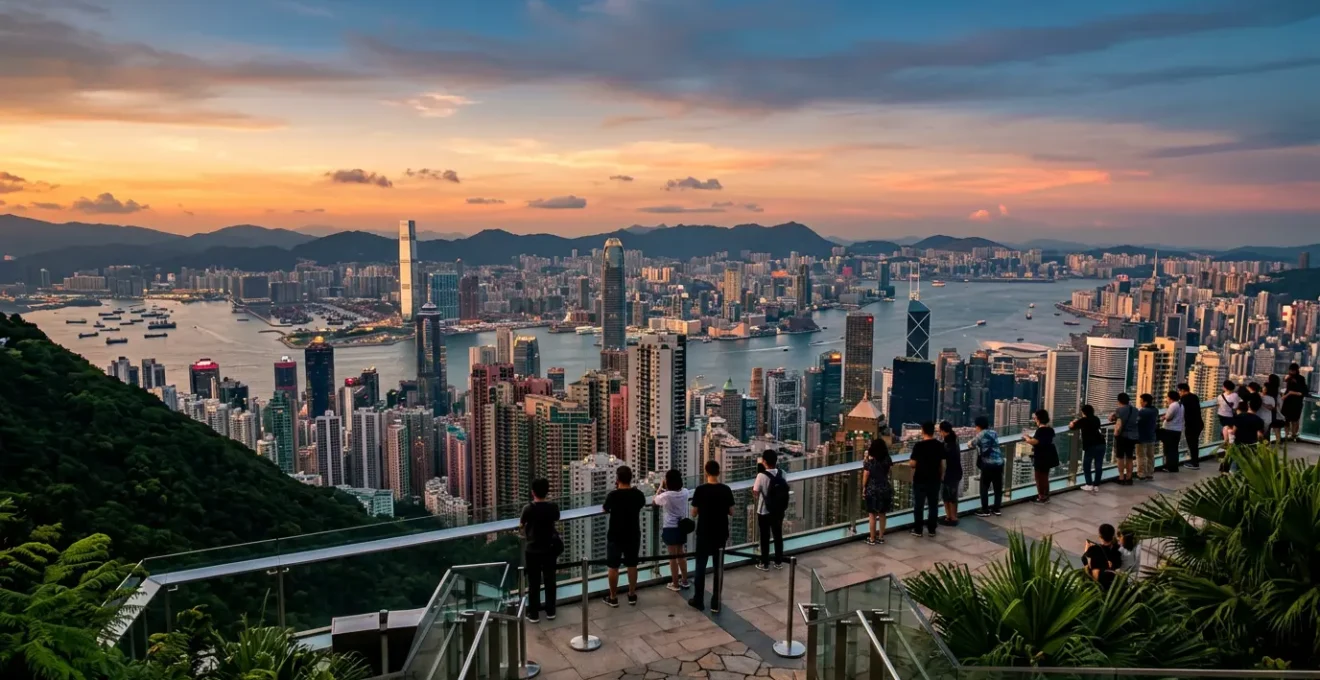
The iconic image is seared into your mind: Hong Kong’s staggering skyline, viewed from above, a forest of light piercing the twilight. But another image quickly follows—a seemingly endless, two-hour queue snaking towards the Peak Tram. Most guides offer the same platitudes: buy tickets online, go early, or take a taxi. While not wrong, this advice misses the fundamental truth for a savvy photographer or sightseer. It treats the visit as a problem of logistics, not a mission of strategy.
The real challenge isn’t just avoiding the queue; it’s about optimizing your entire experience for the perfect, unobstructed shot without falling into the classic tourist traps. This requires a different mindset, one of a crowd avoidance strategist. It’s about understanding and mastering a system of trade-offs. Should you pay for a 360-degree view or opt for a free, more natural vantage point? Is a pricey window-side dinner a romantic investment or a costly mistake? When does a historic tram ride become a liability?
This guide abandons the generic tips. Instead, it equips you with the strategic framework to make the right choices for your specific goal. We will dissect the viewpoints, decode the weather, evaluate the experiences, and reveal the ultimate queue-bypassing technique that turns your descent into an adventure. It’s time to stop waiting in line and start planning your perfect shot.
To help you navigate these critical decisions, this article breaks down the key strategic elements for a successful expedition to The Peak. Explore each section to build your personalized, queue-free itinerary.
Summary: A Strategist’s Itinerary for Victoria Peak
- Sky Terrace 428 or Lugard Road: Which View Saves You HK$75?
- The Weather Mistake: Why You Must Check Visibility Before Boarding the Tram?
- Dining at The Peak: Tourist Trap or Romantic Experience Worth the Price?
- How to Hike Down From The Peak to Central in Under 45 Minutes?
- Day or Night: When to Capture the Skyline for Maximum Impact?
- Sky100 or The Peak: Which Viewpoint Is Worth Your Money?
- Why Has the Tram System Survived Since 1904 Despite Modernization?
- The Descent Strategy: Why Hiking Down is The Ultimate Queue Hack
Sky Terrace 428 or Lugard Road: Which View Saves You HK$75?
The first strategic decision you’ll make is a classic case of viewpoint arbitrage. Do you pay for the highest platform, or do you trade a few meters of elevation for a better, freer, and less crowded experience? The default tourist path leads directly to the Peak Tower and its Sky Terrace 428. It promises the highest 360-degree view on Hong Kong Island, but this comes at a literal and figurative cost.
The platform is notoriously crowded, especially at sunset. For photographers, it presents two major obstacles: thick safety glass that creates unwanted reflections and a strict “no tripods” policy. While the view is undeniably vast, capturing a clean, professional-quality shot is a challenge. Furthermore, the privilege of this view comes with a price tag, as the Sky Terrace 428 charges HK$75 for adults.
The strategist’s alternative is Lugard Road. This free, paved path circles the Peak just below the summit. A 20-minute leisurely stroll brings you to what many locals and photographers consider the definitive skyline viewpoint. Here, you are free from glass, crowds are dispersed along the path, and tripods are welcome. The view is more framed and arguably more dynamic, with natural foliage adding depth to your compositions. You sacrifice the 360-degree panorama for a perfectly composed, world-class shot of the harbor and Kowloon.
This table breaks down the critical trade-offs, making your choice clear based on your priorities.
| Feature | Sky Terrace 428 | Lugard Road |
|---|---|---|
| Cost | HK$75 adults | Free |
| Height | 428 meters elevation | ~400 meters |
| View Type | 360-degree unobstructed | Multiple viewpoints with foliage |
| Crowd Level | Very crowded peak times | More peaceful, dispersed |
| Photography | Glass reflections, no tripods | Natural framing, tripod-friendly |
| Access | Indoor, air-conditioned | Outdoor walking trail |
The Weather Mistake: Why You Must Check Visibility Before Boarding the Tram?
The most common and heartbreaking mistake visitors make is investing time and money to reach the top, only to find themselves inside a dense cloud with zero visibility. Hong Kong’s weather is notoriously fickle, and Victoria Peak has its own microclimate. It can be perfectly clear in Central while the summit is completely socked in by what locals call the “Cloud Dragon.” Simply checking a standard weather forecast for “sunny” is not enough; you need real-time visibility intelligence.
As the image above illustrates, the conditions at 400 meters can be dramatically different from those at sea level. Your go/no-go decision should be based on what the Peak *actually* looks like right now. Fortunately, technology provides the perfect tool for this. The Hong Kong Observatory (HKO) maintains several public webcams pointed directly at the city’s key landmarks, including the Peak.
Before you even think about buying a tram ticket or hailing a cab, you must perform a visibility check. This non-negotiable step will save you from profound disappointment. It’s the difference between a wasted afternoon and a perfectly timed photographic mission. Following a simple protocol ensures you always make the right call.
Your Pre-Visit Visibility Checklist
- Access the official HKO webcams at their public portal. Check the cameras specifically labeled for Victoria Peak for a direct view.
- Analyze the real-time images, which are updated approximately every 5 minutes. Look for clarity around the IFC and Bank of China towers.
- If the view is hazy or obscured, monitor the cameras for 30-60 minutes. Hong Kong’s weather can change rapidly.
- Use the different camera angles offered by the Observatory to get a comprehensive understanding of the fog’s density and movement.
- If foggy conditions persist with no sign of clearing, postpone your visit. The Peak isn’t going anywhere, but your precious time is.
Dining at The Peak: Tourist Trap or Romantic Experience Worth the Price?
After securing your perfect viewpoint, the question of dining arises. The Peak offers a range of options, from fast-food chains in its modern shopping malls to upscale restaurants with panoramic windows. This is where you must calculate your Experience ROI (Return on Investment). Are you paying a premium for a genuinely memorable meal, or are you subsidizing a restaurant’s high rent for a mediocre experience?
Many establishments in the Peak Tower and Peak Galleria are functional but can feel like glorified food court options with an inflated price tag. They serve the masses and often lack unique character. A romantic dinner can quickly lose its charm when surrounded by bustling crowds and the noise of a shopping center. The strategist looks for a balance of view, ambiance, quality, and value.
One notable exception is the Peak Lookout Restaurant. Housed in a historic 1901 building, it was originally a workshop and later a shelter for sedan chair bearers. This history gives it a character and charm that modern venues lack. While still a popular tourist spot, its garden setting and colonial architecture offer a more romantic and authentic atmosphere than its mall-based competitors. It represents a better Experience ROI, trading the highest possible view for a more refined and memorable dining event.
Case Study: The Peak Lookout’s Historical Charm
Originally a spacious house for engineers working on the Peak Tramway, the building housing the Peak Lookout Restaurant was rebuilt in 1901. It served as a functional stop for sedan chairs before being converted into a restaurant in 1947. This heritage provides an ambiance distinct from the modern shopping complexes, offering a tangible connection to the Peak’s colonial past and a more tranquil dining experience.
For those who want the view without the commitment of a full meal, the Peak Galleria offers a clever alternative. Unlike the Peak Tower, the Peak Galleria offers free access to its rooftop terrace. This allows you to enjoy an expansive view, grab a quick bite from one of its many eateries, and then depart without the pressure of a formal, high-priced dinner.
How to Hike Down From The Peak to Central in Under 45 Minutes?
You’ve captured your photos, enjoyed the view, and now face the final challenge: the descent. This is where most visitors fall back into the queue, waiting for a crowded tram or an overpriced taxi. The strategist, however, sees an opportunity. Hiking down is not just an alternative; it’s the ultimate queue hack, saving you time, money, and stress while adding a completely new dimension to your visit.
The most direct and scenic route is via Old Peak Road. This historic, paved path winds its way down the steep mountainside, offering a completely different perspective of the city. What was a monolithic skyline from above becomes a series of tantalizing glimpses through lush, tropical foliage. You transition from a tourist viewpoint to an urban oasis, a tranquil world away from the summit’s hustle.
The journey is surprisingly quick and straightforward for anyone with average fitness. The path is well-maintained and lit at night, though a phone flashlight is always a good backup. The descent is steep but manageable, consisting mainly of slopes and stairs that lead you directly into the heart of the city’s Mid-Levels, a short walk from the Central MTR station.
To execute this descent strategy, follow these simple steps:
- Find the Trailhead: From the Peak Galleria, find the signs for Old Peak Road. It’s a well-marked path, and you’ll quickly find yourself leaving the crowds behind.
- Follow the Path: The route is unambiguous. Simply continue descending. You’ll pass by exclusive residential buildings and lush greenery, a side of Hong Kong few tourists see.
- Enjoy the Views: The path offers unique, framed views of the city’s skyscrapers, which are arguably more interesting for photography than the wide-open panorama from the top.
- Arrive in Central: After about 40-45 minutes, the path will level out, and you’ll find yourself on Robinson Road or Conduit Road in the Mid-Levels. From here, it’s an easy downhill walk or a short bus ride to Central proper.
Day or Night: When to Capture the Skyline for Maximum Impact?
For a photographer, the question of timing isn’t about avoiding crowds; it’s about light-chasing. The view from Victoria Peak offers two dramatically different, yet equally iconic, experiences. The choice between them depends entirely on the story you want to tell with your images. It’s a decision that requires forethought, as highlighted by experienced travelers.
Visit The Peak twice: once during the day and again at night. They’re two completely different experiences, and both are worth your time. Daylight gives you the full picture: Victoria Harbour, green hills wrapping around the city, and skyscrapers that stretch right to the water’s edge. It’s the best time to take in the scale and layout of Hong Kong.
– Deborah Rogers, Hong Kong Solo Travel
The daylight view is about scale, geography, and context. You see the relationship between the dense urban core, the green mountains, and the surrounding islands. It’s the shot that says, “This is the incredible landscape of Hong Kong.” For the best results, aim for the “golden hour” just before sunset, when the warm light rakes across the buildings, creating texture and depth.
The night view is about magic, energy, and density. The city transforms into an electric galaxy of light. This is the classic, dazzling postcard shot. To maximize its impact, plan your visit to coincide with the Symphony of Lights. This daily spectacle at 8:00 PM transforms the cityscape into a synchronized light and laser show. Arriving around 7:00 PM allows you to capture the transition from twilight (the “blue hour”) into full night, culminating with the show. This gives you three distinct photographic opportunities in one session.
The strategist doesn’t just “go at sunset.” They decide beforehand: am I capturing the geographic marvel or the electric dream? This choice dictates the entire schedule, from the ascent to the final click of the shutter.
Sky100 or The Peak: Which Viewpoint Is Worth Your Money?
A true strategist considers all options, even those off the mountain. The Peak is Hong Kong’s most famous viewpoint, a fact reflected in its staggering visitor numbers. With some seven million visitors every year, crowding is a given. This is where Sky100, the observation deck on the 100th floor of the ICC tower in Kowloon, enters the equation as a compelling alternative.
Choosing between The Peak and Sky100 is not about which is “better,” but which experience aligns with your goals. The Peak offers a natural, immersive experience. You are on a mountain looking down upon a city nestled in a dramatic landscape. The journey itself, whether by tram or bus, is part of the adventure. It’s an outdoor, weather-dependent expedition that typically consumes half a day.
In contrast, Sky100 offers a modern, urban experience. You are inside the skyline, looking out from one of its tallest giants. It provides a stunning 360-degree view that includes Hong Kong Island (with The Peak in the background), offering a different and equally breathtaking perspective. Being indoors and air-conditioned, it’s an all-weather, 90-minute attraction with direct MTR access, making it far more efficient and predictable.
For a photographer hating crowds, Sky100’s controlled environment and timed ticketing can be a significant advantage. The trade-off is losing the natural, “top of the world” feeling that only a mountain can provide. The following table highlights the fundamental differences to guide your strategic choice.
| Aspect | Victoria Peak | Sky100 |
|---|---|---|
| Elevation | 552m (1,811ft) | 393m (100th floor ICC) |
| Experience Type | Mountain immersion with nature | Indoor observation from skyscraper |
| Time Investment | Half-day expedition | 90-minute visit |
| Weather Dependency | Outdoor, weather-dependent | Indoor, air-conditioned |
| Access | Peak Tram or bus/taxi | Direct MTR access |
| View Angle | Looking down on city | 360-degree from within city |
Why Has the Tram System Survived Since 1904 Despite Modernization?
The Peak Tram is more than just transportation; it’s a living piece of history and a rideable attraction in its own right. Understanding its resilience is key to deciding whether this 19th-century funicular is a must-do experience or a skippable, time-consuming bottleneck. Its survival is not an accident but a result of its unique engineering, historical significance, and enduring popularity.
First and foremost, it remains an engineering marvel. It climbs 396 meters over a distance of just 1.4 kilometers, tackling an astonishingly steep gradient. This provides passengers with the famous “tilting building” optical illusion, where the skyscrapers of Central appear to fall away at an impossible angle. This vertigo-inducing experience cannot be replicated by bus or taxi, ensuring its status as a unique attraction. Its continued relevance is proven by the more than 4 million people who ride the Peak Tram annually.
Second, its history is deeply intertwined with Hong Kong’s colonial past. Before its opening in 1888, the wealthy residents of the Peak were carried up the slopes in sedan chairs. The tram’s arrival made the area a prime residential district. For a time, between 1904 and 1930, the Peak was an exclusive, segregated residential area, with the front seats of the tram reserved for the Governor. Riding the tram is, in a small way, to participate in this complex history.
So, is it worth the wait? For the first-time visitor or history enthusiast, the answer is often yes—provided you use strategies to mitigate the queue. The tram is not just a way to get to the top; it’s a core part of the Peak experience. For the seasoned photographer focused solely on the shot, however, a taxi might be the more pragmatic choice, saving precious time that could be better spent on Lugard Road during the golden hour.
Key Takeaways
- The best view is often free: Choose Lugard Road over the paid Sky Terrace for better photos and no crowds.
- Trust data, not luck: Use the HKO’s real-time webcams to verify visibility before you commit to the journey.
- Hike down to win: The descent via Old Peak Road is the ultimate strategy to bypass all return queues and adds a unique experience.
The Descent Strategy: Why Hiking Down is The Ultimate Queue Hack
We’ve established the practical steps to hike down from The Peak, but it’s crucial to understand *why* this is the single most powerful move in the crowd avoidance strategist’s playbook. The Descent Strategy is more than just a transportation alternative; it is a fundamental re-framing of the end of your visit. Instead of a frustrating wait, it becomes a peaceful and rewarding conclusion to your adventure.
The primary benefit is the complete elimination of queue time. While other visitors are checking wait times for the tram or haggling with taxi drivers, you are already on a tranquil path, moving at your own pace. This is especially valuable at night, after the Symphony of Lights, when the exodus from the Peak is at its peak. The descent offers a guaranteed, stress-free exit.
Furthermore, the experience is safe and accessible. The main paths like Old Peak Road are well-paved and lit, making a night descent a viable and atmospheric option. As many who have done it can attest, the city’s reputation for safety extends to its popular urban trails.
Hong Kong’s a safe city for night hiking. Sky Terrace open till 11pm, though general travel rule applies – don’t leave valuables unattended especially when taking photos
– Bigfoot Tour
By adopting the Descent Strategy, you seize control of your time. You are no longer at the mercy of queues or crowds. You transform a potential point of frustration into a serene, memorable part of your journey, saving an hour or more that can be better spent enjoying the city below. It is the definitive move for anyone who values their time and seeks an experience beyond the ordinary tourist trail.
Now, equipped with this strategic framework, you can move beyond the generic advice and confidently craft your own perfect, queue-free visit to The Peak, ensuring your memories are of the breathtaking views, not the endless lines.