In summary:
- Dragon’s Back is “conditionally easy”; success depends on managing three types of exertion: physical, environmental, and logistical.
- Inadequate footwear is the single biggest preventable risk, directly contributing to a high percentage of trail injuries.
- Avoiding peak times (mid-day sun and Sunday crowds) is as crucial as physical fitness for an enjoyable experience.
- Your hike isn’t over at the beach; a clear plan for the return transport is essential to avoid a frustrating end to the day.
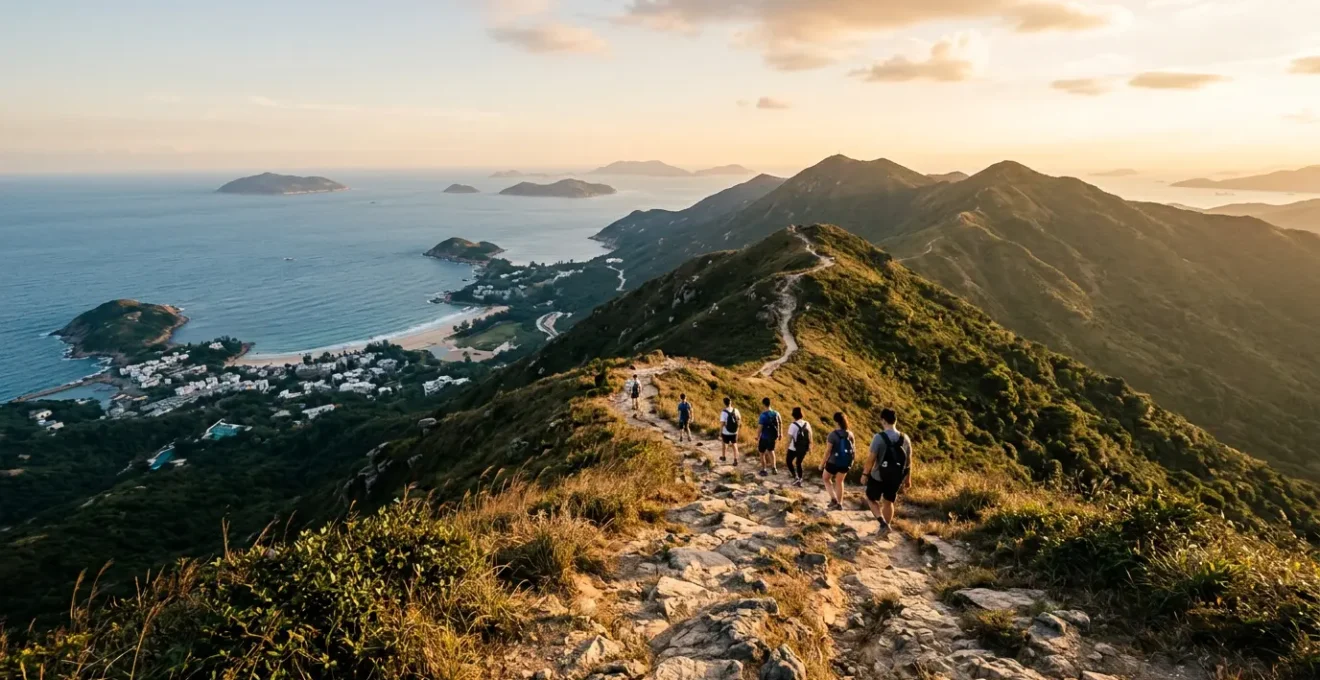
The Dragon’s Back is consistently lauded as Hong Kong’s premier urban hike, a must-do for tourists and a weekend staple for locals. Its reputation for stunning coastal views and accessibility precedes it, often tagged with the reassuring label: “easy.” But for a casual hiker or a family with varying fitness levels, a critical question arises: what does “easy” truly mean? Standing at the trailhead, looking up at the undulating path, it’s natural to wonder if your sneakers, water bottle, and weekend enthusiasm are genuinely enough.
The internet is filled with advice to simply “wear comfortable shoes” and “enjoy the view.” This guidance, while well-intentioned, often overlooks the specific physical demands of the trail. From a fitness professional’s perspective, a successful hike is about managing load. The beauty of the Dragon’s Back isn’t a guaranteed reward; it’s the outcome of successfully managing a trio of challenges: the biomechanical load on your body, the environmental load of sun and crowds, and the logistical load of navigating to and from the trail.
So, is Dragon’s Back suitable for you? The answer is a qualified yes. But instead of a simple “yes” or “no,” this guide provides a professional assessment. We will move beyond platitudes to analyze the specific stressors you’ll encounter. This article will break down the hike into its core components, allowing you to assess your preparedness not against a vague “easy” rating, but against the real, measurable demands of the trail. We will dissect the planning, the physical exertion, the environmental factors, and the crucial post-hike logistics to give you the confidence to make an informed decision.
This comprehensive analysis will equip you with the knowledge to not just complete the Dragon’s Back, but to do so safely, comfortably, and with maximum enjoyment. Let’s break down the trail’s real challenges and how to conquer them.
Summary: A Fitness Pro’s Assessment of the Dragon’s Back Trail
- How to Plan Your Hike to End Perfectly at Big Wave Bay Beach?
- The Footwear Mistake That Causes Injuries on Dragon’s Back
- Why You Should Avoid Dragon’s Back on Sundays if You Seek Nature?
- How to survive the Exposed Ridge Walk During Mid-Day Sun?
- How to Catch the Minibus Back to Shau Kei Wan Without Fighting for Seats?
- Dragon’s Back or Lion Rock: Which Trail Fits Your Fitness Level?
- The Commute Reality: How Long to Reach Central From Sai Kung?
- MacLehose Trail Section 2:Which Skyscraper Observation Deck Offers the Best View of Victoria Harbour?
How to Plan Your Hike to End Perfectly at Big Wave Bay Beach?
A common misconception is that the Dragon’s Back hike simply “ends.” In reality, you have a critical choice to make that dictates the entire final act of your day. For most, the goal is a refreshing swim and a cold drink at Big Wave Bay Beach. Achieving this idyllic finish requires active planning, not passive walking. The primary challenge is managing your Logistical Load during the final descent when your energy is lowest. The trail presents a key junction; the wrong turn leads you to To Tei Wan, a small village with limited amenities and a bus stop, but it’s not the beach you were picturing.
To ensure a perfect beach landing, you must consciously follow the signs pointing right, towards ‘Tai Tam Gap’. This path is your gateway to Big Wave Bay. However, be prepared: this final stretch isn’t a gentle stroll. It’s a steep, often concrete, descent that puts significant strain on tired quadriceps and knees. This is where many hikers, fatigued from the main ridge, lose focus. It’s crucial to take your time, especially on the dusty, gravelly patches that appear in the last 15 minutes, which are notorious for causing slips.
Upon arrival, the logistics continue. The public facilities, including changing rooms and crucial foot-washing taps, are located immediately to the left of the beach entrance. Taking a moment to rinse the trail dust off your feet before heading for the water makes the experience infinitely more pleasant. The final reward, a well-earned cold drink, can be purchased from the beachside kiosk or one of the small stores in the adjacent village. Proper planning transforms the end of your hike from a potentially confusing ordeal into the seamless, rewarding experience you set out for.
The Footwear Mistake That Causes Injuries on Dragon’s Back
The most critical factor influencing your safety on Dragon’s Back is not your cardiovascular fitness, but what’s on your feet. The trail’s “easy” rating lulls many into a false sense of security, leading them to choose fashion sneakers, canvas shoes, or even sandals. This is a significant mistake. From a fitness perspective, this decision dramatically increases your Biomechanical Load, placing undue stress on your joints and stability muscles. The path, while not technically difficult, is a mix of hard-packed dirt, loose gravel, and uneven stone steps. This terrain demands two things from your footwear: grip and support.
This paragraph introduces a concept complex. To understand the risk, it is useful to visualize the interaction between shoe and terrain. The illustration below shows how proper hiking footwear is designed to handle these exact conditions.
As the image demonstrates, a hiking shoe’s deep tread (lugs) acts like teeth, biting into loose surfaces to prevent slips. The stiffer sole protects your foot from sharp rocks, reducing fatigue. Most importantly, proper footwear provides ankle support. The trail’s uneven nature creates constant, small, and unexpected shifts in foot placement. This is where injuries happen. In fact, an analysis of hiking accidents found that 42.4% of fall-related hiking injuries affect the ankle joint. A simple, flimsy sneaker offers no protection against the kind of lateral roll that leads to a sprain, potentially turning a pleasant day out into a painful ordeal.
You don’t need heavy, mountaineering-grade boots. A quality trail running shoe or a lightweight hiking shoe is perfectly sufficient. The key is a dedicated outsole designed for traction and a structure that offers more stability than your average gym shoe. Investing in proper footwear is the single most effective way to reduce your risk of injury and ensure your body can handle the biomechanical demands of the trail comfortably.
Why You Should Avoid Dragon’s Back on Sundays if You Seek Nature?
If your goal is to commune with nature, hear the wind sweep over the ridge, and find a quiet spot for contemplation, then hiking Dragon’s Back on a Sunday is counterproductive. The trail’s popularity, combined with its accessibility, transforms it into a bustling outdoor highway on weekends, particularly on Sundays. This creates a significant Environmental Load—not from the sun or heat, but from crowd density. This psychological stressor can completely change the character of the hike, shifting the experience from meditative to maddening.
The sheer volume of people impacts your hike in tangible ways. You’re often forced to walk at the pace of the slowest person in front of you, unable to get into a natural rhythm. The most scenic viewpoints become crowded selfie spots, with queues forming for the perfect photo. The narrow paths can lead to human traffic jams, and the ambient sound is less of birdsong and more of chatter and portable speakers. This isn’t an exaggeration; it’s the standard weekend reality.
One hiker’s account perfectly encapsulates the Sunday experience, highlighting how the day of the week can redefine the entire outing:
I’d forgotten it was a Sunday, so I had unintentionally signed myself up to deal with the crowds of tourists and locals alike that flock to this ridge-line. Nevertheless, it was beautiful but crowded. The bus stop at the train station had a line of about forty people waiting to get on. Most were dressed in hiking gear and it was at that point, which I figured out it was Sunday. We were now part of the crowd, which was unusual for me.
– Journey Era, Weekend vs Weekday Trail Experience
For a family or a beginner, a crowded trail can add a layer of anxiety. The pressure to keep up, the difficulty of finding a private spot to rest, and the sheer noise can detract from the natural beauty you came to see. If your schedule allows, hiking the Dragon’s Back on a weekday—especially in the morning—offers a completely different, and far more serene, experience. You’ll have the space to appreciate the views, the quiet to enjoy the environment, and the freedom to walk at your own pace.
How to survive the Exposed Ridge Walk During Mid-Day Sun?
The iconic “dragon’s back” section of the trail is a stunning, undulating ridge with panoramic views. It is also, by its very nature, completely exposed to the elements. During the middle of the day, especially in Hong Kong’s hotter months, this exposure creates the most significant Environmental Load of the hike: intense sun and heat. Your body’s ability to manage its core temperature (thermoregulation) becomes the primary limiting factor to your performance and safety. Underestimating this challenge is a common mistake that can lead to dehydration, heat exhaustion, or sunstroke.
The physiological demand is immense. The combination of physical exertion and high ambient temperatures causes your body to perspire heavily to cool down. This fluid loss must be replaced. A study on athletic performance highlights the severity, finding that in hot conditions, adults can lose 1.5-2 liters of fluid per hour, with significant electrolyte depletion beginning within just 30 minutes. For the casual hiker, this means the 500ml bottle of water you thought was sufficient will be gone long before you reach the halfway point. A minimum of 1.5 liters of water per person is a more realistic starting point, with more needed on hotter days.
Survival on the ridge is a matter of strategy. First, timing is everything: starting before 9 AM or after 3 PM allows you to avoid the peak solar radiation between 11 AM and 2 PM. If a mid-day hike is unavoidable, proactive heat management is essential. This starts with pre-hydrating—drinking plenty of water hours before you even begin. During the hike, supplement your water with electrolyte powders or tablets to replace the salts lost through sweat, which are vital for muscle function. Wear a wide-brimmed hat, not a baseball cap, for 360-degree protection of your face, ears, and neck. Utilize the wooded sections before the final ridge ascent as strategic rest stops to cool down in the shade. When you do rest, apply cool water to your neck and wrists to help lower your body temperature. Treating the sun as a serious environmental challenge, rather than an inconvenience, is key to safely enjoying the spectacular views.
How to Catch the Minibus Back to Shau Kei Wan Without Fighting for Seats?
Completing the hike and enjoying the beach is only part of the journey. The final, and often most frustrating, Logistical Load is the return trip. From Big Wave Bay, the primary way back to civilization is the red minibus to Shau Kei Wan MTR station. On a busy afternoon, the queue for this minibus can be daunting, and the feeling of a great day out can quickly sour into a long, tired wait. “Fighting for seats” is less about physical altercation and more about strategic decision-making to minimize your wait time and frustration.
Your primary tool for this part of the day is assessment. Before you even join the queue, take a moment to gauge its size. This simple act of observation will determine your best course of action. Your decision should be based on a simple risk/reward calculation: the length of the queue versus the time and effort of an alternative strategy. A long line of over 30 people could easily mean a wait of 45 minutes or more, as minibuses fill up and depart.
To make an informed decision, you need a clear framework. The following table provides a decision matrix based on the queue length at Big Wave Bay, helping you choose the most efficient option to get back to Shau Kei Wan without an exhausting wait.
| Queue Length | Primary Action | Alternative Option | Expected Wait Time |
|---|---|---|---|
| Under 20 people | Wait for red minibus | N/A – shortest option | 10-15 minutes |
| 20-30 people | Check for taxis at beach entrance | Walk to Shek O Village (15-20 min) | 20-30 minutes |
| Over 30 people | Walk to Shek O Village for Bus No. 9 | Use ride-sharing app (surge pricing likely) | 45+ minutes if waiting |
| No cell signal | Begin walk to Shek O Village immediately | Wait at Big Wave Bay if group has mixed opinions | 20 min walk vs unknown wait |
The key alternative is the 15-20 minute walk to Shek O Village. While it seems counterintuitive to walk more after a long hike, this can be a much faster option. Shek O is a larger hub with more transport options, including the frequent No. 9 bus and a larger taxi stand. This is particularly true if you see the queue snaking far down the road. By proactively choosing to walk to Shek O, you take control of the situation, turning passive waiting time into active progress towards your destination.
Dragon’s Back or Lion Rock: Which Trail Fits Your Fitness Level?
To accurately assess if Dragon’s Back is right for you, it’s helpful to place it in context. In Hong Kong hiking, Lion Rock is often seen as the next step up—a more challenging, but equally iconic, trail. Comparing the two provides an excellent benchmark for understanding the specific demands of each. This is not about which is “better,” but about matching the trail’s Biomechanical Load to your current fitness level. Dragon’s Back is a test of endurance and heat management, while Lion Rock is a test of raw leg strength and nerve.
The primary difference lies in the nature of the elevation gain. Dragon’s Back has a gentler, more undulating profile. Its climbs are spread out, with plenty of flat or downhill sections to recover. The total elevation gain is significant, but it’s accumulated gradually. Lion Rock, in contrast, is relentlessly steep. The final ascent is a grueling, seemingly endless series of high concrete stairs that places immense and continuous strain on your calves, quads, and glutes. There are few opportunities to catch your breath once you’ve started the main climb.
The technical difficulty also varies greatly. Dragon’s Back is mostly a dirt path that can be walked with a steady rhythm. Lion Rock’s final section involves some minor scrambling, using your hands to navigate over rocks. For those with a fear of heights, the exposed peak of Lion Rock can be far more intimidating than the wider, more forgiving ridges of Dragon’s Back. The following table breaks down the key metrics, allowing you to see at a glance which trail’s profile aligns best with your abilities and goals.
| Factor | Dragon’s Back | Lion Rock |
|---|---|---|
| Total Distance | 8.5 km | 7 km |
| Elevation Gain | 250-280 meters | 400+ meters |
| Estimated Time (beginners) | 2-3 hours | 3-4 hours |
| Trail Type | Dirt path, some steps | Endless concrete stairs |
| Technical Difficulty | 2/10 – mostly easy walking | 7/10 – steep stairs, some scrambling |
| Bailout Options | Multiple exit points before halfway | Committed once ascending final section |
| Best For | Families, beginners, endurance building | Experienced hikers, leg strength training |
In summary, Dragon’s Back is the ideal choice for building hiking endurance and getting comfortable with distance and Hong Kong’s heat. It’s a fantastic introductory trail. If you can complete Dragon’s Back and feel you have plenty of energy left, then Lion Rock could be your next challenge. But attempting Lion Rock as a first-time hiker would be an uncomfortable, and potentially unsafe, leap in difficulty.
The Commute Reality: How Long to Reach Central From Sai Kung?
When planning a trip, geography can be confusing, and a common mistake for visitors is to misjudge distances between Hong Kong’s distinct regions. A title like this highlights such a potential error. To be clear: Dragon’s Back is located on the south side of Hong Kong Island, whereas Sai Kung is a large peninsula in the eastern New Territories. They are in completely different parts of Hong Kong, and the commute from Sai Kung to Central is an entirely separate journey that is not relevant to your Dragon’s Back hike.
The question you really need to answer is: “How long does it take to get back to Central from Dragon’s Back?” This is a critical piece of your Logistical Load calculation. After a 2-3 hour hike and time at the beach, you need a realistic estimate for your return journey to plan your evening. The total travel time can be surprisingly long, often taking as much as 90 minutes depending on transport connections and wait times.
The journey involves two main stages: a minibus or bus ride to the nearest MTR station, followed by the train ride into the city’s core. The efficiency of this process can vary greatly. The standard minibus and MTR combination will cost you approximately HK$15-20. While a taxi is an option, it is significantly more expensive, costing HK$200-300, and is subject to traffic. To avoid confusion and ensure a smooth return, follow this clear, step-by-step plan.
Your Action Plan: The Return Journey from Dragon’s Back to Central
- From Big Wave Bay, take the red minibus to Shau Kei Wan MTR station. Factor in 20-30 minutes for this leg, including potential wait time.
- At Shau Kei Wan MTR station, enter via Exit A2 or A3.
- Take the MTR Island Line (the blue line) in the westbound direction, towards Kennedy Town.
- Travel 8 stops to Central Station. This part of the journey is consistent and takes approximately 25 minutes.
- The total estimated journey time from leaving the beach to arriving in Central is 60-90 minutes. Plan accordingly.
By understanding this correct route and timeline, you can manage your post-hike expectations and logistics effectively, ensuring the end of your day is as well-planned and stress-free as the hike itself.
Key takeaways
- Assess the Three Loads: Before hiking, evaluate your readiness against the Biomechanical (your body/gear), Environmental (heat/crowds), and Logistical (transport) demands of the trail.
- Footwear is Non-Negotiable: Your choice of footwear is your most important piece of safety equipment. Trail-appropriate shoes with good grip are essential.
- Timing is a Strategic Tool: Avoid the worst of the heat and crowds by hiking on a weekday and starting early in the morning or later in the afternoon.
MacLehose Trail Section 2:Which Skyscraper Observation Deck Offers the Best View of Victoria Harbour?
After a day spent conquering natural ridges like the Dragon’s Back, many visitors seek to experience Hong Kong’s other famous vantage points: the man-made ones. This question, while referencing a different trail (MacLehose Trail Section 2, known for its own beautiful coastal views), touches upon a core tourist desire: finding the ultimate view of Victoria Harbour. While hiking trails provide a stunning, grounded perspective, for the iconic, glittering skyline view, you must look upwards to the city’s skyscrapers.
The MacLehose trail and Dragon’s back offer views *of* nature and coastline, but they are not optimal for viewing the dense urban canyon of the harbour itself. To truly appreciate the scale of Hong Kong’s architecture and the spectacle of the Symphony of Lights, you need elevation within the city. Your two premier, publicly accessible options are on opposite sides of the harbour, each offering a unique perspective.
On Hong Kong Island, the classic choice is The Peak. While not a skyscraper deck, the Peak Tower’s Sky Terrace 428 provides the most famous panoramic view, looking down across the Central business district towards Kowloon. This is the postcard shot, a breathtaking vista that captures the relationship between the city’s towers and the surrounding green mountains.
For a view from the Kowloon side, looking back at the impressive skyline of Hong Kong Island, the Sky100 observation deck in the International Commerce Centre (ICC) is unmatched. As one of the city’s tallest buildings, it offers a stunning, 360-degree perspective that puts the entire territory into context. From here, the dense forest of skyscrapers on the island appears as a single, glittering entity, with Victoria Harbour laid out before it. This view is particularly spectacular at sunset and into the evening, as the city lights up.
So, while trails like MacLehose Section 2 and Dragon’s Back offer the best way to experience Hong Kong’s natural beauty, the definitive view of Victoria Harbour is found from the engineered heights of its observation decks. The “best” view depends on your preference: the classic panorama from The Peak, or the modern, towering perspective from Sky100.
Your journey to becoming a confident hiker begins with this mindset of structured assessment. By learning to evaluate the biomechanical, environmental, and logistical loads of any trail, you empower yourself to make smart, safe decisions. Apply this framework to your next planned hike, whether it’s in Hong Kong or your own backyard, to transform your approach from hopeful to prepared.