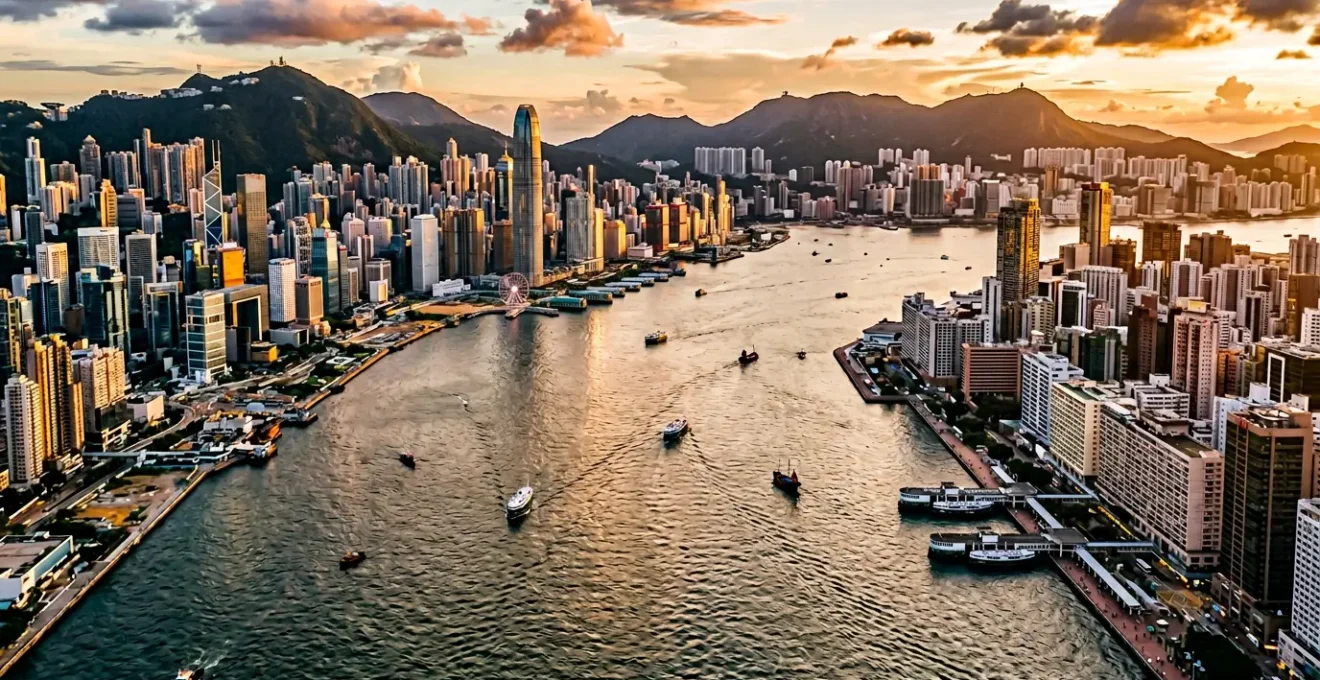
The best side of Hong Kong is not a matter of taste, but of pure logistics: it’s the one that minimizes travel friction and maximizes your time.
- Kowloon offers superior skyline views and budget options, making it the logistical default for first-time visitors and those focused on markets.
- Hong Kong Island provides direct access to business, high-end shopping, and hiking trails, justifying its higher cost for specific itineraries.
Recommendation: Map your “must-do” activities first; your hotel’s location should serve this map, not the other way around.
The classic Hong Kong travel dilemma—Kowloon or Hong Kong Island? It’s a question that fills forums and guidebooks, often answered with broad stereotypes. Kowloon is for the “authentic” experience and skyline views; the Island is for polished nightlife and finance. While there’s a grain of truth in these clichés, they fail to address the core concern of a strategic planner: which location is the most efficient base of operations for your specific trip? Viewing this choice not as a personality test but as a logistical calculation is the key to an optimized itinerary.
This decision goes beyond simple geography. It’s about understanding the city’s unique friction points—from shockingly compact hotel rooms to the relentless hum of a 24/7 metropolis. The wrong choice can mean an extra 40 minutes of commuting every day, time that could be spent at a rooftop bar or exploring a temple. The right choice places your “itinerary center of gravity” at your doorstep, turning your hotel into a launchpad rather than just a place to sleep.
This guide reframes the debate. Instead of focusing on vague “vibes,” we will analyze the tangible, logistical factors that impact your trip. We will dissect everything from MTR line efficiency to the crucial importance of double-glazed windows. By the end, you won’t just have a preference; you’ll have a data-driven strategy for choosing the side that best serves your travel objectives.
This article provides a complete strategic framework to help you decide. We’ll explore the critical logistical factors to consider before you book, then compare the two sides based on practical travel styles.
Summary: A Strategic Guide to Choosing Your Hong Kong Base
- The 15sqm Shock: How to Mentally Prepare for Tiny Hong Kong Rooms?
- Why Being ‘Near the MTR’ Is the #1 Rule for Hotel Selection?
- The Deposit Surprise: Why You Need a Credit Card Upon Check-In?
- How to Ensure Your Room Has Double Glazing in Busy Districts?
- Booking Window: How Far in Advance Should You Book for Autumn?
- Kowloon vs Hong Kong Island: Which Side Should You Choose?
- MTR Speed vs Tram Views: Which Mode Suits Your Journey Best?
- The Commute Advantage: Walking to the Star Ferry in 5 Minutes
The 15sqm Shock: How to Mentally Prepare for Tiny Hong Kong Rooms?
The first reality check for any Hong Kong visitor is spatial. Hotel rooms, particularly in the mid-range and budget categories, are famously small. We’re not talking “cozy”; we’re talking about an average of 12-15 square meters where the bed may touch three walls. This isn’t a sign of a bad hotel; it’s a direct consequence of the city having the world’s most expensive real estate market. Mentally preparing for this “15sqm shock” is the first step in logistical planning. If you travel with large suitcases or value personal space, this single factor can dictate your entire accommodation strategy.
You cannot change the room size, but you can change how you operate within it. This requires a shift in mindset from “unpacking” to establishing a “mini-base of operations.” Think vertically and efficiently. An over-the-door organizer can be a game-changer for toiletries and electronics. Packing cubes are not a suggestion; they are a necessity, allowing you to live out of your luggage without creating chaos. Collapsible luggage, if you have it, will be your best friend. A single powerful multi-USB travel adapter is also crucial, as outlets are often as scarce as floor space.
Ultimately, accepting the spatial constraints allows you to focus on the more important variable: location. A small, well-located room that serves as a launchpad for your daily adventures is logistically superior to a larger, more comfortable room that requires a 20-minute walk to the nearest transport link. Embrace the minimalist challenge and prioritize strategic positioning over square footage.
By treating your room as a highly efficient, if small, command center, you neutralize one of Hong Kong’s biggest friction points before you even arrive.
Why Being ‘Near the MTR’ Is the #1 Rule for Hotel Selection?
The mantra “stay near the MTR” is the most common piece of advice for Hong Kong accommodation, and for good reason. The Mass Transit Railway (MTR) is the city’s circulatory system—clean, efficient, and astonishingly comprehensive. Being within a 5-minute walk of an MTR station is the single most important logistical factor for maximizing your time. It’s the difference between a spontaneous evening trip across the harbor and a tired “let’s just stay in.” This proximity is non-negotiable for a strategic planner.
This wide establishing shot of a modern MTR station entrance, with streams of commuters flowing in and out, perfectly illustrates its central role in the city’s daily life. It is the gateway to every corner of the territory.
However, a true logistics strategist goes one level deeper. It’s not just about being near *any* MTR station, but being near the *right one*. A station on a single, less-frequented line is not the same as a major interchange like Central, Admiralty, or Tsim Sha Tsui. These hubs give you access to multiple lines, drastically reducing transfer times and expanding your “low-friction” travel radius. Choosing a hotel near an interchange is the ultimate power move, effectively putting the entire city within a 30-minute reach.
The following table provides a strategic overview of the most valuable MTR lines for tourists. A five-star rating indicates a line that directly serves a high concentration of key attractions, dining, and shopping areas.
| MTR Line | Key Stations | Tourist Value |
|---|---|---|
| Tsuen Wan (Red) | TST, Mong Kok, Prince Edward | ★★★★★ |
| Island (Blue) | Central, Admiralty, Causeway Bay | ★★★★★ |
| Kwun Tong (Green) | Whampoa, Ho Man Tin | ★★★ |
Choosing your hotel based on its position on this transport grid, rather than just its general neighborhood, is the difference between a good trip and a logistically flawless one.
The Deposit Surprise: Why You Need a Credit Card Upon Check-In?
A common point of confusion for first-time visitors is the hotel check-in process. Even if you’ve fully prepaid for your room online, you will almost certainly be asked for a security deposit upon arrival. This is standard practice in Hong Kong and is not a sign that your booking is incorrect. This deposit covers incidentals like minibar usage, potential damages, or other room charges. The crucial logistical point here is the method: cash is often accepted, but a credit card is strongly preferred and far more efficient.
The amount can be significant, so it’s a budgetary item you must plan for. While it varies, most Hong Kong hotels require a deposit of HKD 500-1000 per night of your stay. For a week-long trip, this could mean having a hold of nearly $1,000 USD placed on your card. If you plan to use a debit card or cash, this is money that is physically removed from your spending budget until checkout. This can be a major friction point if not anticipated.
Using a credit card avoids this cash flow problem. The hotel does not actually charge the amount; instead, they place an “authorization hold.”
The Credit Card Authorization Hold Process
The hotel’s payment system communicates with your bank to “block” a portion of your credit limit to guarantee the funds are available. No money is actually transferred. If you incur no additional charges, this hold is simply released after you check out. The block on your credit limit vanishes automatically within a few business days, without any actual monetary transaction appearing on your statement.
From a logistical standpoint, using a credit card is the only sensible option. It keeps your cash free for night markets and octopus card top-ups and streamlines both the check-in and check-out process. Ensure your credit card has a sufficient limit to cover this hold, especially if you’re staying for an extended period.
This small piece of preparation prevents a potentially stressful and inconvenient start to your Hong Kong adventure.
How to Ensure Your Room Has Double Glazing in Busy Districts?
Hong Kong is a city that never truly sleeps, and its soundtrack is one of constant motion: the rumble of double-decker buses, the chatter of crowds, the hum of air conditioners. While this energy is exhilarating during the day, it can be a major friction point at night, especially for light sleepers. In bustling districts like Tsim Sha Tsui, Mong Kok, or Causeway Bay, the difference between a restful night and a bleary-eyed morning often comes down to one architectural feature: double-glazed windows. Standard in many modern or high-end hotels, it’s not a given in older buildings or budget-friendly establishments.
Assuming your room will be quiet is a rookie mistake. A logistics-minded traveler takes active steps to mitigate the risk of noise pollution. You cannot soundproof the city, but you can be strategic in your room selection process. This goes beyond simply picking a hotel; it involves direct communication and research before and during booking. Requesting a “quiet room” is a good start, but being specific is better. A room on a higher floor and away from the elevator is a standard tactic, but asking for a room that faces an inner courtyard instead of a main thoroughfare like Nathan Road or Hennessy Road can be even more effective.
The most direct approach is to inquire specifically about the windows. A simple email to the hotel asking to confirm if the rooms have double glazing can save you a world of trouble. Furthermore, leveraging the experience of previous guests is a powerful tool. Scouring recent reviews for keywords like “noise,” “quiet,” “soundproof,” or “sleep quality” provides invaluable ground-truth that no hotel marketing material will ever offer.
Action Plan: Verifying Your Room’s Noise-Proofing
- Email the hotel directly to request ‘a quiet room on a high floor, away from the elevator’.
- Specifically ask them to confirm if the windows in your assigned room category are double-glazed.
- Search recent guest reviews for keywords like ‘noise’, ‘quiet’, ‘soundproofing’, and ‘sleep quality’.
- In your request, specify a preference for rooms facing an inner courtyard rather than a main road.
- Check the most recent reviews from the last 3-6 months, as hotel conditions can change.
By treating quietness as a feature to be verified rather than an assumed benefit, you proactively manage one of the most common complaints of urban travel.
Booking Window: How Far in Advance Should You Book for Autumn?
Timing is everything in logistics, and this extends to booking your Hong Kong hotel, especially for the popular autumn season (September to November). This period boasts cooler, less humid weather, making it a peak time for tourism. Consequently, waiting too long to book can result in significantly higher prices and limited availability in desirable locations. Understanding the strategic booking window is crucial for securing the best value. The goal is to hit the sweet spot after initial prices are set but before the late-booking surge begins.
The data tells a clear story. During peak seasons, hotel occupancy skyrockets, creating fierce competition for rooms. For instance, historical data shows that in a typical peak month like October, the hotel occupancy rate can reach as high as 87%. This level of demand means that hotels have little incentive to offer last-minute deals. The closer you get to your travel dates, the more you can expect to pay for a diminishing pool of less desirable rooms.
This image of calendar pages with planning marks captures the essence of strategic travel planning, especially for a high-demand period like Hong Kong’s autumn.
A strategic timeline is your best defense against surge pricing. Here’s a logistical breakdown:
- 6-9 Months Out: This is your reconnaissance phase. Start tracking prices for a shortlist of hotels. Get a feel for the baseline rates.
- 3-5 Months Out: This is generally the optimal booking sweet spot. Airlines have released their fares, and hotels have a clear picture of demand, often offering the best balance of price and availability.
- Under 2 Months Out: You are now in the premium-price zone. Expect to pay significantly more, especially if your dates overlap with public holidays or major events like Golden Week (the first week of October).
The smartest logistical move is to book a room with a free-cancellation policy during the 3-5 month window. This locks in a good rate and location, while giving you the flexibility to switch if a better deal unexpectedly appears.
By approaching your booking with this disciplined, data-aware timeline, you turn a potentially expensive variable into a controlled and optimized part of your travel plan.
Kowloon vs Hong Kong Island: Which Side Should You Choose?
With the foundational logistics covered, we arrive at the central strategic decision. The choice between Kowloon and Hong Kong Island should be driven by a simple question: Where is the center of gravity for your itinerary? Plot your absolute must-do activities on a map. Is it the markets of Mong Kok, the museums of Tsim Sha Tsui, and post-cruise access? Or is it the hiking trails, the nightlife of Lan Kwai Fong, and the boutiques of Causeway Bay? Your side is the one that minimizes your daily commute to the majority of these points.
Kowloon, particularly the Tsim Sha Tsui (TST) area, is often the logistical default for first-time visitors, families, and those on a stricter budget. It offers a wider range of budget-friendly accommodation and provides the iconic, jaw-dropping views of the Hong Kong Island skyline that grace every postcard. Its central location on the MTR’s Tsuen Wan (Red) line offers a direct, efficient link to the Island’s core districts.
Hong Kong Island, in areas like Central, Admiralty, and Causeway Bay, generally caters to business travelers, trend-setters, and those with a higher budget. The hotels are often more expensive and the rooms can be even smaller for the price. However, the “commute advantage” is undeniable if your itinerary is packed with Island-based activities. For extended trips over a week, a split-stay strategy can be logistically sound: start in a budget-friendly Kowloon hotel to explore that side, then move to a more convenient (if pricier) Island base for the remainder of your trip. This allows you to experience both sides while optimizing your daily travel time.
This comparative table breaks down the core differences from a strategic standpoint, helping you align the location with your travel persona.
| Factor | Kowloon | Hong Kong Island |
|---|---|---|
| Best For | First-time visitors, pre/post-cruise stays, families with kids | Trend-setters, limited time visitors, colonial architecture fans |
| Price Range | More budget-friendly options | Generally more expensive |
| Main Areas | Tsim Sha Tsui, Mong Kok | Central, Admiralty, Causeway Bay |
| Views | Best views of HK skyline | Harbor views from select hotels |
Ultimately, there is no “better” side, only the side that is logistically superior for your unique plan of action.
MTR Speed vs Tram Views: Which Mode Suits Your Journey Best?
Your choice of base camp dictates your daily transport needs, and Hong Kong offers a rich, multi-layered system far beyond just the MTR. As a strategist, your goal is to use the right tool for the right job. The MTR is unparalleled for time-efficient, point-A-to-point-B travel. When you need to get from Mong Kok to Central in under 15 minutes, it is your only logical choice. However, an over-reliance on the MTR means you’re traveling underground, missing the city itself. For journeys where the experience is as important as the destination, other modes are superior.
On Hong Kong Island, the double-decker trams (or “ding-dings”) are a prime example. They are slow, rattling, and often crowded, but for a few Hong Kong dollars, they offer a cinematic, street-level view of the Island’s vibrant neighborhoods from Kennedy Town to Causeway Bay. It’s not transport; it’s a mobile sightseeing platform. The iconic Star Ferry is another such case. While the MTR can zip you under the harbor in three minutes, the ten-minute ferry crossing provides one of the world’s great urban vistas. Considering the Hong Kong Star Ferry has operated for over 120+ years, taking this journey is a living piece of history.
A savvy traveler’s daily plan should incorporate a mix of these options, guided by a clear objective for each journey. The key is to match the mode to the mission.
- Mission: Speed/Efficiency. Your default is always the MTR.
- Mission: Scenic Sightseeing. Choose the trams on Hong Kong Island or a double-decker bus (especially for routes on the south side of the island).
- Mission: Iconic Experience. The Star Ferry for the harbor crossing is non-negotiable.
- Mission: Authentic Local Travel. For off-the-beaten-path routes, hopping on a red minibus is a true Hong Kong adventure (just be prepared to shout your stop!).
By building this multi-modal approach into your itinerary, you transform daily travel from a chore into a core part of the discovery process.
This strategic use of transport ensures you’re not just moving through the city, but actively experiencing it at every level.
Key Takeaways
- Your hotel is a logistical base, not just a bed. Its value is measured in proximity to your itinerary’s “center of gravity.”
- Being near an MTR *interchange* station (like Central or TST) is a strategic multiplier, drastically reducing travel friction.
- There is no “best” side, only the side that is logistically superior for your specific, pre-planned activities.
The Commute Advantage: Walking to the Star Ferry in 5 Minutes
The final layer of your logistical analysis is the “micro-commute”—the crucial last-mile advantage of being within a 5-minute walk of a key transport hub or attraction. This is the “Commute Advantage,” and it’s where a well-chosen hotel in a district like Tsim Sha Tsui (TST) truly reveals its strategic value. While the MTR connects everything, the ability to spontaneously decide to cross the harbor on the iconic Star Ferry without a second thought is a luxury afforded only by proximity. Staying in southern TST means the ferry pier is your neighbor, transforming a “must-do” tourist activity into a practical, everyday transport option.
This principle applies across the city. A hotel in Central or Sheung Wan grants immediate walking access to the Mid-Levels Escalator, whisking you up the steep inclines towards Soho’s restaurants and bars. A base in Mong Kok places you steps away from the endless stalls of the Ladies’ Market for late-night shopping. And for those planning a side trip, a hotel near the Sheung Wan or TST ferry terminals eliminates the stress of a pre-departure taxi ride to Macau.
This advantage is about more than just saving time; it’s about reducing decision fatigue and increasing spontaneity. The psychological barrier of a 15-minute MTR ride is low, but the barrier of a zero-minute walk is non-existent. This table highlights how specific neighborhoods offer distinct “5-Minute Walk” advantages.
| District | 5-Min Walk Advantage | Key Benefit |
|---|---|---|
| Tsim Sha Tsui | Star Ferry Pier | Iconic harbor crossing |
| Central | Mid-Levels Escalator | Access to elevated areas |
| Mong Kok | Ladies’ Market | Shopping & street food |
| Sheung Wan | Macau Ferry Terminal | Day trips to Macau |
Choosing your hotel with one of these specific micro-advantages in mind, aligned with your itinerary, is the hallmark of an expert planner. It’s the final and most granular piece of the accommodation puzzle.
Now that you have the strategic framework, the next step is to map your non-negotiable activities and let that data dictate your optimal base of operations.