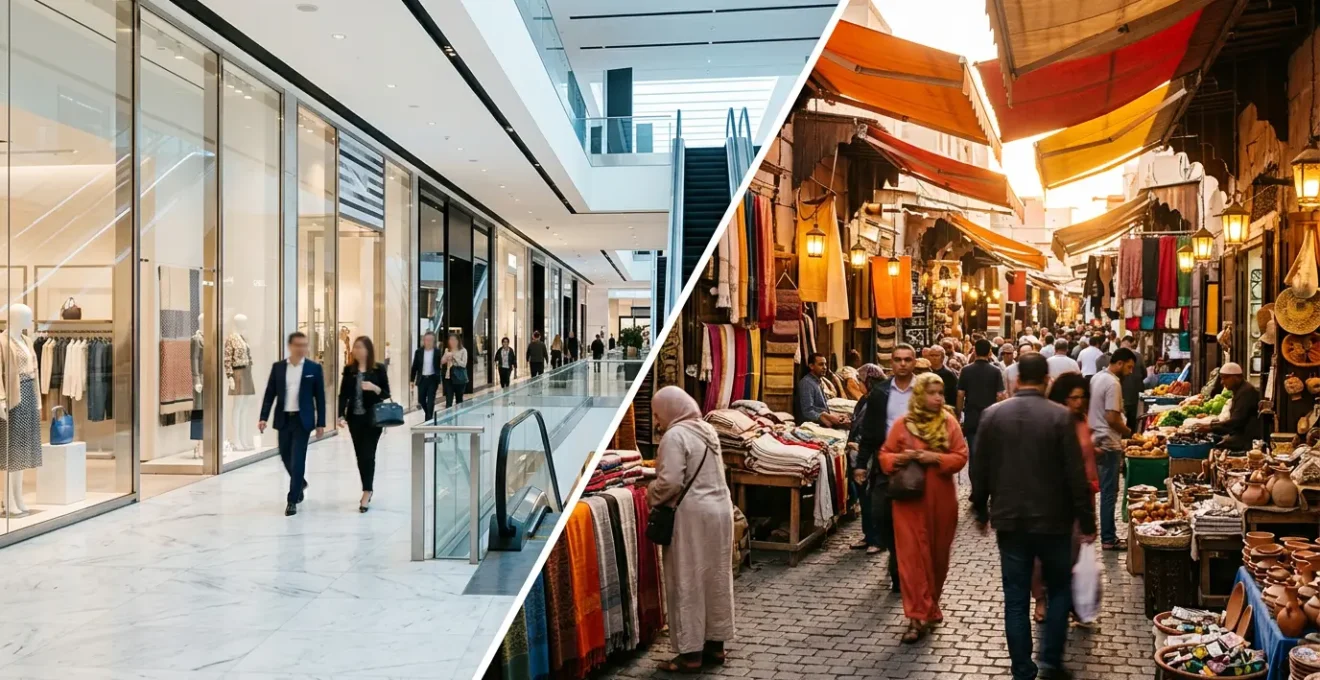
Mastering Hong Kong’s shopping scene isn’t about choosing between high and low; it’s about making them work together in a powerful ecosystem.
- Use malls as strategic “pit stops” for A/C, Wi-Fi, and storage while exploring markets.
- Learn to spot “quality arbitrage” where market finds offer the same material quality as branded items for a fraction of the price.
Recommendation: Adopt a “shopping ecosystem” mindset, where each environment serves a specific, strategic purpose in your retail adventure.
The allure of shopping in a city like Hong Kong presents a delicious dilemma. On one hand, you have the serene, air-conditioned halls of Pacific Place, where designer boutiques whisper promises of timeless elegance. On the other, the vibrant, chaotic energy of Temple Street Night Market pulls you in with the thrill of the hunt. For the dedicated shopaholic, the pressure to choose between high-glamour and high-grit can feel overwhelming. Conventional wisdom often presents a false dichotomy: malls are for investment pieces, and markets are for cheap souvenirs. This simplistic view misses the point entirely.
What if the real secret to conquering the retail landscape wasn’t about choosing, but about connecting? What if the polished luxury of a mall could become your secret weapon for navigating the delightful chaos of a street market? The most versatile and style-conscious shoppers understand that these two worlds are not in opposition. Instead, they form a symbiotic shopping ecosystem. By learning how to leverage the strengths of each, you can transform your shopping from a series of disconnected transactions into a holistic and strategic experience, maximizing both your budget and your enjoyment.
This guide will dismantle the old “high vs. low” debate and give you a new framework. We will explore how to allocate your budget intelligently, identify true quality regardless of the brand, and shift your mindset to thrive in both environments. You will learn to turn malls into strategic basecamps and master the art of negotiation, ensuring every purchase, whether from a gleaming flagship store or a humble market stall, adds true value to your collection.
Summary: Luxury Malls vs Street Markets: How to Balance High and Low Shopping?
- How to Allocate Your Budget Between Designer Goods and Market Finds?
- Brand Name vs No Name: When Is the Quality Actually the Same?
- How to Adjust Your Mindset From Air-Conditioned Malls to Sweaty Markets?
- The Mall Hack: Using Luxury Centers for Pit Stops During Market Tours
- Why Do Markets Open Late While Malls Stay Open Until 10 PM?
- How to Navigate Vertical Malls Without Getting Lost in Elevators?
- The Walk-Away Technique: Why Pretending to Leave Is Your Best Weapon?
- Tax-Free Shopping: How to Maximize Your Savings on High Street Fashion?
How to Allocate Your Budget Between Designer Goods and Market Finds?
The first step in mastering the shopping ecosystem is to abandon the idea of a single, monolithic budget. Instead, think like a portfolio manager. Your shopping funds should be divided into distinct pots, each with a different goal. This isn’t just about spending money; it’s about investing in your personal style and creating a collection of items that tell a story. The most effective approach is to separate your funds into an “Investment” pot for timeless luxury pieces and an “Experience” pot for the unique, ephemeral finds you’ll discover in markets.
The “Investment” pot is for that iconic handbag, those perfectly tailored trousers, or the classic watch—items whose quality and design will endure for years. These are your style anchors. The “Experience” pot, on the other hand, is for the thrill of discovery: the hand-painted fan from a stall in Stanley Market, the quirky vintage brooch, or the silk scarf from an unknown artisan. These items are valued not for their brand name but for their uniqueness and the memory they represent. Before any purchase, apply the “Story Value” test: what story will this item tell back home? This simple question helps prioritize purchases that have personal meaning over impulse buys.
A smart way to structure this is the 10-30-60 rule. Allocate 10% to one major luxury item, 30% to pieces from local designers or smaller boutiques often found in malls, and the remaining 60% to the crafts, accessories, and one-of-a-kind treasures from the markets. This ensures you get your coveted designer piece while leaving ample room for spontaneous and culturally rich discoveries.
Your Action Plan: Smart Budget Allocation Strategy
- Create two separate mental budgets: ‘Investment’ pot for timeless luxury pieces and ‘Experience’ pot for unique market finds.
- Follow the 10-30-60 rule: allocate 10% to one luxury item, 30% to local designer pieces from mall boutiques, and 60% to unique crafts from markets.
- Apply the ‘Story Value’ test before each purchase—ask yourself what story this item will tell back home.
- Plan major purchases further in advance to benefit from seasonal sales and promotions in malls.
- Use price comparison apps and alerts to find the best deals on branded goods in real-time, freeing up more of your budget for market exploration.
This disciplined yet flexible approach ensures you return home with a balanced collection that reflects both high-end craftsmanship and authentic local culture.
Brand Name vs No Name: When Is the Quality Actually the Same?
One of the most valuable skills for a versatile shopper is quality arbitrage—the ability to discern genuine quality, whether it’s presented in a velvet-lined box or on a dusty market table. Many shoppers mistakenly equate a high price tag or a famous logo with superior quality, but the truth is often more nuanced. While luxury brands build their reputation on consistency, the raw materials and construction techniques they use are not always exclusive. A savvy eye can often find non-branded items in a market that offer nearly identical quality, especially in materials and hardware.
To become adept at this, you need to engage your senses. Don’t just look at an item; feel it. Is the fabric weave tight and consistent? Does the leather smell rich and natural, or does it have a chemical odor? Test the hardware. Zippers on high-end bags are often heavy and smooth—brands like YKK are a good sign. Clasps should feel solid and close with a satisfying click. These are small tells that separate well-made items from their lesser counterparts. Stitching is another crucial indicator. Look for a high number of stitches per inch and check that stress points, like where a bag handle meets the body, are reinforced.
The following table provides a framework for assessing quality across different environments. Use it as a mental checklist to train your eye and hands to spot value wherever you find it. This objective analysis allows you to make decisions based on tangible quality rather than marketing hype, which is the true mark of a style expert.
This comparative approach is crucial for smart shopping, as highlighted in a detailed guide on professional shopping techniques that emphasizes looking beyond the label.
| Quality Aspect | Designer/Branded | Non-Branded Market Finds | How to Test |
|---|---|---|---|
| Materials | Consistent high-grade fabrics, genuine leather | Variable quality, sometimes identical materials | Check weave tightness, smell leather, test flexibility |
| Hardware | Heavy metal zippers (YKK), solid clasps | May use same suppliers or lighter alternatives | Test weight, listen to sound, check plating quality |
| Stitching | Reinforced stress points, straight seams | Quality varies by artisan skill | Count stitches per inch, check stress points |
| Longevity | Designed to last 5-10+ years | 1-5 years depending on craftsmanship | Check construction method (glued vs sewn) |
By focusing on these intrinsic characteristics, you empower yourself to find excellence everywhere, transforming you from a passive consumer into a discerning collector.
How to Adjust Your Mindset From Air-Conditioned Malls to Sweaty Markets?
Successfully navigating the shopping ecosystem requires more than just a good budget and a trained eye; it demands mental flexibility. The transition from the calm, curated environment of a luxury mall to the bustling, sensory overload of a street market can be jarring. This is where mindset shifting becomes a critical skill. Instead of seeing the market’s heat and crowds as a negative, reframe it as part of the authentic experience. The goal is to embrace the contrast, not resist it.
Preparation is key. Dress in light, breathable layers. Comfortable walking shoes are non-negotiable for cobblestone lanes and crowded alleys, but a light pashmina or cardigan is perfect to ward off the aggressive air-conditioning in the malls. Physically, this prepares you for the temperature swings. Mentally, you should plan your day around energy levels. A common strategy among seasoned travelers in destinations like Ho Chi Minh City is to tackle markets in the morning when energy is high and temperatures are lower. As the midday heat peaks, they retreat to a mall for a relaxed lunch, a cool-down, and some decision-free window shopping.
This approach treats the two environments as complementary. The mall becomes a haven, a place to recharge before another market excursion in the late afternoon or evening. It’s also wise to separate your purchasing decisions. Save high-consideration luxury buys for when you are mentally fresh and in a calm environment. Market shopping, which often involves quick decisions and bargaining, is best done in shorter, focused bursts. Set a time limit for each market section—say, 45 minutes—to prevent decision fatigue. This strategic rhythm prevents burnout and ensures you can enjoy the best of both worlds without feeling overwhelmed.
By consciously managing your energy and expectations, you can flow seamlessly between the grit and the glamor, finding joy in both.
The Mall Hack: Using Luxury Centers for Pit Stops During Market Tours
Here is where the “shopping ecosystem” concept truly comes to life. The smartest shoppers don’t just see malls as a place to buy things; they see them as a strategic pit stop or a basecamp for their market adventures. This “Mall Hack” transforms a luxury center from a mere retail destination into a vital support system that makes market exploration more efficient and enjoyable. Instead of viewing your day as “mall time” or “market time,” you integrate them into a single, fluid itinerary.
Imagine this: you’ve spent the morning at the Ladies’ Market and your arms are full of unique finds. Instead of heading back to your hotel, you walk a few blocks to a mall like Langham Place. There, you can take immediate advantage of several key amenities. First, use the mall’s lockers to store your market purchases, freeing your hands to continue shopping or to simply grab a coffee. Next, connect to the free, high-speed Wi-Fi to quickly research an item you saw in the market, check currency conversions, or even look up the last MTR train time. This empowers you with information, which is a key advantage in any shopping scenario.
Furthermore, malls offer a reliable and clean environment to recharge—both literally and figuratively. You can use their modern, well-maintained restrooms, find a comfortable seating area with charging stations for your devices, and refuel at a food court offering a wide variety of hygienic options with clear pricing. This strategic break allows you to reset and re-energize before heading back out to the night markets, turning a potentially exhausting day into a comfortable and well-managed excursion. The mall is no longer the opposite of the market; it’s its most valuable ally.
By leveraging these free and accessible resources, you shop smarter, stay comfortable longer, and ultimately have a more rewarding experience.
Why Do Markets Open Late While Malls Stay Open Until 10 PM?
Understanding the rhythm of a city’s retail life is essential for strategic shopping. The different operating hours of malls and markets aren’t arbitrary; they are driven by culture, climate, and consumer behavior. Malls in Hong Kong typically open around 10 or 11 AM and stay open until 10 PM, catering to both daytime shoppers and the after-work crowd in a climate-controlled environment. Markets, especially night markets like Temple Street, come alive much later, often starting in the late afternoon and running late into the night. This temporal difference creates a perfect opportunity for a full day of varied shopping if you plan accordingly.
The key is to align your shopping goals with the optimal time for each venue. Fresh produce markets are a morning affair, where you’ll find the best selection and witness authentic local life. Malls are ideal for the peak heat of the day (11 AM – 4 PM), offering a comfortable escape. This is the best time for browsing high-end goods or electronics, as weekday afternoons are often less crowded. As the “golden hour” approaches (5 PM – 8 PM), craft and souvenir markets begin to bustle. The atmosphere is magical, and vendors, anticipating the end of their day, may be more open to negotiation.
Finally, the late mall hours (8 PM – 10 PM) offer a unique advantage. The tourist crowds have thinned, allowing for more focused, pressure-free shopping. This is the perfect time to make a considered, big-ticket purchase you mulled over earlier. By understanding and respecting these distinct rhythms, you can move through the city’s retail landscape with purpose, always arriving at the right place at the right time.
This strategic timing is not just about convenience; it’s about value. An in-depth look at global market timings confirms that aligning your visit with the natural flow of a market enhances the entire experience.
| Time of Day | Best Venue Type | Advantages | What to Buy |
|---|---|---|---|
| 6-9 AM | Local produce markets | Freshest selection, authentic local life | Fresh food, flowers, local breakfast |
| 11 AM-4 PM | Shopping malls | Escape heat, fewer crowds on weekdays | Luxury items, electronics, branded goods |
| 5-8 PM | Craft/souvenir markets | Golden hour atmosphere, vendors ready to negotiate | Handicrafts, souvenirs, textiles |
| 8-10 PM | Malls (late hours) | Tourist crowds gone, focused shopping | Big-ticket items requiring consideration |
This temporal strategy ensures you’re always in the right shopping environment for your current mood and mission.
How to Navigate Vertical Malls Without Getting Lost in Elevators?
Hong Kong’s density has given rise to a unique architectural phenomenon: the vertical mall. Buildings like Times Square in Causeway Bay or Langham Place in Mong Kok are not sprawling horizontal complexes but towering stacks of retail floors. Navigating them can be a dizzying experience, with a confusing web of express elevators and crisscrossing escalators. Without a strategy, you can easily waste an hour just trying to find a specific store. The key is to think like an architect and approach the mall with a clear plan.
First, upon entering, locate the digital directory and take a screenshot on your phone. This becomes your personal, portable map. Then, apply the “Top-Down Gravity Method.” Instead of starting at the bottom and randomly ascending, take an express elevator directly to the top floor. From there, you can work your way down systematically using the escalators. This approach is more methodical, ensures you see every floor without backtracking, and provides a natural sense of progression. It turns a chaotic maze into a linear journey.
Before you even begin your descent, use your digital map to identify your 2-3 target “thematic floors.” Malls are often organized by category—Luxury & Beauty, Tech & Gadgets, Local Designers, etc. By pre-selecting your priority zones, you can move with purpose. Differentiate between the express elevators, which are for long jumps between distant floors, and the local escalators, which are for browsing floor-by-floor. Finally, and most importantly, before you step out of the MTR or your taxi, mark your entry point or parking level in your phone’s map app. After hours of vertical exploration, this simple trick will be your saving grace, guiding you back to your starting point effortlessly.
This structured approach transforms the overwhelming scale of a vertical mall into a manageable and enjoyable architectural adventure.
The Walk-Away Technique: Why Pretending to Leave Is Your Best Weapon?
Bargaining is a fundamental part of the market experience, but many shoppers approach it with apprehension. The most powerful tool in your negotiation arsenal isn’t aggressive haggling, but quiet confidence, embodied by the Walk-Away Technique. This psychological maneuver is less about being confrontational and more about demonstrating that you are a discerning buyer with a clear price limit. It’s a respectful way of communicating your final offer without further discussion.
As a Travel Guide Expert advises for Istanbul’s Grand Bazaar, a place with a similar bargaining culture, the general rule is to start by offering half the quoted price. This sets the stage for a negotiation that ideally meets in the middle. However, when you reach your absolute maximum price and the vendor won’t budge, it’s time to deploy the walk-away. With a polite smile, a simple “thank you,” and perhaps stating your final price one last time, you physically turn and begin to walk away. This action must be genuine; you have to be truly willing to leave the item behind. This detachment is what gives the technique its power.
Case Study: The Psychology of Bargaining at Chatuchak Market
At Bangkok’s sprawling Chatuchak Weekend Market, seasoned shoppers have perfected the walk-away. They report that vendors are most likely to call them back within the first 5-10 steps if they are willing to accept the offer. The technique’s success rate increases dramatically in the last hour before the market closes, as vendors are eager to make final sales and avoid packing up unsold inventory. The key to their success is setting a firm maximum price before even engaging with the vendor. For them, “winning” the negotiation means sticking to their limit, not necessarily acquiring the item at any cost.
The expert consensus is clear, as one authority on global markets states:
Bargaining is expected here; start by offering half the quoted price and negotiate from there.
– Travel Guide Expert, Istanbul Grand Bazaar Shopping Guide
If the vendor calls you back, you’ve succeeded. If they don’t, you’ve successfully stuck to your budget, which is a victory in itself. This technique shifts the power dynamic, positioning you as someone who values your money as much as you value their goods.
It’s a respectful, effective, and surprisingly low-stress way to ensure you always get a fair price.
Key Takeaways
- Adopt a “shopping ecosystem” mindset, using malls and markets as complementary parts of a unified strategy.
- Master “quality arbitrage” by learning to assess materials, hardware, and stitching to find value beyond the brand name.
- Use luxury malls as strategic “pit stops” to recharge, store purchases, and use amenities, making market tours more comfortable and efficient.
Tax-Free Shopping: How to Maximize Your Savings on High Street Fashion?
For the international shopaholic, one of the most significant advantages of purchasing luxury goods abroad is tax-free shopping. This isn’t just a minor discount; it’s a substantial saving that can make a big-ticket item significantly more affordable. In many countries, as a tourist, you are eligible to reclaim the Value-Added Tax (VAT) on your purchases, which can lead to significant returns. According to tax-free shopping experts, tourists can save up to 20% on their purchases, effectively giving you a major discount on brand-new, in-season items.
To maximize these savings, you need a strategy. The process requires diligence and organization. First, always look for stores displaying “Tax-Free” shopping logos in their windows. You must request the tax-free form at the time of purchase; it cannot be done retroactively. A crucial tip is to consolidate your purchases. Many schemes have a minimum spending threshold per receipt, so buying multiple items from a single large department store (like Selfridges in London or Galeries Lafayette in Paris) makes it easier to hit this minimum and manage your paperwork. Keep all your receipts and tax forms together in a dedicated travel envelope.
The final step happens at the airport and requires careful planning. You must have your forms validated by customs before you check your luggage, as officials may ask to see the high-value items. To avoid any issues, pack these goods in your hand luggage for easy inspection. While many travelers wait in long queues at the airport to get their refund, a smarter approach is to use downtown refund offices found in many major cities. These offices often provide an instant cash refund, allowing you to bypass the airport chaos. With a little organization, you can turn tax-free shopping from a confusing chore into a significant financial win.
Apply these tax-free strategies on your next trip to transform your high-street haul from a simple purchase into a smart, maximized investment.
Frequently Asked Questions on High and Low Shopping
What should I wear when planning to visit both malls and markets?
Dress in comfortable, breathable layers. Markets require walking shoes and light clothing that can handle crowds and heat. Carry a light jacket or pashmina for the powerful air-conditioning in malls.
How do I manage my energy between the two environments?
Set time limits per market section (30-45 minutes) to avoid burnout. Use malls for strategic breaks to rehydrate and cool down. Save decision-heavy luxury purchases for when you’re mentally fresh and in a calm setting.
Should I carry cash for markets and cards for malls?
Yes, this is the best practice. Carry small denomination cash for markets, where bargaining is common and cards are often not accepted. Keep your credit and debit cards for mall purchases, where they are universally accepted and often required for tax-free claims.