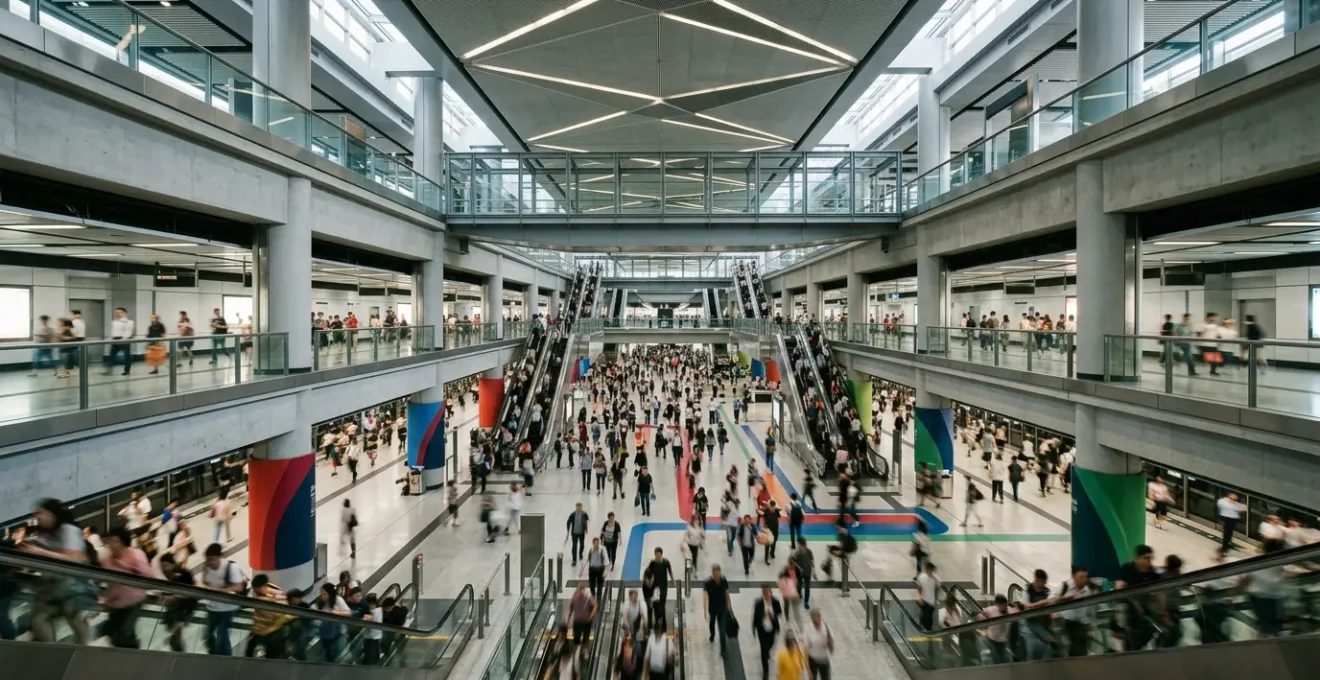
Mastering the Hong Kong MTR is not about reading a map; it’s about exploiting its interconnected systems for maximum time arbitrage.
- Strategic use of the In-Town Check-In service can grant you an entire luggage-free day before your flight.
- Choosing your train car based on your destination exit can eliminate up to 15 minutes of walking underground.
Recommendation: Treat every journey as a logistical puzzle to be solved, optimizing your position, fare, and luggage for peak efficiency.
The Hong Kong MTR is universally praised for its cleanliness, punctuality, and coverage. For the typical traveler, it’s an easy-to-use utility. But for the efficiency-focused, treating the MTR as merely “easy” is a critical error. The common advice—buy an Octopus card, download the app, avoid rush hour—scratches only the surface. It addresses basic usage, not system mastery. True efficiency isn’t found in following the crowd; it’s discovered in the seams of the system, in the micro-decisions that compound to save you not just seconds, but crucial 15-minute blocks of time.
This guide reframes the MTR from a simple mode of transport to a complex, interconnected system ripe for optimization. We will move beyond the platitudes and explore the strategic levers you can pull to weaponize its design for your benefit. This involves understanding the unspoken language of its station layouts, the economic calculus of its fare structures, and its powerful integration with airline travel. The goal is to transform your journey from a passive ride into an active exercise in logistical precision, enabling you to traverse this dense urban landscape with unparalleled speed.
By the end of this guide, you will understand how to leverage concepts like exit-level precision and pre-flight luggage disposal. You will learn to see the MTR not just as a way to get from A to B, but as the fundamental tool for reclaiming your most valuable asset: time.
This article deconstructs the MTR into a series of strategic components. The following sections provide a complete roadmap, from decoding station signage to leveraging its deep integration with air travel for ultimate efficiency.
Summary: The MTR System Mastery Blueprint
- How to Decode the Colorful Station Maps and Exit Guides?
- First Class vs Standard Car: Is the Extra Cost Worth It on the East Rail Line?
- The Snacking Mistake That Can Cost You a HK$2,000 Fine
- What Makes the In-Town Check-In Service a Game Changer for Departures?
- How to Choose the Right Exit to Save 15 Minutes of Walking?
- Why Being ‘Near the MTR’ Is the #1 Rule for Hotel Selection?
- How to Unlock Hidden Benefits of the Octopus Card Beyond the MTR?
- How to Use the In-Town Check-In Station to Dump Bags Early?
How to Decode the Colorful Station Maps and Exit Guides?
The first step to mastering the MTR is learning its native language: color. The system’s wayfinding is a masterclass in visual information design, but only if you know the rules. Each MTR line is assigned a unique, vibrant color—Island Line is blue, Tsuen Wan Line is red, and so on. This isn’t just for the map; this color-coding is woven into the very fabric of the stations. Following the ‘purple trail’ on the floor of an interchange station will physically guide you to the Tung Chung Line platform. It’s a navigational system designed to be followed subconsciously.
Beyond the lines, station maps are your primary tool for exit-level precision. At the concourse level, large-scale maps display not only the exits but also the specific streets, buildings, and landmarks each one serves. Ignoring these is a rookie mistake. Before ascending to street level, you must consult this map to match your final destination with the correct exit letter and number (e.g., ‘Exit A1’). A wrong choice at a major station like Central or Tsim Sha Tsui can easily add ten minutes of walking, often in challenging weather. The system provides all the information needed to make the optimal choice before you even tap your card to exit.
As the image highlights, the integration of color and texture is key. Brushed metal surfaces might indicate a primary path, while colored panels direct you toward a specific line. This tactile and visual language is consistent across the network. Learning to read these subtle cues transforms a confusing interchange into a simple, guided pathway. Your goal is to move from actively searching for signs to intuitively following the color-coded flow of the architecture itself.
Ultimately, a few seconds spent studying the map on the concourse level is an investment that pays significant dividends in time and energy once you are at street level.
First Class vs Standard Car: Is the Extra Cost Worth It on the East Rail Line?
The concept of a “First Class” car on a metro system can seem like an unnecessary luxury. However, on the East Rail Line—the critical artery connecting the city to the mainland border crossings at Lo Wu and Lok Ma Chau—it becomes a strategic tool for time and comfort arbitrage. The fare is exactly double the standard journey cost, a premium that requires clear justification. For a typical short journey, it’s rarely worth it. But for the full 45-minute trip to the border, especially during peak hours, the value proposition changes dramatically.
The primary benefit is a guaranteed seat in a quieter environment. During morning and evening rush hours, standard cars are often standing-room-only, making a long journey with luggage a stressful endurance test. First Class offers wider, more comfortable seating and a calmer atmosphere, allowing you to work, plan, or simply relax. This is a calculated trade-off: you are paying to convert stressful travel time into productive or restful personal time. The validation process is a crucial step; you must tap your Octopus card on a designated orange validator on the platform *before* boarding the First Class car. Failure to do so results in a hefty fine.
Cross-Border Traveler’s First Class Strategy
A business traveler regularly using the East Rail Line to the Lo Wu border crossing found First Class essential during morning rush hours (7-9am). With luggage and needing to be prepared for the border crossing, the guaranteed seating for the approximately 45-minute journey was paramount. The double fare (around HK$80 vs. HK$40) was justified by the ability to work on a laptop comfortably, effectively turning transit time into billable hours and avoiding the physical strain of standing in a crowded car.
This comparative analysis shows that First Class is a situational tool, not a universal upgrade. It’s a calculated decision based on journey length, time of day, and personal need for space and quiet.
| Feature | First Class | Standard Class |
|---|---|---|
| Cost | Double the standard fare | Regular MTR fare |
| Car Location | Always at northernmost end | Throughout the train |
| Seat Availability | Usually guaranteed during rush hour | Standing room only at peak times |
| Validation Required | Must tap Octopus at First Class processor before entering | Standard entry only |
| Fine for Non-compliance | HK$1,000 if caught without validation | N/A |
| Atmosphere | Quiet zone, no loud conversations | Regular commuter environment |
The decision to upgrade should therefore be a conscious one, weighing the monetary cost against the invaluable return of comfort, quiet, and personal space on long, critical journeys.
The Snacking Mistake That Can Cost You a HK$2,000 Fine
One of the most defining characteristics of the MTR is its immaculate cleanliness, a standard maintained by a strict set of rules. The most important of these for any traveler is the absolute prohibition on eating and drinking within the paid areas of the system. This includes all platforms and train carriages. The rule is not a mere suggestion; it is enforced. According to MTR bylaws, passengers face fines of up to HK$2,000 for eating or drinking.
This zero-tolerance policy catches many visitors by surprise. Even a quick sip of water is technically forbidden, although enforcement for water is often more lenient than for food or sugary drinks. The logic is simple: preventing spills and crumbs is the most effective way to deter pests and maintain the pristine environment the MTR is known for. For the efficiency-focused traveler, getting stopped and fined is a massive and entirely avoidable time sink. The system is designed with this in mind, providing ample opportunities to eat and drink *before* you enter.
The solution is to embrace the “unpaid area” as a designated zone for sustenance. Major stations like Central, Hong Kong, and Tsim Sha Tsui are integrated with vast shopping malls and food courts located just outside the ticket barriers. These areas are filled with bakeries, coffee shops, and convenience stores. The intended behavior is clear: finish all food and drink before you tap your Octopus card to enter the paid zone. This simple discipline ensures you comply with the rules and avoid any potential delays or financial penalties, keeping your journey frictionless.
Think of the ticket gates as a hard border for consumption. Once you cross it, your journey is for transit only. This mindset is key to navigating the MTR like a local and respecting the culture that keeps it one of the world’s best.
What Makes the In-Town Check-In Service a Game Changer for Departures?
The In-Town Check-In service is arguably the MTR’s most powerful tool for the efficiency-focused traveler, yet it remains surprisingly underutilized. Available at Hong Kong and Kowloon stations on the Airport Express line, this facility allows you to check your luggage and receive your boarding pass up to 24 hours before your flight. This isn’t a minor convenience; it’s a strategic move that fundamentally changes the entire dynamic of your departure day, transforming it from a logistical burden into a final, unencumbered day of exploration.
The process liberates you from your heaviest and most cumbersome possessions. Instead of dragging suitcases to a final tourist spot or guarding them in a cafe, you are completely free. This “frictionless travel” is the ultimate goal. You can spend your last day hiking Victoria Peak, exploring Stanley Market, or closing a business deal, all while your luggage is securely on its way to the airport. To access the check-in counters, you must have a valid Airport Express ticket, which serves as your entry pass. Once checked in, you are free to leave and return to the station just 90 minutes before your flight to take the 24-minute, traffic-free ride directly to the terminal.
Family Travel Strategy Using In-Town Check-In
A family of four with an 8 PM flight used the In-Town Check-In at Hong Kong Station to maximize their last day. At 9 AM, one parent used all four passports and Airport Express tickets to check in three large suitcases. This freed the entire family to enjoy a full day visiting Victoria Peak and Stanley Market without the stress and physical strain of managing luggage. They simply returned to the station at 6:30 PM for a relaxed journey to the airport, completely unburdened.
This service allows you to extract maximum value from your time in the city, effectively giving you back a full day that would otherwise be compromised by luggage logistics.
Your Action Plan: Maximizing Your Last Day with In-Town Check-In
- Check out of your hotel in the morning and proceed directly to Hong Kong or Kowloon Station with all your luggage.
- Purchase an Airport Express ticket for each traveler. This is required to access the check-in area.
- Proceed to your airline’s counter to check in your bags. This can be done from 24 hours up to 90 minutes before departure for most participating airlines.
- Receive your boarding passes and walk away, completely free of luggage for the rest of the day.
- Return to the station at least 90 minutes before your flight and take the 24-minute Airport Express journey directly to the airport terminal.
By shifting the check-in process from the airport to the city center, you are not just saving time; you are buying freedom. It’s the ultimate MTR hack for a seamless departure.
How to Choose the Right Exit to Save 15 Minutes of Walking?
In the vast, subterranean complexes of major MTR stations, the single most impactful micro-decision you can make is your choice of exit. This is where the casual tourist and the seasoned navigator diverge. A wrong turn in a station like Central, which has over a dozen exits leading to a sprawling network of underground walkways and adjacent buildings, can easily result in a 10-15 minute detour. Mastering exits is not about luck; it’s a deliberate, two-part strategy involving pre-planning your train car position and using station landmarks for orientation.
The first step happens before you even board the train. The MTR Mobile App and platform-level diagrams show which train cars will align most closely with the escalators leading to your desired exit at your destination station. Choosing to board car 2 instead of car 7 might mean you step off the train directly in front of the escalator you need, while others are forced to walk the entire length of the platform. This is exit-level precision: you are positioning yourself for success before the journey even begins. The second step is using the detailed concourse maps. These are your ground truth.
A regular commuter shares: ‘Once you’re at the concourse, you’ll see amazing street level maps with directions to key sights. I still take a photo of these maps every time I travel around Hong Kong. Even after all these years, it’s the easiest way to find your way back or navigate on foot once outside.’
– Commuter, Hong Kong Solo Travel
This simple act of photographing the map provides an external reference point once you emerge into the often-disorienting density of the city streets. It’s a low-effort, high-impact habit. During inclement weather—a frequent occurrence in Hong Kong—prioritizing exits with direct, climate-controlled underground connections to malls and office buildings is a pro-level move that saves you from both the elements and the crowds.
Here is a simple process to follow:
- Before Boarding: Use the MTR Mobile App to identify the optimal train car for your destination exit.
- On the Concourse: Do not follow signs blindly. Stop at the large area map to confirm your exit and its relation to your final destination.
- Take a Photo: Capture the street-level map with your phone for reference once you are outside.
- Prioritize Connections: In hot or rainy weather, check the map for exits that lead directly into buildings or covered walkways.
- Assess for Luggage: If you have heavy bags or a stroller, locate the lift (elevator) access on the map. It may be a slightly longer route but is often faster and far less stressful than navigating escalators.
By treating exit selection as a critical part of your journey planning, you convert wasted walking time into efficient, direct movement, arriving at your destination faster and with less frustration.
Why Being ‘Near the MTR’ Is the #1 Rule for Hotel Selection?
For the efficiency-focused traveler in Hong Kong, the phrase “near the MTR” on a hotel booking site is dangerously ambiguous. A five-minute walk to a station entrance is a world away from a hotel with a direct, underground connection. This distinction is the single most important factor in hotel selection, as it directly impacts your daily “last-mile agony”—the final leg of your journey from the station to your hotel room after a long day. Choosing a hotel with a direct, weather-proof connection is a strategic investment in comfort and time.
The value of this direct access cannot be overstated, especially given Hong Kong’s climate of intense summer heat and frequent, torrential rain. A hotel directly connected to a station exit via an underground passage or an integrated mall means you can travel from any point on the network to your room without ever being exposed to the elements. This eliminates the need for umbrellas, taxis in the rain, or trudging through humidity with luggage. It makes your entire journey seamless and climate-controlled. This premium access is a defining feature of top-tier hotels and a key justification for their pricing.
The Premium for a Direct MTR Connection
The Rosewood Hong Kong, connected to the K11 MUSEA shopping mall, offers guests direct underground access to Exit J of the Tsim Sha Tsui MTR station. Guests consistently report that this feature alone justifies the hotel’s premium price point. It transforms travel during a typhoon or a 35°C (95°F) day from a major ordeal into a non-issue, completely eliminating the ‘last-mile agony’ of navigating crowded, wet, or hot streets after a long day of sightseeing or meetings.
The different types of MTR access have a significant impact on your daily logistics. Understanding them allows you to make a more informed choice that aligns with your tolerance for friction.
| Access Type | Walking Time | Weather Protection | Examples |
|---|---|---|---|
| Direct Underground Connection | 0-1 minute | 100% covered | Hotels at IFC, K11 MUSEA |
| Adjacent Exit (street level) | 1-3 minutes | Minimal coverage | OTTO Hotel, Holiday Inn Golden Mile |
| Nearby Station | 5-10 minutes | No coverage | Most budget hotels |
| Connected via Footbridge | 3-5 minutes | Partial coverage | Hotels in Admiralty |
Ultimately, selecting your accommodation is the first step in optimizing your entire Hong Kong itinerary. Prioritizing a hotel with the best possible MTR connection is a strategic decision that pays dividends in time, comfort, and convenience every single day of your stay.
How to Unlock Hidden Benefits of the Octopus Card Beyond the MTR?
The Octopus card is the key to the MTR, but to see it as only a transit pass is to miss its true power. It is the city’s de facto digital wallet, a piece of ubiquitous technology that streamlines countless daily transactions. The system is so deeply integrated into the fabric of Hong Kong life that it is used by over 98% of residents aged 15-64. For an efficiency-focused traveler, leveraging the Octopus card beyond the MTR is essential for achieving a truly frictionless experience in the city.
Think of the Octopus card as your universal key to low-value, high-frequency payments. Its acceptance extends far beyond the MTR gates. You can use it to pay for:
- All other public transport: This includes the iconic trams (“ding dings”), buses, minibuses, and ferries to the outlying islands. No more fumbling for exact change.
- Retail Purchases: Virtually all convenience stores (7-Eleven, Circle K), supermarkets (Wellcome, ParknShop), and fast-food chains (McDonald’s, Cafe de Coral) accept Octopus. It’s perfect for grabbing a bottle of water or a quick snack.
- Vending Machines & Parking Meters: Tap-and-go payment for countless automated services across the city.
- Recreational Facilities: Entry to public swimming pools and sports facilities can often be paid for with an Octopus card.
This widespread acceptance means you can navigate most of your day with just this one card, minimizing the need to handle cash or wait for credit card transactions. You can top up the card with cash at any MTR station or convenience store, ensuring you’re always ready to go.
Furthermore, while most international credit cards are now accepted for direct entry at MTR gates, the Octopus card often provides slightly lower fares on certain routes and is essential for paying for other modes of transport like minibuses, which do not accept credit cards. It remains the most versatile and efficient payment method for anyone looking to move through the city with speed. The initial refundable deposit of HK$50 is a small price to pay for the immense convenience it offers.
By embracing the Octopus card as your primary payment tool for small daily expenses, you align yourself with the rhythm of the city and eliminate a significant source of transactional friction from your travels.
Key Takeaways
- System Mastery over Basic Usage: True efficiency comes from treating the MTR as a system to be optimized, not just a service to be used.
- Time Arbitrage is Key: Small investments in planning (choosing an exit) or cost (First Class, Airport Express) yield significant returns in time and comfort.
- Frictionless Travel is the Goal: Leverage tools like the Octopus card and In-Town Check-In to minimize physical and mental loads throughout your journey.
How to Use the In-Town Check-In Station to Dump Bags Early?
The In-Town Check-In service is the master-level move for any traveler departing from Hong Kong. While we’ve discussed its power to free up your last day, the truly strategic application lies in understanding how to “dump your bags” at the earliest possible moment to maximize your luggage-free time. This is not just about convenience on your departure day; it can influence your entire trip’s final 24 hours. The service is available at the Airport Express stations in Central (Hong Kong Station) and Kowloon, acting as satellite airport terminals in the heart of the city.
The key is the full 24-hour advance check-in window offered by many major airlines (like Cathay Pacific). This allows for powerful logistical plays. For example, if you have an 8 AM flight, you can check your large suitcases at 8 AM on the *day before* your departure. This single move liberates you from your luggage for two full days of activity. You can enjoy your last evening, stay overnight in your hotel with only a small carry-on, and wake up on your departure day completely unburdened, proceeding directly to the airport without any luggage to manage.
The 24-Hour Advance Check-In Strategy
A business traveler with a 9 AM flight to London used this strategy to perfection. The day before their flight, after morning meetings, they went to Hong Kong Station at 11 AM. They checked in their large suitcase for the next day’s flight, freeing them up completely. They were able to attend an evening banquet in Tsim Sha Tsui and return to their hotel in Central without any luggage. The next morning, they simply traveled to the airport with their briefcase, bypassing all check-in and bag-drop queues at the airport itself.
When you analyze the cost and time, the value of this strategy becomes even clearer. The price of an Airport Express ticket is a small investment compared to the cost of a taxi and, more importantly, the freedom it buys you.
This cost analysis from a recent transportation guide shows the clear advantage of the In-Town Check-In strategy when factoring in the value of luggage-free hours.
| Option | Cost (HKD) | Time to Airport | Luggage-Free Hours |
|---|---|---|---|
| In-Town Check-In + Airport Express | $115 (from Hong Kong Station) | 24 minutes | Up to 24 hours |
| Taxi Direct | $350-450 | 35-60 minutes | 0 hours |
| Airport Bus | $40-55 | 60-90 minutes | 0 hours |
| Hotel Luggage Storage + Airport Express | $115 + storage fee ($50-100) | 24 minutes | Until hotel checkout |
Begin planning your departure day not around your flight time, but around the moment you can strategically offload your luggage. This shift in mindset is the final step to achieving true MTR and Hong Kong travel mastery.
Frequent questions on Navigating the MTR: How to Reach Any District in Under 45 Minutes?
Is drinking water allowed on the MTR?
Technically no – even water is prohibited in paid areas and trains, though enforcement for plain water is typically less strict than for food or other beverages
Where can I eat before entering the MTR?
Most major stations have food courts, bakeries, and convenience stores in the unpaid areas before the ticket gates
What other behaviors can result in fines?
Playing music without headphones, carrying oversized luggage during peak hours, or placing feet on seats can also result in HK$2,000 fines