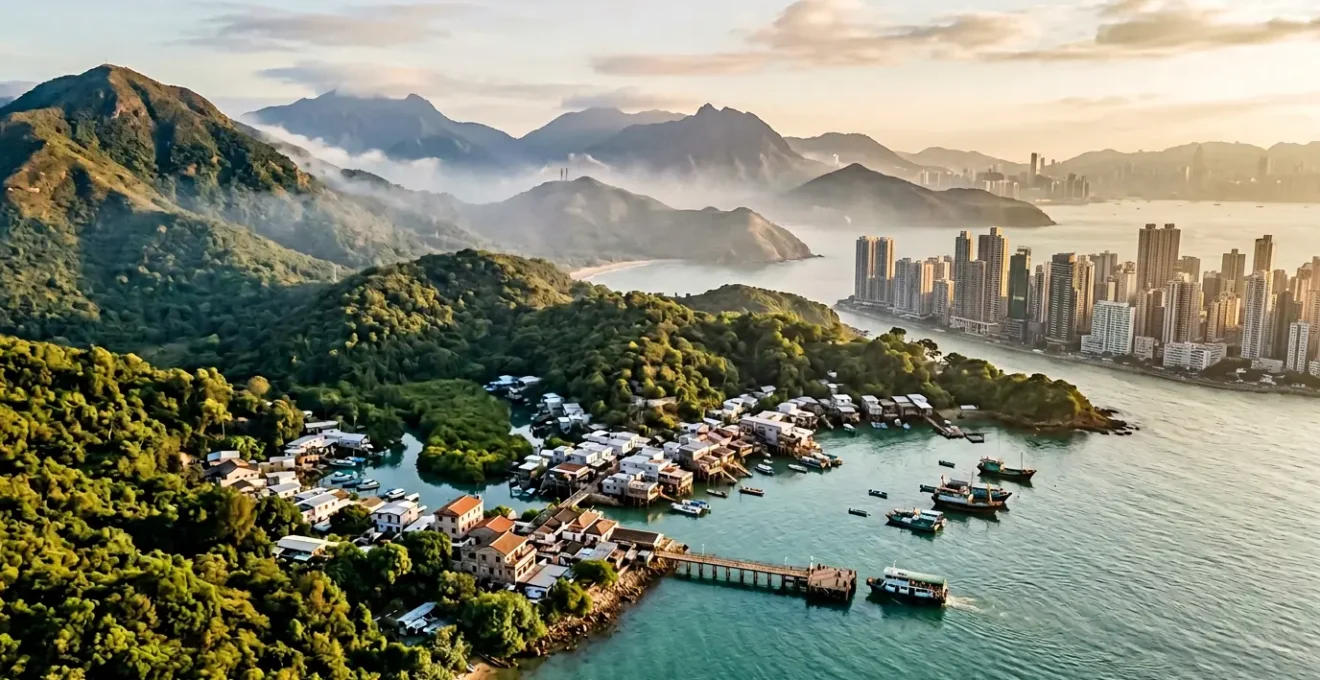
Choosing between Lantau and Sai Kung isn’t just a location choice—it’s a decision about the very rhythm and sensory experience of your escape.
- Sai Kung offers a vibrant, community-oriented nature experience but comes with a demanding commute that shapes your daily life.
- Lantau provides a deeper, almost spiritual disconnection, but its profound silence can be surprisingly challenging for urbanites to adapt to.
Recommendation: Instead of just comparing activities, first define the type of quiet and the daily rhythm you truly need to recharge.
The hum of air conditioners, the perpetual glow of neon signs, the sheer density of humanity—for many, this is the pulse of Hong Kong. But for a nature lover, it can feel like a constant, low-grade stressor. The common advice is to take a day trip, hike a trail, or visit an outlying island. These are temporary fixes, small gasps of air before plunging back into the urban deep. But what if the goal isn’t just a brief escape, but a fundamental shift in your daily environment? What if you could trade the city lights for a canopy of stars every night?
This is the promise of living in Hong Kong’s greener territories, specifically areas like Lantau Island and Sai Kung. Yet, the decision is more complex than simply looking at a map. Choosing between these two iconic green sanctuaries is not about which has better beaches or more famous hiking trails. It’s about consciously selecting a new rhythm for your life, a different sensory texture that will redefine your relationship with the city you’re trying to escape. The real choice lies in understanding the subtle, yet profound, differences in their character, accessibility, and the psychological space they create.
This guide moves beyond the surface-level comparisons. We will dissect the reality of the daily commute, the unique character of accommodations, the wildlife you’ll share your home with, and even the surprising psychological impact of true silence. By understanding these deeper dimensions, you can make an informed choice that aligns not just with your love for nature, but with the very pace and feel of the life you want to lead.
To help you decide which green sanctuary best suits your needs, this article explores the crucial aspects that define life outside the city center. From historic hotels to the realities of coexisting with nature, we’ll cover the key questions you should be asking.
Contents: Choosing Your Hong Kong Green Sanctuary
- Staying at the Tai O Heritage Hotel: How to Book This Ex-Police Station?
- The Commute Reality: How Long to Reach Central From Sai Kung?
- Where to Find Luxury Glamping Options With Air Conditioning?
- Mosquitos and Cows: What to Expect When Staying Rural?
- Why the Silence of Lamma Island Can Be Unsettling for City Dwellers?
- Why Hong Kong Preserves 40% of Its Land as Country Parks?
- Why the Archipelago Offers the Best Relief from Urban Stress?
- Why Tai O Fishing Village Is Disappearing and When to Visit Before It Changes?
Staying at the Tai O Heritage Hotel: How to Book This Ex-Police Station?
For those seeking a stay steeped in history and character, few places in Hong Kong can rival the Tai O Heritage Hotel. This isn’t just accommodation; it’s a piece of living history. Housed in the beautifully restored Old Tai O Police Station, built in 1902, the hotel offers a profound sense of place that a modern building simply cannot replicate. Its colonial architecture, complete with arches and verandas, stands in stark contrast to the traditional stilt houses of the surrounding fishing village, creating a unique cultural dialogue.
Staying here is an immersive experience. Waking up to the sounds of the village and the sea, rather than traffic, is a core part of its appeal. The hotel has only nine rooms, making it an exclusive and peaceful retreat. This scarcity, however, means booking requires forethought. Demand is high, with prices often ranging from $125 to $166 per night and bookings needed well in advance, especially for rooms with coveted sea views.
To secure a room, it’s essential to plan ahead. The hotel often requires full payment within 48 hours for early bookings made more than 30 days out. For a truly special experience, consider timing your visit to avoid peak local holidays when the village can be crowded with day-trippers. Arriving via the water shuttle from the ferry pier to the hotel’s private dock adds another layer to the sense of escape, making you feel as if you’ve journeyed back in time. If the hotel is fully booked, the nearby Espace Elastique B&B offers a charming alternative, maintaining that intimate, village feel.
The Commute Reality: How Long to Reach Central From Sai Kung?
The romantic vision of a rural home—waking up to birdsong, enjoying a coffee overlooking green hills—is powerful. But this dream is tethered to a daily reality: the commute. For anyone still tied to an office in the city, understanding the journey is not a logistical footnote; it is the single most defining factor of your new lifestyle. The commute dictates your daily rhythm, influences your social life, and shapes your energy levels. It’s the price of admission for your green sanctuary.
Sai Kung and Lantau offer vastly different commuting experiences. Sai Kung, a vibrant town known for its strong community of locals and expats, is a haven of cute shops, great restaurants, and endless hiking trails. However, it has no MTR connection. The journey to Central during peak hours involves a combination of minibus or bus followed by the MTR, often taking a grueling 90 to 120 minutes with little chance of getting a seat. This daily grind can erode the very peace you moved to find.
Lantau, on the other hand, offers more varied and often more civilized options. From Tung Chung, the MTR ride to Central is a manageable 45-60 minutes. From Mui Wo, the ferry provides a far more pleasant alternative. The journey is a consistent 55 minutes, and it offers a seated, scenic experience that allows you to read, work, or simply watch the islands drift by. This physical and mental separation is a crucial part of the island-living appeal.
This table breaks down the hard numbers, but remember to factor in the qualitative experience—standing crushed in a bus versus sitting with a sea view is a world of difference.
| Route | Peak Hours (8AM) | Off-Peak (11AM) | Cost (HKD) | Comfort Level |
|---|---|---|---|---|
| Sai Kung to Central | 90-120 min | 60-75 min | $30-45 | Low (standing room) |
| Lantau (Tung Chung) to Central | 45-60 min | 30-40 min | $23-28 | Medium (MTR) |
| Mui Wo Ferry to Central | 55 min | 55 min | $15-30 | High (seated, scenic) |
A Sai Kung resident might tell you the trade-off is worth it for the “greater sense of connection between expats and locals,” but you must honestly assess if your tolerance for travel matches that sentiment. As one resident noted in a feature on living in the area, the town has a unique grit and charm that makes it a beloved destination, but living there is a different commitment.
Where to Find Luxury Glamping Options With Air Conditioning?
For the nature lover who isn’t quite ready to part with modern comforts, glamping (glamorous camping) presents a perfect compromise. It offers the immersion of being outdoors—the starry nights, the sound of cicadas, the fresh air—without the discomfort of traditional camping. In Hong Kong’s humid climate, the single most coveted amenity is, without a doubt, air conditioning. This feature transforms a potentially sweaty, restless night into a comfortable, rejuvenating sleep, making nature accessible to a wider audience.
While Hong Kong isn’t known for a vast glamping scene like other destinations, dedicated and luxurious options do exist, you just need to know where to look. These are not typically found in the 25 official government-run campsites, which are bare-bones. Instead, luxury glamping is the domain of private farms and dedicated adventure parks. Places like Saiyuen Camping & Adventure Park on Cheung Chau have pioneered this, offering themed tents, from Mongolian gers to stargazing domes, many equipped with air conditioning.
To find these hidden gems, your search should focus on keywords like “private campsite Hong Kong,” “glamping Hong Kong,” or “caravan park.” Many are located on Lantau Island and Cheung Chau, leveraging their space and natural beauty. These sites often offer more than just a comfortable tent; they provide a curated experience with on-site activities like kayaking, archery, or organic farming workshops. The “luxury” aspect extends beyond AC to include proper beds, private bathroom facilities, and sometimes even BBQ pits or small kitchenettes. It’s the ideal way to test the waters of rural living before fully committing.
Mosquitos and Cows: What to Expect When Staying Rural?
Trading the concrete jungle for a green one means accepting a new set of neighbours, and they aren’t always quiet. Life in rural Hong Kong is an intimate dance with nature in its most unfiltered form. This means embracing the presence of creatures great and small, from the buzzing mosquito to the placid water buffalo. For a city dweller, this can be the biggest adjustment, turning a romantic ideal into a daily reality check. Seeing these animals not as pests or obstacles, but as integral parts of the ecosystem, is the first step toward truly belonging.
The most persistent companions will be insects. Hong Kong’s mosquitos are notorious, and in rural areas, they are joined by sandflies (midges), which are smaller and can get through standard nets. High-quality, fine-mesh screens on all windows and doors are not a luxury; they are a necessity. Beyond defence, you learn to coexist, using natural repellents like citronella and accepting that the small, chirping house geckos on your walls are your most effective form of pest control.
Larger animals also define the landscape. The feral cattle and water buffalo of Lantau and Sai Kung are iconic, gentle giants that roam freely. While beautiful, they require respect and distance. Learning not to startle them, giving them a wide berth, and never walking directly behind them are unwritten rules of rural life. Similarly, the presence of wild boars means that rubbish must be secured in sealed, often metal, containers to prevent nightly raids. This isn’t an inconvenience; it’s a rhythm of life dictated by the wild.
Your Practical Guide to Coexisting with Rural Wildlife
- Fortify Your Home: Install fine mesh screens on all windows and doors. Standard mosquito nets are not enough to stop the tiny but fierce sandflies.
- Respect the Herd: Always keep a 5-meter distance from feral cattle and water buffalo. Never approach them from behind or make sudden movements.
- Secure Your Waste: Store all rubbish in tightly sealed metal containers. Wild boars are intelligent and persistent foragers who can easily get through plastic bags or bins.
- Create a Natural Barrier: Plant citronella, lavender, or mint around outdoor seating areas. These plants act as natural insect repellents and add to the garden’s aroma.
- Welcome Your Allies: Accept house geckos as part of the household. They are harmless to humans and are voracious predators of mosquitos and other insects.
Why the Silence of Lamma Island Can Be Unsettling for City Dwellers?
When you dream of escaping the city, you dream of peace and quiet. You imagine a serene silence broken only by birdsong or the lapping of waves. But the reality of that silence can be profoundly unnerving. Lamma Island, with its complete absence of cars and its quiet, meandering pathways, is the ultimate test of this adjustment. For a brain conditioned by the constant, low-frequency hum of an urban environment, the sudden absence of this auditory backdrop can trigger a surprising response.
This phenomenon is recognized by psychoacoustics experts. The city’s noise—the distant traffic, the collective hum of air conditioners, the muffled sounds from neighbours—acts as a form of ‘white noise’. We become so accustomed to it that we don’t even notice it’s there, until it’s gone. As one urban psychoacoustics researcher noted, “The brain, accustomed to the constant, low-frequency hum of a city, can interpret the absence of this ‘white noise’ as anxiety or unease.” This can manifest as a feeling of restlessness, an inability to concentrate, or a heightened awareness of every tiny sound—a creaking floorboard, a buzzing fly—that was previously masked.
This isn’t a sign of failure, but a necessary phase of sensory acclimatization. It’s your brain recalibrating to a natural soundscape. The key is to lean into the experience rather than fighting it. Instead of filling the silence with music or podcasts, the goal is to learn to listen again. This means consciously identifying the new sounds that make up your environment: the wind in the trees, the different types of insect calls, the distant clang of a ferry bell. It’s a practice in mindfulness, a slow re-tuning of your senses.
For those struggling with the transition, a gradual “sensory acclimatization program” can help ease the process:
- Day 1: Take a 30-minute walk without any electronic devices or headphones. Just walk and observe.
- Day 2: Find a spot by the water and sit for 15 minutes, doing absolutely nothing but listening.
- Day 3: Actively try to identify and name three distinct natural sounds in your immediate environment.
- Day 4: Practice ‘mono-tasking’ for the entire day. Focus on doing only one thing at a time, without background noise.
- Day 5: Try sleeping with the windows open to the natural night sounds, rather than relying on a white noise machine or fan.
Why Hong Kong Preserves 40% of Its Land as Country Parks?
One of the most astonishing facts about Hong Kong, a city renowned for its verticality and density, is that it is also a city of immense natural wealth. This is not an accident of geography but a deliberate, long-term policy decision. The fact that Hong Kong preserves a staggering 440 km², or 40% of its total land area, as protected country parks is a testament to the government’s understanding of a fundamental human need: the need for an escape valve. These parks are the city’s lungs and its collective backyard.
This extensive network of green space was formally established with the Country Parks Ordinance in 1976. The legislation was a visionary move to create a legal framework for designating and managing these areas for conservation and recreation. It established a board to advise the government on all matters related to the parks, ensuring their protection for generations to come. Today, a total of 25 country parks form a vast, interconnected web of trails, reservoirs, and protected habitats, easily accessible from the urban core.
This commitment to preservation has created a unique urban dynamic. Nowhere else in the world is the boundary between hyper-urban development and wild, untamed nature so stark and so accessible. You can leave your office in Central and, within an hour, be standing on a mountain ridge with the city sprawling beneath you like a circuit board. This duality is the very essence of Hong Kong’s identity. For the nature lover, it means that choosing a rural base isn’t about leaving the city behind entirely; it’s about repositioning yourself to better access these incredible green assets that have been intentionally safeguarded for you.
Why the Archipelago Offers the Best Relief from Urban Stress?
While Sai Kung offers a land-based escape, the true antidote to Hong Kong’s urban intensity may lie across the water. The territory is not just one island; it’s an archipelago of more than 250 islands, each offering a unique flavour of retreat. Opting for an island stay on Lantau, Lamma, or Cheung Chau provides a form of relief that a mainland escape cannot fully replicate, thanks to a powerful psychological phenomenon: the ferry ride.
The simple act of boarding a ferry and crossing a body of water creates what one writer for National Geographic aptly called a “psychological moat” between work and life. This journey enforces a mental and physical disconnect that is almost impossible to achieve when your home is connected by roads and tunnels. The chug of the engine, the salty spray, and the receding skyline are a daily ritual that washes away the stresses of the city. It’s a forced pause, a moment of transition where you can’t check emails or run errands. You are simply in-between, and that state is incredibly restorative.
As travel writer Andy Choi explained in National Geographic Traveller, this barrier is what defines the island experience:
The physical act of taking a ferry creates a powerful psychological ‘moat’ between work and life, enforcing a mental disconnect that’s impossible to achieve when living on the mainland.
– Andy Choi, National Geographic Traveller
This daily ritual reinforces a healthier work-life boundary. When you’re on the island, you’re home. When you’re in the city, you’re at work. The commute, rather than being a source of stress, becomes a vital part of your well-being. This is why for many, the islands offer a more profound and sustainable form of relief from urban pressure. It’s not just a change of scenery; it’s a change in the fundamental structure of your day.
Key Takeaways
- The choice between Lantau and Sai Kung is about selecting a lifestyle ‘rhythm,’ not just a location.
- The daily commute is not a minor detail; it is the single most defining factor of the rural Hong Kong experience.
- True disconnection involves embracing both nature’s beauty and its inherent challenges, from wildlife to profound silence.
Why Tai O Fishing Village Is Disappearing and When to Visit Before It Changes?
A stay in rural Hong Kong is not just an escape; it’s a chance to connect with the territory’s deep-rooted heritage. Nowhere is this more poignant than in Tai O, the historic fishing village on Lantau Island. Visiting or staying here is an opportunity to step into a living museum, a community whose way of life has remained remarkably unchanged for centuries. The iconic pang uk, or stilt houses, are inhabited by descendants of the ancient Yueh tribe, Hong Kong’s original settlers. But this precious heritage is fragile and facing existential threats.
The very foundations of the village are at risk. The 200-year-old stilts that support the homes are vulnerable to typhoons and the relentless march of time. More profoundly, the traditional fishing lifestyle that sustained the village is fading. Younger generations are moving to the city for education and opportunities, leaving an aging population to maintain the old ways. The vibrant market streets, famous for their drying salted fish and handmade shrimp paste, are a sensory link to the past, but the knowledge behind these crafts is disappearing with each passing year.
Visiting Tai O now is a chance to experience this culture before it transforms forever. However, as a visitor, you have a responsibility to do so sustainably and respectfully. This means seeing the village not as a theme park, but as a living community. It’s about supporting the local economy in a way that honours its heritage rather than overwhelming it. Choosing to visit on a weekday, for instance, reduces the strain on the small village’s infrastructure.
To be a responsible visitor, consider these simple actions:
- Prioritize family-run businesses when buying traditional shrimp paste or dried seafood.
- Take photographs respectfully, being mindful not to intrude on the private lives of residents.
- Support establishments like the Tai O Heritage Hotel, which actively employs local staff and contributes to preservation.
- Engage with local elders; even learning a few basic Tanka dialect greetings can show immense respect.
Now that you understand the different rhythms of escape, the next step is to experience one for yourself. Go for a day, stay for a weekend, and listen to what the silence—or the cicadas—tells you about the pace of life you truly desire.