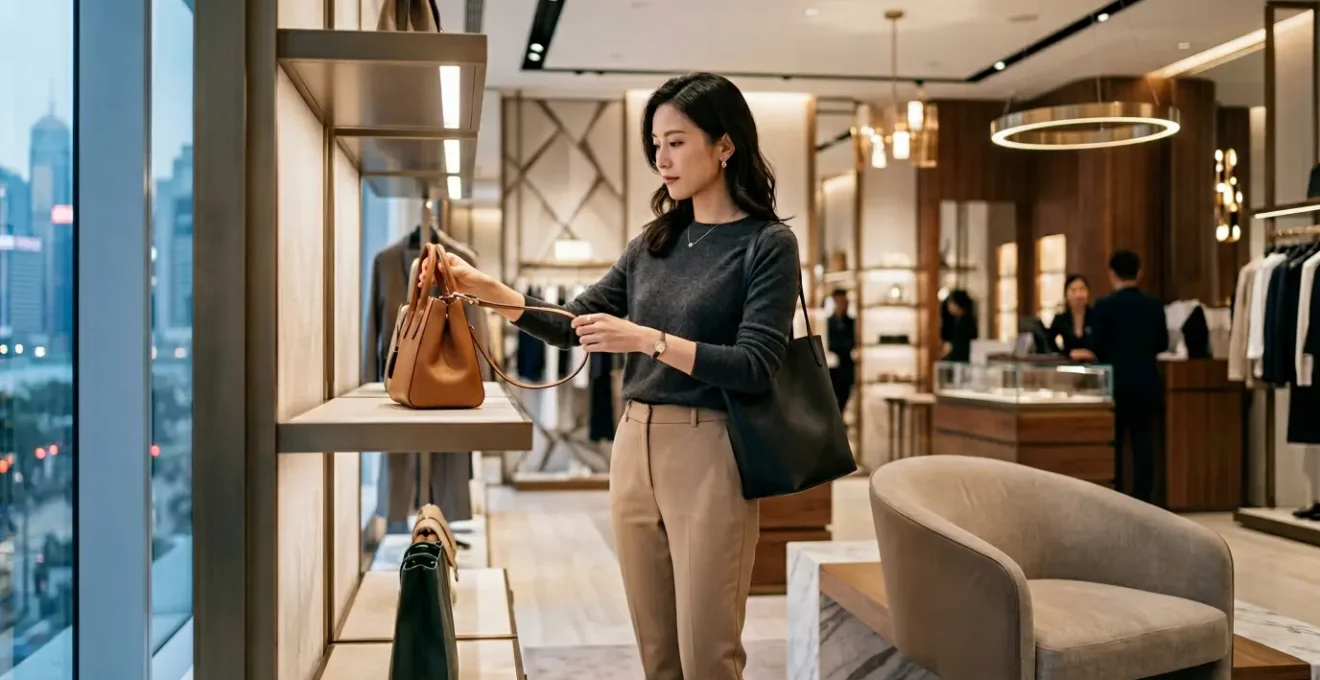
Hong Kong’s tax-free status is a trap for the uninformed; true savings on fashion are unlocked through strategic timing and understanding local retail rules, not just the absence of VAT.
- Outlet discounts (30-70%) must be weighed against travel time and past-season stock.
- Sale items are almost always final sale—the ‘No-Refund Doctrine’ is strict and legally supported.
Recommendation: Mastering Asian sizing, targeting local brands, and pre-calculating handbag costs are non-negotiable steps for maximizing your budget.
The words “Hong Kong” and “shopping” are practically synonymous, sparking images of gleaming malls and bags filled with tax-free treasures. As a fashion lover, you’ve likely heard the legend: a city with no sales tax or VAT, making it a paradise for refreshing your wardrobe. While this is true, it’s only the surface of the story. Many tourists arrive expecting automatic savings, only to return home with purchases that weren’t as good a deal as they seemed, or worse, don’t fit and can’t be returned. They fall for the common platitudes: just show up during the sales and buy, buy, buy.
But what if the real key to maximizing your budget wasn’t the absence of tax, but a deeper, more strategic approach? This is the perspective of a stylist and budget maximizer. The most significant savings aren’t found by chance; they are engineered. They come from understanding the subtle arbitrage of time versus discount, the non-negotiable cultural norms of retail, and the practical realities of a market designed for a different body type. This is not just a shopping guide; it’s a strategic playbook.
We’ll deconstruct the myths and give you a tactical edge. We will analyze the real value of outlet malls, decode the city’s strict refund policies, pinpoint the true sales seasons, and provide a masterclass in navigating sizing. Forget being a tourist shopper; it’s time to become a tactical investor in your style.
This guide provides a complete framework for turning your Hong Kong shopping trip into a masterclass in budget maximization. Explore the sections below to build your strategy.
Summary: A Strategic Guide to Hong Kong’s Tax-Free Fashion Scene
- Is the Trek to Citygate Outlets Worth the Time for Discounts?
- The Refund Mistake: Why You Cannot Return Sale Items in HK?
- When Do the Summer and Winter Sales Actually Start?
- Fitting Room Reality: How to Navigate Asian Sizing Standards?
- Which HK Fashion Brands Should You Buy That Are Tax-Free?
- Price Check: Are Handbags Actually Cheaper Given the Exchange Rate?
- Shopping Summer or Hiking Autumn: Which Season Fits Your Goal?
- How to Pack for Hong Kong’s Unpredictable Micro-Climates?
Is the Trek to Citygate Outlets Worth the Time for Discounts?
The first question every bargain hunter asks is about Citygate Outlets. Located near the airport on Lantau Island, it promises a haven of designer discounts. The primary allure is the promise of deep, year-round price cuts. For instance, official guides highlight that Citygate Outlets features year-round discounts of 30% to 70% on a host of international brands. This sounds like a guaranteed win, but a true budget maximizer doesn’t just look at the discount percentage; they calculate the total cost of acquisition.
This is a classic case of value arbitrage. You must weigh the monetary savings against the time investment. A trip from Central on the MTR can take nearly 40 minutes each way, consuming a significant portion of your shopping day. While the brands are plentiful, the stock is almost exclusively from previous seasons. If you’re hunting for a specific item from the current collection, you won’t find it here. The environment is also a factor; while less crowded on weekdays, it can be overwhelming on weekends, diluting the premium shopping experience you might find in the city center.
To make a tactical decision, you need a clear comparison. The real value depends entirely on your goals: are you hunting for any bargain from a good brand, or are you seeking the latest trends?
The following table, based on a comprehensive value analysis, breaks down the trade-offs to help you decide if the trek aligns with your shopping strategy.
| Shopping Aspect | Citygate Outlets | Central/TST Malls |
|---|---|---|
| Discount Range | 30-70% year-round | 0-30% (seasonal sales only) |
| Travel Time from Central | 37 minutes via MTR | 0-15 minutes |
| Brand Selection | 150+ outlet brands | 500+ full-price brands |
| Stock Type | Previous seasons | Current collections |
| Shopping Environment | Less crowded weekdays | Always busy |
The Refund Mistake: Why You Cannot Return Sale Items in HK?
Here is the most critical piece of advice a stylist can give you for shopping in Hong Kong: operate under the assumption that every purchase is final. This is especially true for sale items. Unlike the generous return policies common in North America or Europe, Hong Kong retail culture is built on a “buyer beware” foundation. A simple change of mind is almost never a valid reason for a return or even an exchange. This isn’t just a store policy; it’s a deeply ingrained market norm.
The legal framework supports this reality. Hong Kong law primarily protects consumers against faulty goods or misrepresentation, not buyer’s remorse. As research from the Legislative Council highlights, Hong Kong has no specific legislation mandating cooling-off periods or customer-friendly return policies seen in other regions. This firm stance is what I call the No-Refund Doctrine. Before you pay, you must be 100% certain. This means meticulously checking the garment for defects, trying it on carefully, and visualizing how it fits into your existing wardrobe. The moment your card is charged, the item is yours for good.
The Hong Kong government itself advises consumers to be cautious. As the Home Affairs Department clearly states in its official guide for residents and visitors:
Return policy varies with stores and trades. In most cases, only defective goods can be returned for exchange. So don’t expect to exchange or return a product simply because you change your mind after the purchase.
– Hong Kong Home Affairs Department, Your Guide to Services in Hong Kong – Consumer Rights
When Do the Summer and Winter Sales Actually Start?
Timing is everything in tactical shopping. While Hong Kong’s tax-free status provides a baseline discount, aligning your trip with the major sales seasons can amplify your savings exponentially. The two main periods are the Summer Sale and the Winter Sale. However, unlike fixed holidays, their start dates are fluid and follow a predictable crescendo. You don’t just show up in July; you aim for the sweet spot.
- Summer Sale: This typically kicks off in late June and runs through August. The early phase (late June to mid-July) sees modest discounts of around 30%. The real action happens from late July to late August, when discounts can plunge to 50-70% as retailers clear stock for autumn collections.
- Winter Sale: The winter markdown begins after Christmas, from late December through to Chinese New Year (usually late January or early February). This is arguably the biggest sale of the year, with massive crowds and deep discounts on everything from winter coats to luxury accessories.
The current retail climate may also play in your favor. When the market is soft, retailers are often more aggressive with their markdowns to stimulate demand. For example, recent data shows an 8% decline in retail sales in Hong Kong from January to August 2024. For a savvy shopper, a cooling market can signal an opportunity for even better-than-usual bargains during the established sales periods. Stay agile and watch for early signs of deep discounts.
Fitting Room Reality: How to Navigate Asian Sizing Standards?
You’ve found the perfect dress at a 70% discount, but there’s a catch: it’s a size “L” and you’re usually a “S”. Welcome to the most practical challenge of shopping in Asia: sizing. The “No-Refund Doctrine” we discussed makes a mistake here costly. Achieving sizing literacy is not just a recommendation; it’s a financial necessity. Asian sizing standards are fundamentally different from Western ones, generally running one to two sizes smaller. A European ‘Medium’ is often an ‘XL’ in a local Hong Kong or Japanese brand. The cut is also different, designed for a different body type with narrower shoulders and often shorter torso and limb lengths.
The fitting room is your sanctuary and your single point of truth. Never buy clothing without trying it on first. For a seamless experience, you need a strategy. Forget the letter on the tag and focus on the fit. Here are the three most critical tactics for success:
- Arm Yourself with Data: Before you leave home, take your key measurements (bust, waist, hips, inseam) in centimeters. Save them on your phone. This is a universal language that can cut through any confusion. You can compare your numbers directly to the size charts often found on tags or by asking staff.
- Embrace the “Size Up” Mentality: As a rule of thumb, start by grabbing a size or two larger than you normally would. Don’t let ego get in the way; it’s about the fit, not the label. This is especially true for local brands and Japanese imports like Uniqlo or Muji.
- Know the Limits: Be realistic about size availability. While international brands in major malls (like Zara or H&M) will have a wider size range, local boutiques and brands can have a very limited selection. Finding sizes above a US 10 for women or a US 12 for men can be genuinely difficult. If you fall into this category, focusing on accessories, shoes, or international brand stores might be a more fruitful strategy.
Which HK Fashion Brands Should You Buy That Are Tax-Free?
While Hong Kong is a gateway to global luxury, a truly savvy shopper also explores the vibrant local fashion scene. Buying local not only gives you unique pieces that you won’t see everywhere back home but also maximizes the tax-free advantage on brands that are already priced competitively. Because Hong Kong is a duty-free port, there’s no Value-added Tax (VAT) or sales tax on any goods, local or imported, making the sticker price the final price.
So, where should you direct your attention? Instead of getting lost in the mega-malls, target specific categories where Hong Kong excels. Your shopping list should be a mix of unique local flavor and high-quality staples.
- The Savvy Souvenir: G.O.D. (Goods of Desire) is a must-visit. It’s a design-led brand that brilliantly remixes classic Hong Kong iconography into modern apparel and lifestyle goods. It’s the perfect place for a stylish, non-cliché souvenir.
- The Independent Designer Gem: PMQ in Central is a hub for local designers. Formerly the Police Married Quarters, this heritage site now houses dozens of small boutiques and workshops offering unique, handcrafted fashion and accessories. It’s the antidote to fast fashion.
- The Affordable Workwear: Brands like Bossini and G2000 are Hong Kong institutions. They offer incredible value for money on quality basics, office attire, and smart casuals. This is where you stock up on well-made essentials.
- Bespoke Tailoring: Perhaps the ultimate Hong Kong fashion experience. The value proposition for a custom-made suit or dress is unparalleled compared to Western prices. You can get a perfectly fitted, high-quality garment made in just a few days.
By focusing on these local heroes, you are not just shopping; you are curating a wardrobe with a story. You’re leveraging the tax-free environment on items that offer both cultural and monetary value.
Price Check: Are Handbags Actually Cheaper Given the Exchange Rate?
This is the million-dollar question for many fashion lovers. With its tax-free status, Hong Kong has a built-in advantage. On luxury items like designer handbags, a shopper can expect to save 10-30% on designer brands compared to countries with a high VAT. However, the final price in your home currency is what truly matters, and this depends heavily on the exchange rate and any foreign transaction fees your credit card may charge.
To be a true budget maximizer, you must think like a CFO and calculate the “Total Landed Cost.” Before your trip, make a list of the handbags you’re interested in and their retail prices in your home country. Once in Hong Kong, you can do a direct comparison. The formula is simple: (HKD Price / Exchange Rate) + Credit Card Fee = Final Cost.
Don’t forget to factor in the tax refund process elsewhere. While a 20% VAT in Europe looks daunting, you typically only recover about 12-15% after administrative fees. In Hong Kong, the saving is immediate and hassle-free. There are no forms to fill out, no airport queues. The price you see is the price you pay. This convenience has its own value.
This comparative table illustrates why Hong Kong’s straightforward pricing often results in tangible savings, even after considering all factors. It’s a clear demonstration of the financial benefits of its tax-free system.
| Cost Component | Hong Kong | Europe/US with VAT |
|---|---|---|
| Retail Price | HKD price (no tax) | Base price + 18-25% VAT |
| Tax Refund Process | None needed | 80-85% recovery after fees |
| Transaction Fees | 0-3% foreign transaction | 0-3% foreign transaction |
| Final Savings | 10-30% cheaper | Baseline comparison |
Shopping Summer or Hiking Autumn: Which Season Fits Your Goal?
A successful trip is about aligning your activities with the season. Hong Kong offers two very different experiences depending on when you visit, and your choice should reflect your primary goal. Are you on a laser-focused mission for fashion, or are you looking for a more balanced holiday? The weather is a massive factor. Summer (June-August) is intensely hot and humid, with frequent rain. It’s the perfect season for an indoor activity like a multi-day shopping marathon, moving from one air-conditioned mall to another via the MTR. The brutal heat outside makes a day spent under the cool lights of Landmark or Pacific Place an attractive proposition, especially when it coincides with the biggest sales.
In contrast, Autumn (September-November) offers a completely different picture. The weather is glorious: cooler, dryer, and sunny. This is the prime time for exploring Hong Kong’s incredible hiking trails, beaches, and outlying islands. While you can still shop, the siren call of the outdoors is strong. Many visitors find themselves torn. Winter offers a festive medium, where the cool, pleasant weather is perfect for exploring, and the run-up to Christmas brings a magical shopping atmosphere. The city’s streets are adorned with dazzling lights, creating a unique cultural experience where shopping becomes part of the festive adventure.
Ultimately, there’s no “wrong” season, but there is a “right” season for your trip. If your main objective is to completely overhaul your wardrobe and maximize sale season, embrace the summer heat. If you want a more varied trip with a mix of city and nature, aim for autumn or winter and treat shopping as one of several activities rather than the sole focus.
Key takeaways
- True savings in Hong Kong come from strategy—timing, location, and knowledge—not just the absence of tax.
- Adopt the “No-Refund Doctrine”: assume all sales are final, especially for discounted items, to avoid costly mistakes.
- Mastering Asian sizing, knowing your measurements in cm, and being prepared to size up are crucial for a successful shopping trip.
How to Pack for Hong Kong’s Unpredictable Micro-Climates?
Your packing strategy for Hong Kong is as important as your shopping strategy. It needs to account for two opposing forces: the city’s wildly unpredictable weather and the desire to leave as much empty space in your luggage as possible for your new purchases. The key is not to pack for one climate, but for multiple “micro-climates” you’ll experience in a single day: the sweltering humidity of the street, the sudden downpour, and the notoriously aggressive mall AC that can feel like a walk-in freezer.
The solution is smart layering with high-performance, lightweight fabrics. Think of yourself as a tactical operator, ready for any environment. A thin merino wool t-shirt is perfect as a base layer; it’s breathable in the heat and insulating in the cold. A light cardigan or zip-up goes over that, and a packable, water-resistant shell is your final defense against rain and wind. This system allows you to adapt instantly, whether you’re stepping out of a humid MTR station or into a freezing cinema.
Beyond clothing, your packing list should be ruthlessly efficient. Broken-in sneakers are non-negotiable for the 15,000-step days you’ll inevitably have. Quick-dry shoes are a godsend during the rainy season. And consider what you can buy on arrival; cheap basics like umbrellas or extra t-shirts are readily available at stores like Watsons or a local market, saving you precious luggage space on the way over.
Action Plan: Your Smart Packing Checklist
- Pack light and bring a foldable duffel bag for your new acquisitions and souvenirs.
- Include thin, breathable layers: a merino wool t-shirt, a light cardigan, and a packable shell are your core system.
- Bring essential quick-dry shoes for sudden downpours and broken-in sneakers for long shopping days.
- Always carry a large scarf or pashmina to combat the powerful air conditioning in malls and restaurants.
- Consider buying cheap basics like umbrellas and extra t-shirts upon arrival instead of packing them.