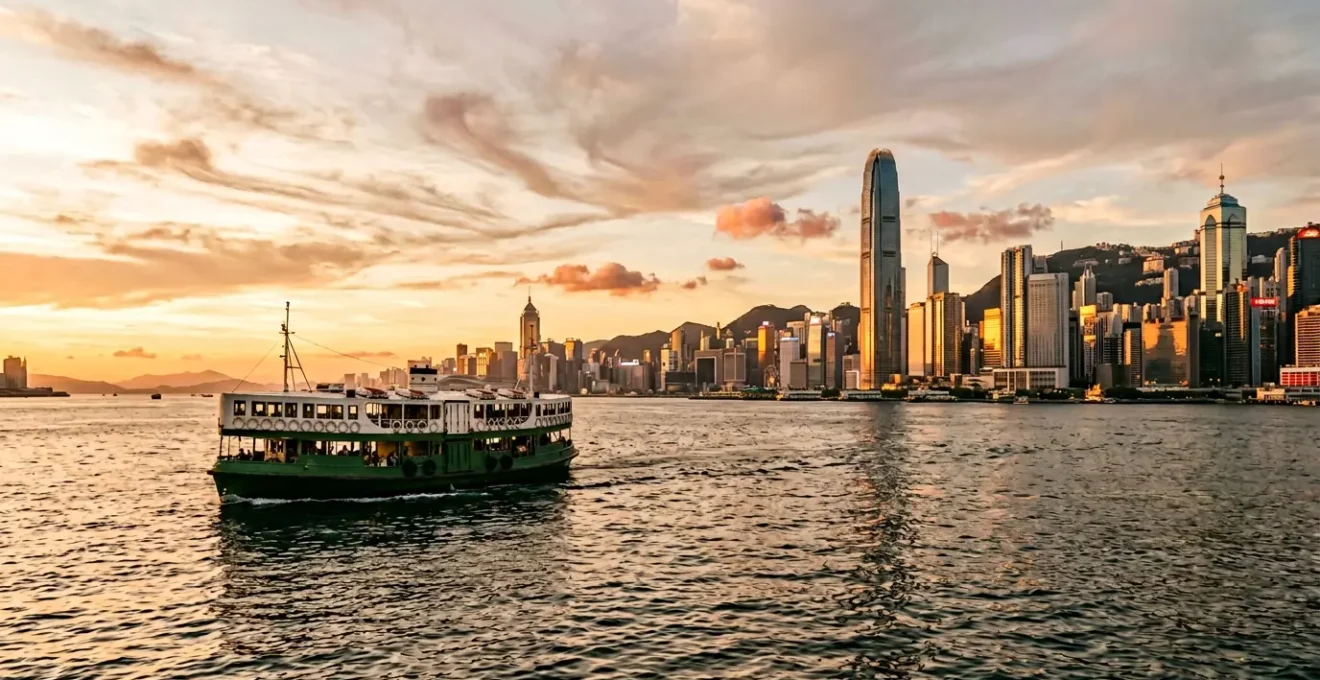
The Star Ferry isn’t just transport; it’s a 10-minute cinematic performance you direct.
- Optimal views depend entirely on your chosen deck and the specific time of day.
- The route you pick (Central vs. Wan Chai) dictates the architectural story you’ll witness unfold.
Recommendation: Plan your journey around the “Symphony of Lights” by boarding the 7:55 PM ferry from Tsim Sha Tsui for a truly spectacular experience.
It’s often touted as one of the world’s best-value attractions, a journey costing less than a cup of coffee. But to measure the Star Ferry’s worth in dollars is to miss the point entirely. For the romantic or nostalgic traveler, this ten-minute glide across Victoria Harbour isn’t merely a commute; it’s a moving meditation, a dialogue between past and future. Many guides will tell you to simply hop on. They’ll mention the low price and the nice view, treating it as a box to be ticked. But this approach overlooks the profound, cinematic potential packed into those few minutes.
The true magic of the Star Ferry lies not in the destination, but in the deliberate curation of the journey itself. What if the key wasn’t just to cross the harbour, but to craft a specific visual and emotional story for yourself? This guide moves beyond the basics. We will explore how your choice of deck, seat, time, and route can transform a simple boat ride into a powerful, personal Hong Kong moment. We’ll delve into the nuances that turn a tourist attraction into a treasured memory, understanding why this simple pleasure has captured hearts for over a century.
This article breaks down the art of the Star Ferry crossing into distinct, manageable elements. From choosing the perfect seat to timing your ride for a city-wide light show, you’ll find everything you need to curate your own perfect journey across the iconic harbour.
Summary: The Art of the Crossing: A Curated Star Ferry Guide
- Upper Deck vs Lower Deck: Which Seat Offers the Best Experience?
- When to Board to Catch the Symphony of Lights From the Water?
- Why Did National Geographic Rate This Commute as a ‘Lifetime Place’?
- Tsim Sha Tsui to Central or Wan Chai: Which Route Is More Scenic?
- The Motion Sickness Risk: Crossing the Harbour During Rough Weather
- City View vs Harbour View: Why City View Can Be More Cyberpunk?
- The Commute Advantage: Walking to the Star Ferry in 5 Minutes
- When to Visit Observation Decks for the Perfect Sunset Shot?
Upper Deck vs Lower Deck: Which Seat Offers the Best Experience?
The first choice you make before the ferry even leaves the pier is the most fundamental: upper or lower deck? This decision fundamentally shapes your sensory experience. The upper deck, air-conditioned and slightly more expensive, is the classic choice for first-time visitors. It offers a cleaner, more expansive panoramic view, perfect for wide-angle photography and feeling like you’re floating above the harbour’s hustle. The large windows provide an uninterrupted cinematic frame of the iconic skyline.
Conversely, the lower deck offers a more visceral, grounded experience. Here, you’re closer to the water, feeling the spray on your face and hearing the deep, rhythmic chug of the diesel engine. The view is partially obscured by the workings of the pier and other vessels, but this proximity to the mechanics of the journey is part of its charm. It’s a more authentic, nostalgic ride that connects you to the generations of commuters who have made this same crossing. For photographers, the lower deck can offer unique, grittier shots framed by the ferry’s own structure, especially at night when you can avoid the reflections from the upper deck’s windows.
- Morning trips (before 10 am): Choose the port side (left) when departing from Tsim Sha Tsui to catch the morning sunlight illuminating the buildings on Hong Kong Island.
- Golden hour (5-6 pm): Sit on the starboard side (right) from Tsim Sha Tsui to capture the sunset behind the Kowloon skyline as you cross.
- Evening trips (after 7 pm): The lower deck often provides better contrast for night photography, minimizing the glare from interior lights on the windows.
When to Board to Catch the Symphony of Lights From the Water?
Timing is everything when you want to elevate your Star Ferry crossing from pleasant to truly magical. The ultimate expression of this is coordinating your journey with the “A Symphony of Lights.” This dazzling multimedia show, a nightly spectacle, transforms the Hong Kong skyline into a canvas of light and sound. According to the Hong Kong Tourism Board, the Symphony of Lights illuminates Victoria Harbour every night at 8:00 PM for approximately 10 minutes, involving more than 40 buildings on both sides of the water.
To witness this from the unique vantage point of the ferry, you need to execute the “Symphony Sandwich” strategy. The goal is to be in the middle of the harbour when the show peaks. The most effective plan is to board the 7:55 PM ferry departing from Tsim Sha Tsui (TST). This timing allows the ferry to pull away from the pier and position itself in the heart of the harbour just as the first laser beams and LED patterns ignite the skyline. You get a moving, 360-degree view that is impossible to replicate from a stationary viewpoint on land.
As the ferry gently glides towards Central or Wan Chai, the architectural giants of Hong Kong Island perform their choreographed dance of light directly in front of you. Since most participating skyscrapers are on Hong Kong Island, the view from the Kowloon side—and by extension, a ferry departing from it—is often considered the most spectacular. Be warned, this is a popular strategy, so it’s wise to board a few minutes early to secure a coveted spot by the window or railing for an unobstructed view of the show.
Why Did National Geographic Rate This Commute as a ‘Lifetime Place’?
The Star Ferry’s global acclaim transcends its function as simple public transport. It’s an institution, a living piece of history that has earned a special place in the world’s travel consciousness. This is most famously encapsulated by one of the travel world’s highest honors. As the company itself proudly notes, this humble commute has been recognized on a global stage.
A crossing of Victoria Harbour on a Star Ferry has been named by the National Geographic of Traveler as one of the ‘fifty places of a lifetime’.
– Star Ferry Company, Star Ferry Official Website
But why? What elevates this short, inexpensive ride to such a prestigious list, alongside wonders like the Grand Canyon or the Taj Mahal? The answer lies in its perfect blend of the epic and the everyday. It’s a place where history, commerce, and breathtaking urban landscapes converge. For over a century, these green-and-white vessels have been the lifeblood of the harbour, a constant presence amidst the city’s relentless transformation. On any given day, the ferries carry about 70,000 passengers daily, from office workers and delivery personnel to wide-eyed travelers, all sharing the same democratic space.
This shared experience is the soul of the Star Ferry. As you sit on the polished wooden benches, you are part of a continuous narrative. The ferry glides past futuristic skyscrapers, yet the salty air, the rumbling engine, and the iconic design of the boat itself feel timeless. It’s this temporal weaving—the ability to simultaneously witness Hong Kong’s hyper-modern present while participating in its living history—that makes it a “place of a lifetime.” It’s not just a view you’re seeing; it’s the very heartbeat of the city you’re feeling.
Tsim Sha Tsui to Central or Wan Chai: Which Route Is More Scenic?
While all Star Ferry crossings offer stunning views, the question of which route is “more scenic” depends entirely on the story you want to see. The two primary routes from the Tsim Sha Tsui (TST) pier on the Kowloon side lead to two different destinations on Hong Kong Island: Central and Wan Chai. Each offers a distinct architectural narrative and connects you to different parts of the island’s vibrant urban fabric.
The TST to Central route is the undisputed classic. This is the journey that delivers the “postcard” view of Hong Kong. As you cross, the western side of Hong Kong Island’s skyline unfolds before you, dominated by the iconic silhouettes of the IFC Tower and the geometric masterpiece of the Bank of China Building. This route provides the most concentrated and famous panorama of the city’s financial might. Choosing this route is ideal if your next stop is the Peak Tram for even higher views, the trendy bars and restaurants of SoHo, or the famous Mid-Levels Escalators.
The TST to Wan Chai route, on the other hand, offers a slightly different, often quieter, and more locally-focused perspective. The journey is a little longer, allowing more time to soak in the atmosphere. This route provides a better view of the eastern part of the skyline, including the Hong Kong Convention and Exhibition Centre with its distinctive wing-like roof, and the area around Causeway Bay. Arriving at Wan Chai pier places you perfectly to visit the Golden Bauhinia Square, a significant landmark commemorating Hong Kong’s handover, and allows for easier exploration of Wan Chai’s authentic local markets and bustling dining scene.
- Choose TST-Central if: You want the quintessential postcard view and plan to explore the financial district or The Peak.
- Choose TST-Wan Chai if: You prefer a longer, less crowded ride and are heading to the Convention Centre or want to dive into Wan Chai’s local culture.
The Motion Sickness Risk: Crossing the Harbour During Rough Weather
Victoria Harbour is generally a protected body of water, making the Star Ferry crossing a smooth and pleasant experience for the vast majority of passengers. However, Hong Kong is a city of dramatic weather, and conditions can change. During periods of high winds, storms, or the approach of a typhoon, the harbour can become choppy, and the gentle glide of the ferry can turn into a more pronounced bob and sway. For those prone to motion sickness, this is a factor worth considering.
The first and most important thing to know is that your safety is never in question. The Star Ferry company operates with impeccable safety standards and will suspend services when conditions become dangerous. This is often tied to the Hong Kong Observatory’s official weather warnings. For instance, service is typically suspended when Tropical Cyclone Warning Signal No.3 or above is issued, ensuring passengers are never put at risk. If the ferries are running, the journey is considered safe, but it may not be comfortable for everyone.
If you find yourself needing to cross in less-than-ideal weather and are concerned about seasickness, a few simple strategies can make a significant difference. Choosing the lower deck, which is closer to the water level, often results in a more stable ride with less swaying motion compared to the upper deck. Where you sit also matters greatly, as does your visual focus. The key is to help your body and brain align with the motion of the vessel.
Your Action Plan: Nautical Stability Tips for Rough Crossings
- Center Yourself: Sit in the center of the vessel, both lengthwise and widthwise, where the rocking and pitching motion is least pronounced.
- Go Low: Choose the lower deck as it is closer to the ferry’s center of buoyancy and generally experiences less roll.
- Face Forward: Always sit facing the direction of travel. This helps your inner ear and eyes agree on the direction of movement.
- Fix Your Gaze: Focus on a fixed point on the distant shore, like a specific building. Avoid looking at the churning water nearby.
- Breathe Fresh Air: If possible, stand in an open area at the back of the ferry to get fresh air, which can help alleviate nausea.
City View vs Harbour View: Why City View Can Be More Cyberpunk?
The default impulse on the Star Ferry is to look out—at the magnificent harbour, the distant mountains, and the towering skyline. This is the “Harbour View,” and it is undeniably spectacular. But for a different, arguably more intense and atmospheric experience, a “City View” can be just as compelling. This doesn’t mean looking at the city from the middle of the water, but rather immersing yourself in the view *from the pier* looking back into the dense urban jungle of Kowloon.
This is where Hong Kong’s cyberpunk soul reveals itself. Before you even board, take a moment on the Tsim Sha Tsui pier. Turn your back to the water and look towards Nathan Road. You’re met with a vertical onslaught of neon signs, residential towers, and commercial chaos, all layered on top of each other. The air is thick with the scent of street food and the hum of a million lives. It’s a sensory overload that feels straight out of a sci-fi film. This view is about texture, density, and human-scale energy, a stark contrast to the grand, impersonal scale of the harbour view.
The magic is especially potent on a rainy evening. The slick pavement of the pier becomes a mirror, reflecting the Blade Runner-esque glow of the neon signs. Steam rising from food stalls mingles with the mist, creating an atmospheric haze that softens the hard edges of the city into an abstract dreamscape of light and colour. While the harbour view is a majestic panorama, this city view is an intimate, gritty, and deeply cyberpunk portrait. It’s a reminder that the Star Ferry experience isn’t just the ten minutes on the water; it’s the entire sensory journey, including the moments of transition at its edges.
The Commute Advantage: Walking to the Star Ferry in 5 Minutes
Part of the Star Ferry’s enduring charm is its seamless integration into the pedestrian life of Hong Kong. Unlike many major attractions that require a dedicated trip, the ferry piers are woven directly into the city’s most vibrant and walkable areas. This “commute advantage” means you can spontaneously incorporate a harbour crossing into your day, with a wealth of attractions just a five-minute stroll from either side of the pier. This convenience transforms the ferry from a standalone activity into a delightful connector between experiences.
From the Tsim Sha Tsui pier, you are at the very heart of Kowloon’s cultural and commercial waterfront. A quick walk connects you to a host of landmarks. You can be at the foot of the historic Clock Tower in under a minute or begin your stroll along the Avenue of Stars almost immediately. The grand entrances to the Hong Kong Cultural Centre and the Harbour City mall are just a few steps away. You can easily pair a morning ferry ride with an afternoon of world-class shopping or a visit to the Hong Kong Space Museum.
The same is true on the Hong Kong Island side. The Central Pier is connected by covered walkways to the high-end IFC Mall and the Hong Kong MTR station. You can disembark and be on the Hong Kong Observation Wheel in two minutes. The ferry’s proximity makes it the perfect transport for a multi-part itinerary, like grabbing a famous egg tart from a nearby bakery to enjoy during your crossing. This walkability is key to the ferry’s role as not just a destination, but as the most scenic “A to B” in the world.
- From TST Pier: Clock Tower (30 seconds), Hong Kong Cultural Centre (1 min), Avenue of Stars entrance (2 min), Harbour City Mall (3 min).
- From Central Pier: Hong Kong Observation Wheel (2 min), IFC Mall via walkway (3 min), Maritime Museum (adjacent).
Key takeaways
- The upper deck offers classic panoramic views, while the lower deck provides a more atmospheric, visceral experience.
- For the Symphony of Lights, the 7:55 PM ferry from Tsim Sha Tsui is perfectly timed to place you mid-harbour for the show’s peak.
- It’s not just the view or the price; the ferry’s ‘lifetime place’ status comes from its role as a piece of living history connecting millions of lives.
When to Visit Observation Decks for the Perfect Sunset Shot?
The Star Ferry offers an unparalleled water-level perspective of Hong Kong’s skyline, but a truly curated photographic journey involves playing with altitude. To capture the full majesty of the city, combine your sea-level ferry crossing with a visit to one of its famous observation decks, like The Peak or Sky100. The key is timing this “deck-to-deck” itinerary to take advantage of the day’s best light: the golden hour and the blue hour.
The “golden hour” is the period shortly before sunset, where the light is softer, warmer, and more flattering for architecture. Plan to arrive at your chosen observation deck about 30 minutes before sunset. This gives you time to set up and capture the skyline as it’s bathed in golden light, with long shadows creating dramatic texture on the buildings and mountains. As the sun dips below the horizon, you’ll capture the quintessential sunset shot from a bird’s-eye view.
But don’t leave just yet. The “blue hour,” the period just after sunset, is when the magic truly happens for a city photographer. This is your cue to descend from the heights. After capturing the sunset, make your way swiftly down (via the Peak Tram or an express elevator) and head straight for the Star Ferry pier. Board the ferry for a blue hour crossing. By this time, the sky will have a deep, rich blue hue, but there’s still enough ambient light to see detail. More importantly, the city’s lights will have just begun to twinkle on, creating a breathtaking contrast between the natural and the man-made. This itinerary allows you to capture the same iconic skyline from two dramatic and completely different perspectives within a single hour.
- 4:30 PM: Arrive at The Peak or Sky100 for your golden hour setup.
- 5:00-5:30 PM: Capture the sunset from the observation deck.
- 5:45 PM: Descend quickly and head to the pier.
- 6:15 PM: Board the Star Ferry for your blue hour crossing, capturing the newly illuminated skyline from water level.
Now that you are equipped with the secrets to curating your own cinematic journey, the next step is to put this knowledge into practice. Plan your crossing not as a chore, but as a highlight of your Hong Kong itinerary.