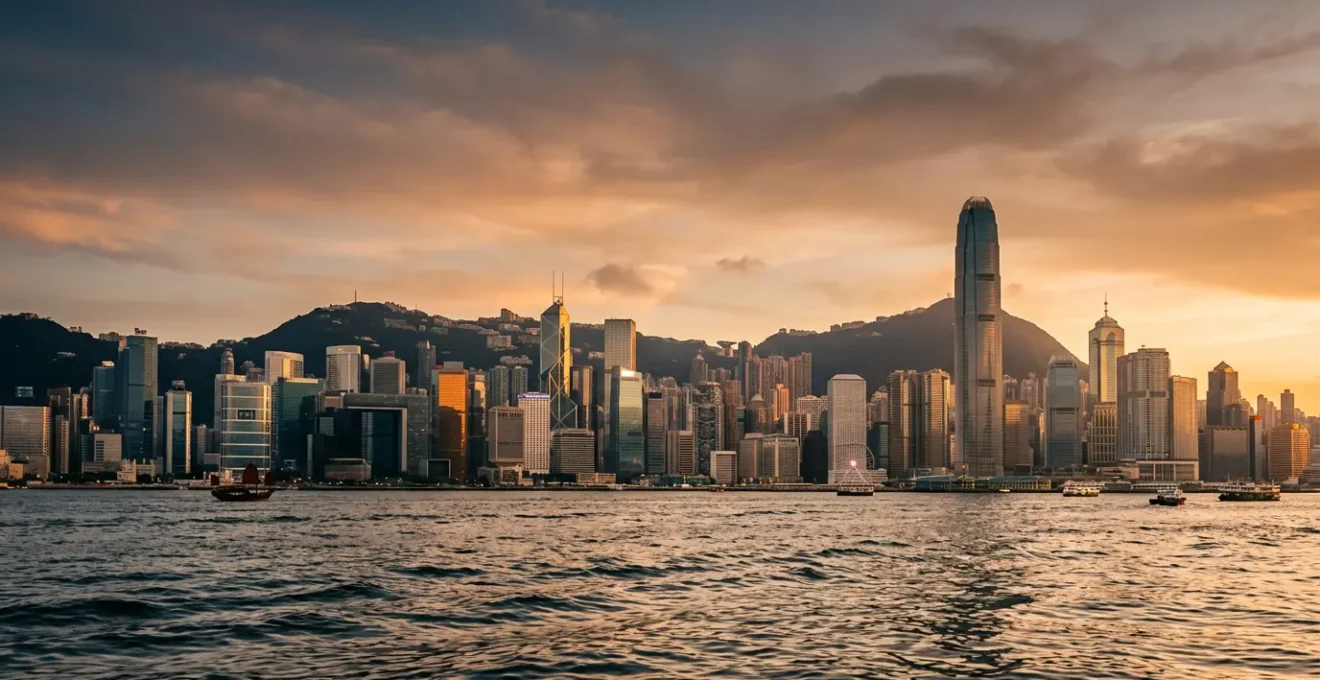
The choice between The Peninsula and the Mandarin Oriental is not about which hotel is better, but which version of Hong Kong’s legacy you wish to inhabit.
- The Peninsula offers the grandeur of colonial empire history, defined by tradition and spectacular gestures.
- The Mandarin Oriental represents the discreet, sophisticated power of a modern global financial hub.
Recommendation: Choose The Peninsula for a narrative of timeless opulence and iconic views. Choose the Mandarin Oriental for an experience of understated excellence and insider access in the city’s heart of power.
For the discerning luxury traveler, the choice between The Peninsula and The Mandarin Oriental in Hong Kong is more than a simple booking decision; it’s a defining moment of any itinerary. To approach this dilemma by merely comparing room counts or restaurant menus is to miss the point entirely. Most guides will highlight the obvious: The Peninsula’s fleet of emerald Rolls-Royces or the Mandarin’s prime location in Central. These are facts, but they don’t capture the soul of the experience.
The real decision lies in understanding the distinct narrative alignment each property offers. These are not just hotels; they are institutions, the ‘Grand Dames’ of Hong Kong, each with a deeply ingrained legacy DNA that shapes every aspect of a guest’s stay. The question is not which has the better amenities, but which historical and cultural footprint aligns with the story you want to tell. Are you the heir to a colonial trading empire, arriving in grand style, or the modern power player, operating with discreet efficiency from the city’s financial heart?
This article moves beyond a surface-level comparison. We will dissect the experiential return on investment (ROI) of their most famous offerings, from securing afternoon tea to the value of club access. We will explore their historical roots, their distinct service philosophies, and the practical realities that a true connoisseur must consider before making a choice. By the end, you will not just have a preferred hotel; you will have chosen your side in the story of Hong Kong.
To guide this critical decision, this analysis is structured around the key questions a seasoned traveler must ask. The following sections will delve into the nuanced differences that define these two pillars of luxury hospitality.
Summary: A Critic’s Analysis of Hong Kong’s Two Leading Grand Dames
- Queue or Reservation: How to Secure a Spot for Afternoon Tea?
- Is the Helipad Transfer from the Airport Worth the Splurge?
- Why Paying Extra for Club Access Saves Money on Drinks and Food?
- Which 5-Star Hotel Has the Best Traditional Chinese Medicine Spa?
- Why Did Colonial Dignitaries Always Stay at These Hotels?
- Canton Road or Landmark: Which Location Offers Better Service?
- The Mistake of Ignoring the Colonial Past When Viewing Monuments
- The Window Cleaning Risk: How to Check Schedules Before Booking?
Queue or Reservation: How to Secure a Spot for Afternoon Tea?
Afternoon tea at The Peninsula is not a meal; it’s a cultural institution. It is a spectacle of colonial-era grandeur held in the magnificent lobby, a tradition so entrenched that the hotel famously does not take reservations for it. This deliberate choice cultivates an air of exclusivity and turns the act of waiting into part of the experience. For non-guests, securing a table means joining a queue, and the wait can be up to two hours during peak times. This is the quintessential ‘see-and-be-seen’ event in Hong Kong, a performance of patience rewarded with classic finger sandwiches and scones beneath soaring gilded ceilings. Hotel guests, however, are given priority, a significant and often overlooked perk.
The Mandarin Oriental, by contrast, offers a different philosophy. Their afternoon tea, served at the Clipper Lounge or Café Causette, is an affair of sophisticated calm. Reservations are not only possible but recommended. The experience is less of a public spectacle and more of a private indulgence. The choice here reflects the core DNA of each hotel: The Peninsula offers a grand, public-facing tradition that you must earn your way into, while the Mandarin Oriental provides discreet, seamless luxury that you can schedule into your day. The former is a story to tell; the latter is a moment of serene enjoyment.
As the image captures, the atmosphere is as much a part of the offering as the tea itself. The Peninsula’s lobby is a stage, and those partaking in the ritual are its actors. For the traveler seeking that iconic, almost theatrical Hong Kong moment, the queue at The Peninsula is a small price to pay. For those who value time and tranquility above all, the Mandarin Oriental’s reservation system is the clear winner. This single choice perfectly encapsulates the philosophical divide between the two Grand Dames.
Is the Helipad Transfer from the Airport Worth the Splurge?
The ultimate expression of a dramatic arrival in Hong Kong is undoubtedly The Peninsula’s helicopter transfer. It is a statement of unparalleled extravagance, whisking you from the airport to the hotel’s rooftop helipad in a matter of minutes, offering a breathtaking panorama of the city. However, this level of spectacle comes at a significant cost. According to the hotel’s official site, the Peninsula’s helicopter transfer costs HK$45,500 for a one-way trip. Is it worth it? From a purely financial standpoint, the answer is no. A taxi is efficient, and the Airport Express is even more so. But this question isn’t about finances; it’s about the experiential ROI.
The helipad transfer is pure cinema. It is the James Bond arrival, a memory that will last a lifetime and an unbeatable story to recount. The Peninsula’s legendary Rolls-Royce fleet, while iconic, offers a ground-level view of a city often choked with traffic. The helicopter provides a god’s-eye perspective, immediately establishing a sense of place and power. For a milestone celebration or a traveler for whom cost is secondary to a unique experience, the splurge delivers an unforgettable narrative.
The following table, based on the hotel’s own offerings, puts the choice into sharp perspective. It’s a decision not between modes of transport, but between levels of theatricality.
| Transfer Type | Price (HKD) | Duration | Experience Level |
|---|---|---|---|
| Helicopter Transfer | 45,500 one-way | 7 minutes | Skyfall Spectacle |
| Rolls-Royce Phantom | 3,600 round-trip | 45-60 minutes | Colonial Tycoon |
| Bentley Bentayga | 3,600 round-trip | 45-60 minutes | Modern Luxury |
Ultimately, the Mandarin Oriental doesn’t compete in this arena. Its arrival experience is one of seamless, discreet luxury, typically via a comfortable sedan. It is efficient and elegant, but it is not a spectacle. The choice is clear: if your travel philosophy is about grand, memorable gestures, The Peninsula’s helipad is a justifiable extravagance. If you prefer understated efficiency, save your money for experiences on the ground.
Why Paying Extra for Club Access Saves Money on Drinks and Food?
At first glance, the additional fee for Club or executive lounge access at a luxury hotel can seem like an unnecessary expense. However, for the strategic traveler staying at The Peninsula or The Mandarin Oriental, it is often a savvy investment that yields significant returns in both value and experience. A simple calculation reveals the logic. At The Peninsula, for instance, afternoon tea alone costs around HK$868 for two people. Add the price of breakfast, evening cocktails, and canapés for two, and the daily cost can easily exceed the Club supplement.
But the value extends far beyond simple food and beverage savings. Club access unlocks a higher tier of service and convenience that defines true luxury. This is where the hotels’ service philosophies are most apparent. Benefits often include a dedicated concierge, priority restaurant bookings, and complimentary services like suit pressing. At The Peninsula, this is elevated even further with a unique, game-changing benefit. As the La Jolla Mom Travel Expert notes in her guide, the true value lies in exclusive perks:
Peninsula Time guarantees that a room will be ready no matter what time you arrive
– La Jolla Mom Travel Expert, La Jolla Mom’s Hong Kong Hotel Guide
This single benefit for guests with club access or who book through specific channels is invaluable for those arriving on early morning international flights, saving them from paying for an extra night or waiting hours for check-in. The Mandarin Oriental’s Club Lounge is equally renowned for its exceptional service and culinary offerings, providing a tranquil sanctuary from the bustling city. The hidden benefits often include:
- Priority restaurant bookings at fully-booked Michelin-starred venues
- Complimentary suit pressing service for business travelers
- Late check-out privileges without additional fees
- Access to dedicated Club concierges with insider connections
Therefore, paying for Club access is not an expense; it is an upgrade to a more seamless, personalized, and ultimately more economical experience. It transforms a great stay into an exceptional one.
Which 5-Star Hotel Has the Best Traditional Chinese Medicine Spa?
While both The Peninsula and The Mandarin Oriental boast world-class spas, the Mandarin Oriental has distinguished itself by more deeply and authentically integrating the principles of Traditional Chinese Medicine (TCM) into its wellness philosophy. The Peninsula Spa is a haven of classic luxury, offering superb treatments in a serene, Roman-inspired setting. It is excellent by any measure. However, for the traveler specifically seeking a wellness journey rooted in ancient Chinese wisdom, the Mandarin Oriental Spa offers a more profound and specialized experience.
The Mandarin Spa in Central is not merely a place with a few Asian-inspired treatments on the menu. It has built its entire concept around the holistic balance of TCM. Their approach is comprehensive, encouraging guests to arrive early to use facilities like the Chinese herbal steam room, which prepares the body and mind for treatment. The therapies themselves are often developed in consultation with TCM practitioners, aiming to address underlying imbalances rather than just providing superficial relaxation. This commitment to authenticity provides a level of depth that is hard to match. They successfully merge ancient practices with modern luxury, creating a genuine wellness sanctuary.
As detailed in their treatment descriptions, the experience is immersive: guests can choose from treatments inspired by TCM and are encouraged to use the heat and water facilities to enhance the benefits. This focus on a holistic, preparatory ritual is a hallmark of a genuine TCM approach. The Peninsula offers luxury and relaxation; the Mandarin Oriental offers a therapeutic journey. For the wellness connoisseur interested in the cultural and healing aspects of TCM, the Mandarin Oriental holds a clear edge, making it the destination for a truly restorative experience.
Why Did Colonial Dignitaries Always Stay at These Hotels?
To understand the stature of The Peninsula and The Mandarin Oriental, one must look to their origins. Their enduring prestige is rooted in the distinct historical currents they represent. They became the default choice for dignitaries for two very different reasons, tied to two different eras of Hong Kong’s history. The Peninsula is the original Grand Dame, the embodiment of the British Empire at its zenith. Its location was not a matter of chance; it was a strategic gateway.
The Peninsula (1928) was the terminus of the Trans-Siberian railway, the true ‘Gateway to the Orient’ for colonial-era travelers
– Hotel Historical Archives, The Peninsula Hong Kong Heritage Documentation
Opened in 1928, it was the final stop for wealthy Europeans arriving by rail. It was the first and last bastion of Western luxury on the edge of Asia, a social and political hub for colonial officers, diplomats, and tycoons. To stay at “The Pen” was to signal one’s status within the imperial hierarchy. Its legacy DNA is one of colonial grandeur, of being the nexus point between West and East during the age of empire.
The Mandarin Oriental, opened in 1963, represents a different kind of power. It rose with Hong Kong’s post-war emergence as a global financial titan. It quickly became the preferred hotel for a new kind of dignitary: the international CEO, the banker, the deal-maker. Its location in Central, the financial district, was deliberate. The Mandarin Oriental’s identity is not one of colonial history but of modern corporate power and sophisticated capitalism. Its renovations and constant evolution reflect its role as the home away from home for the global elite who built modern Hong Kong. It represented the city’s future, not its past. Choosing between them is choosing which era of power you wish to channel.
Canton Road or Landmark: Which Location Offers Better Service?
The question of location—Kowloon for The Peninsula, Central for The Mandarin Oriental—is often oversimplified to “tourist side” versus “business side.” A more sophisticated analysis reveals that each location dictates a fundamentally different service philosophy, tailored to its environment. The “better” service depends entirely on the guest’s needs. When comparing culinary excellence as a proxy for service, the Mandarin Oriental holds a slight edge with a collective 10 Michelin stars across its restaurants, compared to The Peninsula’s still-impressive 7 stars. This reflects the MO’s focus on attracting the city’s discerning local and business elite with destination dining.
However, service extends beyond the dining room. The concierge at The Peninsula, situated on the bustling Canton Road, is an expert in navigating the vibrant, and at times chaotic, energy of Kowloon. Their expertise lies in securing access to the best tailors, navigating local markets, and recommending authentic local eateries. The service is geared towards creating memorable experiences for the international luxury traveler. Conversely, the Mandarin Oriental’s concierge, located above the exclusive Landmark mall, operates with a different focus. Their network is tuned to the needs of the financial district: securing tables at private kitchens, arranging access to art galleries, and facilitating connections within the corporate world. The service is discreet, efficient, and anticipatory.
This deep-seated difference in location and atmosphere directly shapes the guest experience, as detailed in this comparative analysis.
This table from a recent comparative analysis highlights the environmental differences that shape the service culture at each hotel.
| Aspect | Peninsula (Kowloon/Canton Road) | Mandarin Oriental (Central/Landmark) |
|---|---|---|
| Atmosphere | Vibrant, tourist-centric, high-energy | Urban sanctuary, financial district calm |
| Views | Spectacular harbor views toward HK Island | City skyline and Victoria Harbor |
| Shopping | Canton Road luxury boutiques, local markets | Landmark mall, exclusive designer stores |
| Concierge Expertise | Kowloon experiences, tailors, local eateries | Central galleries, private kitchens, finance networking |
In essence, The Peninsula offers service designed to help you conquer and enjoy the city as a visitor. The Mandarin Oriental offers service designed to help you operate within it as an insider. The superior choice is a matter of personal mission, not objective quality.
The Mistake of Ignoring the Colonial Past When Viewing Monuments
To experience The Peninsula or The Mandarin Oriental as mere five-star hotels is the greatest mistake a luxury traveler can make. These are not simply places to sleep; they are living monuments, and their colonial and post-colonial past is not a historical footnote but an active ingredient in the daily experience. Ignoring this context is like visiting a museum and only looking at the picture frames. The Peninsula, in particular, is a physical embodiment of a bygone era. Since its opening, it has been the city’s premier social stage, a symbol of colonial-era capitalism and social hierarchy.
As its own historical documents state, The Peninsula swiftly established itself as ‘The Meeting Point of Hong Kong Society,’ where afternoon tea was a luxurious ritual. This DNA is still palpable today. The grand gestures, the formal service, the sheer scale of the lobby—all are echoes of an imperial past designed to impress and project power. Post-1997, the hotel has skillfully adapted, continuing to serve its traditional Western clientele while also becoming a status symbol for a new generation of mainland Chinese ultra-rich. The experience is layered with this history; the deference of the staff and the grandeur of the architecture are part of a century-old performance.
The Mandarin Oriental, while younger, also carries the weight of history. It represents the next chapter: Hong Kong’s confident stride onto the world stage as a financial powerhouse, breaking from its colonial cocoon. Its brand of luxury is less about overt grandeur and more about the quiet confidence of new money and global influence. To stay there is to align with a narrative of modern, international success. Appreciating these hotels requires understanding their role as monuments to two different epochs of Hong Kong’s story. The “better” hotel is the one whose historical narrative resonates most powerfully with the visitor.
Key Takeaways
- The choice is a narrative one: Colonial grandeur (Peninsula) vs. modern financial power (Mandarin Oriental).
- Experiential ROI is key: Amenities like the helipad or club access should be valued for the unique story they create, not just their function.
- Location dictates service: Each hotel’s service philosophy is a direct reflection of its neighborhood’s character (Kowloon’s vibrancy vs. Central’s calm).
The Window Cleaning Risk: How to Check Schedules Before Booking?
For hotels whose primary selling point is an iconic view, there is no greater disappointment than arriving to find your window obscured by scaffolding or a cleaning gondola. This is a very real, if seldom discussed, risk at properties like The Peninsula and The Mandarin Oriental, where the harbor view is a multi-million dollar asset. A true luxury hotel critic knows that due diligence goes beyond reading reviews; it involves proactive verification. Assuming an unobstructed view is a rookie mistake.
The key is to bypass generic reservation channels and communicate directly with hotel management before booking. This act not only helps avoid logistical issues but also serves as a litmus test for the hotel’s service responsiveness. A swift, clear, and reassuring response is a strong indicator of the level of service you can expect during your stay. Even with the best planning, issues can arise. What separates a Grand Dame from a merely good hotel is its ability to perform service recovery. A testimonial regarding The Peninsula highlights this point:
The Peninsula Hotel is my favourite Hotel in Hong Kong period and I always recommend it when asked.
– J3 Consultants Hong Kong
This loyalty often stems not from a flawless stay, but from the hotel’s exceptional handling of the occasional flaw. To mitigate the risk of a compromised view, a pre-booking audit is essential. The following checklist provides a framework for ensuring your view is as spectacular as promised.
Your Pre-Booking View Verification Plan
- Direct Contact: Email the reservation manager directly, not the generic information address, to establish a high-level point of contact.
- Specific Inquiry: Ask a direct, dated question: “Can you confirm in writing that no scheduled exterior maintenance, window cleaning, or construction will be affecting the views from a [Room Type] between [Your Dates]?”
- Comprehensive Check: Broaden your query to include potential disruptions beyond your window, such as wing renovations, pool closures, or major public works in the hotel’s immediate vicinity.
- Written Confirmation: Do not accept a verbal assurance. Politely request a written confirmation of unobstructed views to be added to your reservation notes.
- Service Test: Use the response time and the quality of the answer as a key indicator of the hotel’s overall service culture and attention to detail.
This simple process protects your investment and sets the stage for a truly uncompromising luxury experience.
Ultimately, the decision rests on a single, personal question: what story do you want to bring home? Do you want the tale of imperial grandeur, of arriving by Rolls-Royce to the gateway of the Orient? Or do you prefer the narrative of quiet power, of navigating the world of global finance from a discreet urban sanctuary? To choose between The Peninsula and The Mandarin Oriental is to choose your role in the grand, ongoing saga of Hong Kong. Make your selection not as a tourist booking a room, but as a connoisseur curating an experience.