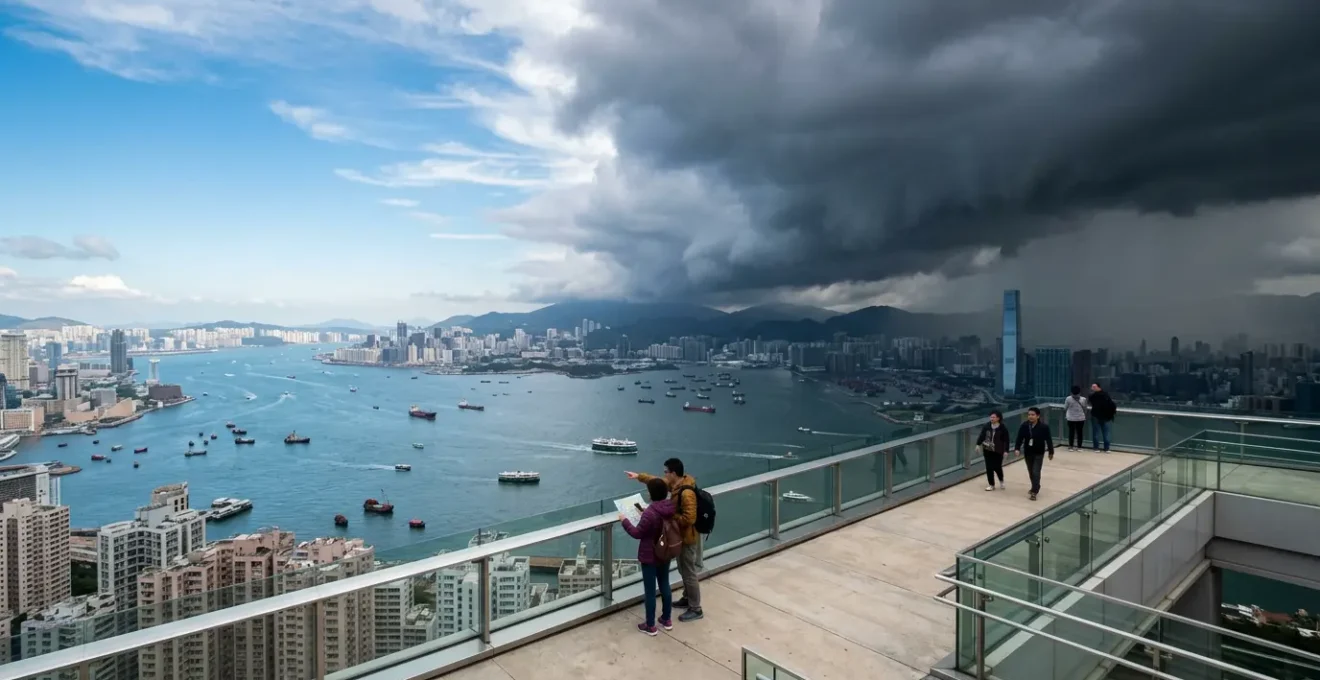
The key to the perfect Hong Kong trip isn’t just picking the ‘best’ month, but mastering its weather systems to your advantage.
- Autumn (Oct-Dec) offers the ideal balance of mild temperatures and sun, but is also peak season.
- Typhoon signals are a highly effective safety system, not a trip-killer; understanding them is crucial.
- Aligning your activities—indoor shopping in summer, outdoor hiking in autumn—is more effective than fearing the forecast.
Recommendation: Stop fearing the weather forecast and start using it strategically. This guide shows you how to turn Hong Kong’s climate from a threat into a predictable part of your travel plan.
Planning a trip to Hong Kong often starts with excitement, quickly followed by a wave of anxiety. You see the stunning skyline, the vibrant street markets, the lush hiking trails, but then you read the words: “typhoon season” and “sweltering humidity.” The fear that your dream trip could be ruined by torrential rain or unbearable heat is a real concern for any meticulous planner. The common advice is simple and repetitive: just go in the autumn. While not wrong, this suggestion misses the bigger picture and fails to empower you with the knowledge to travel confidently at any time of year.
This approach leaves you vulnerable to the whims of the weather. But what if the key wasn’t simply avoiding “bad” months, but understanding the city’s predictable climate patterns and sophisticated safety systems? What if you could learn to read the weather like a local and turn its challenges into strategic advantages? This isn’t about finding a mythical “perfect” week; it’s about adopting the mindset of a meteorology-savvy travel planner. It’s about knowing that a T3 signal is your cue to head to a museum, not to panic, or that summer’s heat makes it the ideal time for an “urban expedition” through the world’s most impressive air-conditioned mall networks.
This guide is designed to do just that. We will move beyond the generic advice and provide you with a data-driven framework for planning your trip. We will break down the year month by month, decode the meaning of typhoon signals, and provide tactical strategies for managing the climate. By the end, you’ll be able to choose your dates not based on fear, but on a confident understanding of how to make Hong Kong’s weather work for you.
To navigate this detailed analysis, the following summary lays out the key strategic sections that will transform you from an anxious tourist into an expert planner, ready to tackle Hong Kong’s dynamic climate with confidence.
Summary: The Savvy Planner’s Guide to Hong Kong Weather
- January to December: Which Month Offers the Best Balance of Sun and Cool?
- What Do Typhoon Signals 1, 3, and 8 Mean for Your Travel Plans?
- Shopping Summer or Hiking Autumn: Which Season Fits Your Goal?
- How to Pack for Hong Kong’s Unpredictable Micro-Climates?
- Why Humidity Matters More Than Temperature When Checking Forecasts?
- The Weather Mistake: Why You Must Check Visibility Before Boarding the Tram?
- When Do the Summer and Winter Sales Actually Start?
- How to Manage 90% Humidity During Your Hong Kong Trip Without Melting?
January to December: Which Month Offers the Best Balance of Sun and Cool?
For the planner seeking a simple answer, the data points overwhelmingly to one period: autumn. Specifically, late October through December is Hong Kong’s “sweet spot.” This is when the city emerges from the humid summer into a season of clear skies, comfortable temperatures, and low rainfall. Climate data consistently shows this period as the most pleasant, with a temperature range of 22-28°C and only 4 to 8 rainy days per month. This is the time for outdoor exploration, whether it’s ferry trips to outlying islands or long walks through city neighborhoods, all without the oppressive weight of humidity.
However, “best” often comes with a trade-off: cost and crowds. This peak season sees higher flight and hotel prices. For a more nuanced decision, a planner must weigh weather comfort against travel costs. Spring (March-May) presents a compelling alternative, offering good weather as temperatures rise from the winter cool, but before the summer humidity fully sets in. While you might encounter more drizzle and fog, the travel costs are often more moderate. Conversely, the summer (June-September) promises the lowest airfares, sometimes with discounts up to 70%, but at the cost of extreme heat and humidity. The winter (January-February) is dry but can be surprisingly cool, with prices spiking around Chinese New Year.
To make a truly strategic choice, you must consider what you value most. The following table provides a clear framework for balancing these competing factors, allowing you to find your personal “best” time to visit.
| Month | Weather Comfort | Travel Costs | Value Score |
|---|---|---|---|
| October-December | Excellent (22-28°C, low humidity) | High (peak season) | 7/10 |
| March-May | Good (20-26°C, rising humidity) | Moderate | 8/10 |
| June-September | Poor (30°C+, high humidity) | Lowest (70% airfare discount) | 6/10 |
| January-February | Fair (16-18°C, dry) | High (Chinese New Year) | 5/10 |
What Do Typhoon Signals 1, 3, and 8 Mean for Your Travel Plans?
The word “typhoon” strikes fear into the heart of any traveler. However, in Hong Kong, it’s a manageable, systemized event rather than a chaotic disaster. The Hong Kong Observatory’s warning system is a masterclass in public communication, and understanding it is the key to removing your anxiety. The signals (T-Signals) are not just about wind speed; they are a precise action plan for the entire city. For a tourist, they are your guide to what you can—and should—be doing.
Here’s what they mean for your itinerary:
- T1 (Standby Signal): A typhoon is in the region. For you, it’s business as usual. Continue with your plans, but keep an eye on ferry schedules as services to outer islands can be suspended early. It’s a good time to download the “MyObservatory” app.
- T3 (Strong Wind Signal): Winds are strengthening. This is your cue to wrap up outdoor activities. Some attractions, like the Ngong Ping 360 cable car, may close. It’s a good moment for a last-minute supermarket run if needed, but the city remains largely operational.
- T8 (Gale or Storm Signal): This is the serious one. You must stay indoors immediately. All shops, offices, and schools close. Public transport, including buses and ferries, ceases operation. The MTR continues to run on its underground sections, but it’s best to be where you need to be before the T8 is hoisted. For a tourist, this is a forced hotel day. Stock up on snacks and water; hotel restaurants and room service typically remain open.
- Black Rainstorm Warning: This is about rain, not wind. It’s often treated like a T8 signal. Widespread flooding is possible, so stay indoors and away from low-lying areas.
The system’s effectiveness is not theoretical. As the Typhoon Ragasa case study from September 2025 demonstrates, even with a Category 4 storm boasting 140 mph winds, Hong Kong’s infrastructure and preparedness resulted in zero fatalities. Businesses were able to reopen mere hours after the signal was lowered. This proves the system is designed for safety and rapid recovery, providing immense reassurance for any visitor.
Shopping Summer or Hiking Autumn: Which Season Fits Your Goal?
A smart travel plan isn’t just about picking a date; it’s about aligning your desired activities with the climate you’ll encounter. Hong Kong’s distinct seasons create two very different travel experiences. Instead of seeing the sweltering summer as a negative, a savvy planner reframes it as the perfect opportunity for an indoor “urban expedition.” As the travel experts at Big Bus Tours Hong Kong advise, you should ” use the sweltering summer to explore Hong Kong’s vast, air-conditioned, interconnected mall networks.” These are not just shopping centers; they are miniature cities, climate-controlled environments with world-class dining, cinemas, and attractions, all linked by covered walkways and the MTR. The summer heat becomes an incentive to discover a side of Hong Kong many outdoor-focused tourists miss.
Conversely, autumn unlocks a completely different side of the territory. When the humidity breaks and cool breezes return, Hong Kong’s incredible network of hiking trails becomes the main attraction. From the iconic Dragon’s Back ridge to the challenging Lantau Trail, the cooler weather makes outdoor adventures a joy. It’s no coincidence that travel authorities consistently rate this period as the prime time for trekking; late October through December is rated as the best months for hiking trails across the region. Choosing this season is a deliberate decision to experience Hong Kong’s stunning natural landscapes.
The choice is not between a “good” and “bad” season, but between two distinct types of vacations. Do you envision a trip filled with exploring luxury flagship stores and discovering hidden culinary gems within sprawling, cool complexes? Plan for summer. Do you dream of panoramic views from a mountain peak after a rewarding climb? Aim for autumn. By matching your goals to the season, you guarantee a successful trip regardless of the weather.
How to Pack for Hong Kong’s Unpredictable Micro-Climates?
Packing for Hong Kong is an exercise in meteorological strategy. The generic advice to “pack layers” is woefully inadequate for a city where you can experience a 10-degree temperature drop simply by walking from the street into a shopping mall. Your packing list must be a tactical response to the two primary challenges: intense outdoor humidity and powerful indoor air-conditioning. This is a battle fought with fabric technology and smart accessories.
For a summer or late spring trip, your focus should be on moisture management and rapid cooling. Forget cotton, which absorbs sweat and stays wet for hours. Your wardrobe should consist of:
- Quick-dry synthetic fabrics: Think materials used for athletic wear like polyester or merino wool blends. These fabrics wick moisture away from your skin, keeping you feeling drier and more comfortable.
- Loose, breathable clothing: Linen and lightweight synthetics are your best friends. They allow for air circulation, which is critical for cooling.
- A powerful portable fan: A small, rechargeable USB fan is not a gimmick; it’s a vital piece of equipment for instant relief while waiting for a bus or walking through a crowded market.
- A “freeze-and-go” jacket: A very lightweight cardigan or pashmina that you can carry in your bag. This is your defense against the aggressive air-conditioning in malls, cinemas, and the MTR, which can feel arctic after being outside in 90% humidity.
For an autumn or winter trip, the strategy shifts to adaptable layering. While the days are pleasant, evenings can get genuinely chilly, especially near the waterfront. A medium-weight jacket, long-sleeved tops, and a scarf will be necessary. Even in winter, the sun can be strong, so don’t neglect sunglasses and sunscreen. In all seasons, comfortable, broken-in walking shoes are non-negotiable, as is a compact, quick-drying umbrella.
Why Humidity Matters More Than Temperature When Checking Forecasts?
Any seasoned traveler to a subtropical region knows this truth: a 28°C day in a dry climate is pleasant; a 28°C day in Hong Kong can be utterly draining. The reason is a single, crucial metric that is far more important to your comfort than the temperature alone: the relative humidity. As a planner, learning to prioritize this number in your daily forecast check is the single most important shift you can make.
Humidity is the measure of moisture in the air. When it’s high, the air is already saturated with water vapor. This dramatically inhibits your body’s primary cooling mechanism: sweating. Your sweat can’t evaporate effectively into the humid air, so it clings to your skin, leaving you feeling sticky, overheated, and drained. This is why the “real feel” or “heat index” temperature is often 5-10 degrees higher than the actual air temperature. It’s the difference between feeling warm and feeling like you’re walking through soup.
In Hong Kong, humidity levels regularly exceed 80-90% from late spring through summer. This has several practical implications for your planning. It dictates your clothing choices (breathable, quick-dry fabrics are essential), your activity schedule (plan strenuous outdoor activities for the early morning or evening), and your hydration strategy (you’ll lose fluids constantly, even if you don’t feel like you’re sweating effectively). Ignoring humidity is a recipe for heat exhaustion, which can quickly ruin a vacation day. It’s the invisible force that will sap your energy faster than anything else.
So, when you open your weather app each morning in Hong Kong, train your eyes to find the ‘%’ symbol first. If it’s below 70%, you’re in for a great day outdoors. If it’s creeping towards 90%, it’s a day for indoor museums, long lunches in air-conditioned restaurants, and strategic use of the MTR to minimize time on the sweltering streets.
The Weather Mistake: Why You Must Check Visibility Before Boarding the Tram?
One of the most iconic Hong Kong experiences is riding the Peak Tram to the top of Victoria Peak for its breathtaking skyline view. It’s a must-do on nearly every tourist’s list. However, it’s also the site of one of the most common and disappointing weather-related mistakes a visitor can make: paying for the ticket and making the journey only to find the “view” is a solid wall of white.
The culprit is not always rain or clouds in the traditional sense. Hong Kong’s weather, particularly in the spring months (February to April), is characterized by periods of low visibility due to coastal fog, haze, and humidity. The air can be thick with moisture, creating a dense blanket that completely obscures the famous vista. On some days, you can barely see the building across the street, let alone the magnificent harbor below the peak.
This is where the savvy planner’s meteorological mindset comes into play. Before you even think about heading towards the Peak Tram terminus, you must perform a simple visibility check. Don’t just look at the weather forecast for “sun” or “clouds.” Instead, you need to do two things:
- Look up: From your hotel window or the street, can you clearly see the tops of the tallest skyscrapers around you? If their peaks are shrouded in mist, the view from Victoria Peak will be non-existent.
- Check the live cameras: The Hong Kong Observatory and various other websites host live webcams pointed from Victoria Peak. A quick 30-second search for “Victoria Peak webcam” on your phone will give you a real-time, unambiguous answer about the current conditions. It is the single most reliable way to avoid disappointment.
This simple, two-step check separates the frustrated tourist from the strategic planner. It costs nothing and takes less than a minute, but it can save you both time and money, ensuring that your trip to this world-famous viewpoint is as spectacular as you imagined.
When Do the Summer and Winter Sales Actually Start?
For many visitors, Hong Kong is synonymous with shopping. Aligning a trip with the city’s legendary sales seasons is a strategic move that can yield significant savings. Unlike one-day events, Hong Kong’s sales are prolonged periods of progressively deeper discounts. Understanding their timing is key to maximizing your bargain-hunting opportunities, and happily, they often coincide with distinct weather seasons, adding another layer to your planning.
There are two primary sales periods to target:
- The Summer Sales: This is the main event. It typically kicks off in late June or early July and runs through the end of August. This timing is no coincidence; it aligns perfectly with the hottest, most humid part of the year. Retailers use the sales to draw people into their gloriously air-conditioned stores. The sales start with modest discounts (20-30%) and deepen as the season progresses, with final markdowns reaching 70% or more by late August on leftover stock. For the planner, this means a trip in July offers a great selection with moderate discounts, while a late August trip offers incredible bargains but on a more limited range of sizes and styles.
- The Winter Sales: The second major sales period happens in winter, perfectly timed for holiday and Chinese New Year shopping. This season generally runs from early December through to the Chinese New Year festival (which falls in late January or February). These sales are often focused on winter fashion, gift sets, and electronics. The festive atmosphere adds to the experience, but be warned: the weeks leading up to Chinese New Year are one of the busiest shopping times of the year, with crowds to match.
By knowing these windows, you can strategically plan your trip. A July visit combines fantastic shopping with lower airfares due to the summer weather. A December trip combines pre-holiday bargains with the best weather of the year, but at peak season prices. The choice depends on your priority: the best bargain, the best weather, or a balance of both.
Key takeaways
- Autumn (Oct-Dec) is the undisputed champion for weather, but also the most expensive.
- Understanding typhoon signals transforms them from a threat into a manageable, systemized event.
- The real enemy of comfort is humidity; always check the “real feel” and pack moisture-wicking fabrics.
How to Manage 90% Humidity During Your Hong Kong Trip Without Melting?
We’ve established that humidity, not just heat, is the primary climatic challenge in Hong Kong. Facing a day with 90% humidity requires more than just a positive attitude; it demands a concrete, tactical survival plan. Mastering this environment is the final step in becoming a truly savvy Hong Kong traveler. It’s about deploying a series of simple but highly effective strategies to stay cool, comfortable, and energized, allowing you to enjoy the city even when the air feels like water.
The core principle is to create your own micro-climate through a combination of gear, timing, and strategic retreats. Think of it as a campaign with multiple fronts. Your clothing is your first line of defense, with quick-dry fabrics being non-negotiable. Your accessories, like a portable fan, are your active support. Your itinerary is your grand strategy, dictating when to advance (explore outdoors) and when to retreat (dive into air-conditioning). Hydration is your logistics, keeping your body fueled and functional.
This isn’t about hiding from the weather; it’s about engaging with it intelligently. It’s about knowing you can walk through the steamy Temple Street Night Market and then, within minutes, be in the refreshingly cool environment of the MTR. The city is designed with these “escape hatches” of cool air. Your job is simply to use them. The following checklist provides a step-by-step plan to ensure you don’t just survive the humidity, but thrive in it.
Your Humidity Survival Checklist: 5 Steps to Stay Cool
- Gear Audit: Before you leave, check your wardrobe. Do you have at least 3-4 outfits made of synthetic, quick-dry material? Have you packed a portable USB fan and a lightweight jacket for AC? This is your essential toolkit.
- Itinerary Timing: Plan your day in blocks. Schedule outdoor activities like visiting markets or temples for the morning (before 11 AM) or evening (after 6 PM). Use the peak heat of the afternoon (12 PM – 4 PM) for indoor pursuits like museums, malls, or long lunches.
- The A/C Network Map: Mentally map out your “cool-down” spots. Know the nearest MTR station or major shopping mall from any point on your itinerary. Use them as strategic waypoints to cool off for 10-15 minutes between outdoor explorations.
- Hydration Protocol: Carry a water bottle and sip constantly, even if you don’t feel thirsty. Drink electrolyte replacement powders or sports drinks at least once a day to replenish salts lost through sweat. Avoid excessive alcohol and caffeine during the hottest part of the day.
- The “Cool Down” Routine: At the end of a long, hot day, take a cool (not cold) shower to lower your core body temperature. This simple act can make the difference between a restless night and a restorative sleep, preparing you for the next day’s adventure.
With this comprehensive meteorological and strategic knowledge, you are no longer at the mercy of the forecast. You are now equipped to build a smart, resilient, and enjoyable itinerary. The next logical step is to begin mapping your desired activities to the specific conditions and systems you now understand, ensuring a successful trip no matter when you choose to go.