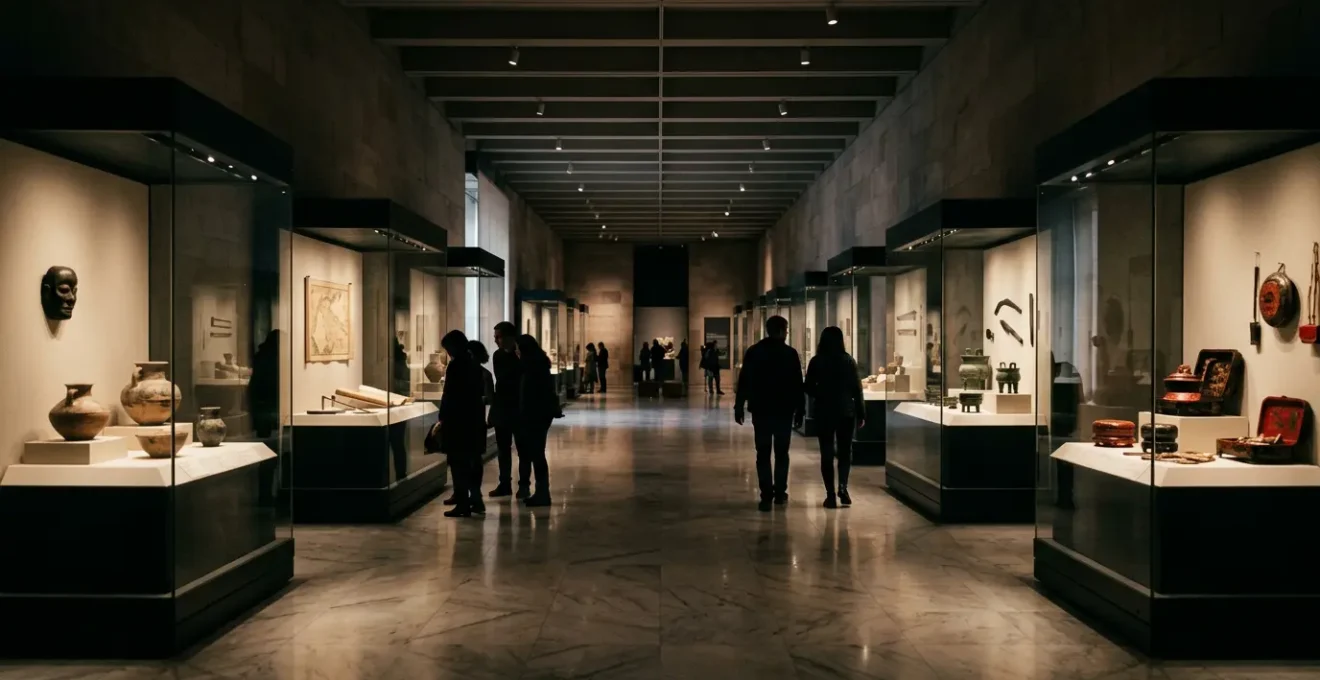
The Hong Kong Story exhibit is the single most important primer for any cultural traveler, transforming a visit from mere sightseeing into a deep understanding of the city’s soul.
- It decodes the “East meets West” cliché into a tangible, explorable narrative.
- It reveals how ancient geography and colonial politics forged the city’s iconic vertical skyline.
Recommendation: Dedicate three hours to this experience before you explore the streets to see the city’s living history come alive around you.
Arriving in Hong Kong for the first time is an exhilarating sensory overload. The neon-drenched streets of Kowloon, the dizzying heights of Central’s skyscrapers, the scent of dim sum steaming from a hidden alleyway—it’s a city that pulses with an energy all its own. For many cultural travelers, the first instinct is to tick off the famous sights: the Peak Tram, the Star Ferry, a bustling market. Museums are often relegated to a “rainy day” backup plan, seen as static collections of artifacts disconnected from the vibrant city outside.
But this is where a fundamental misunderstanding occurs. What if the key to truly grasping Hong Kong’s complex character wasn’t found at the top of Victoria Peak, but within the walls of a museum? The “Hong Kong Story” permanent exhibition at the Hong Kong Museum of History is not just a collection of relics; it is a meticulously crafted narrative, a Rosetta Stone that allows you to decode the city’s very DNA. It’s the one place that contextualizes every seemingly chaotic or contradictory aspect of modern Hong Kong.
Forget the idea of a dusty, silent hall. This experience is an immersive journey that explains the deep historical echoes you’ll feel on every street corner. But if the very idea of a history museum feels overwhelming, don’t worry. This guide, from a curator’s perspective, will answer the most pressing questions and show you how to use this exhibit as the ultimate key to unlocking the city.
In the sections that follow, we will explore how to navigate this vast collection efficiently, why it captivates even young visitors, and how its exhibits provide direct answers to the biggest questions about Hong Kong’s identity. Consider this your map to understanding the story behind the skyline.
Summary: The Hong Kong Story: Your Guide to the City’s Narrative Core
- How to Navigate the Massive Exhibits in Under 3 Hours?
- Is the History Museum Boring for Kids Under 10 Years Old?
- Why Does Hong Kong Have Prehistoric Artifacts Despite Its Modern Image?
- The Free Admission Hack: Is Visiting on Wednesday Worth the Crowds?
- What Unique Souvenirs Can You Find in the Museum Shop?
- Why is Hong Kong Called the Place Where ‘East Meets West’?
- Why Hong Kong Was Forced to Build Upwards Instead of Outwards?
- How Does the Opium War Exhibit Shape Local Identity Today?
How to Navigate the Massive Exhibits in Under 3 Hours?
The sheer scale of the “Hong Kong Story” can feel daunting. The permanent exhibition sprawls across multiple galleries, and without a plan, it’s easy to get lost in details and miss the overarching narrative. The goal is not to see everything, but to understand the story. As a curator, I advise visitors to treat it like a well-paced film, focusing on the key “scenes” that drive the plot forward. A strategic approach can provide a rich, comprehensive experience in under three hours, leaving you energized, not exhausted.
The key is to follow the narrative threads woven by the museum’s layout. Instead of aimless wandering, you follow a path that builds context chronologically. You start with the deep, natural history that shaped the very land, move through the lives of its earliest inhabitants, witness the clash of empires, and emerge into the modern metropolis. This focused journey ensures you grasp the cause-and-effect relationships that define Hong Kong.
To make the most of your time, a structured itinerary is essential. By allocating specific time blocks to the most impactful galleries—such as the Folk Culture section and the Opium Wars exhibit—you ensure you engage with the core of Hong Kong’s identity. This isn’t about rushing; it’s about strategic immersion.
Your Action Plan: The Strategic 3-Hour Museum Route
- First 40 Minutes (The Foundations): Start on the 2nd floor. Spend 10 minutes in the ‘Natural Environment’ gallery (or skip if very pressed for time), then dedicate 30 minutes to ‘Folk Culture in Hong Kong’, focusing on the life-sized fishing junk and traditional Hakka village scenes.
- Next 45 Minutes (The Turning Point): Devote this entire block to ‘The Opium Wars and the Cession of Hong Kong’. This includes watching the crucial 20-minute film that provides essential context for the colonial era.
- Following 60 Minutes (The Urban Growth): Spend 30 minutes in ‘Birth and Early Growth of the City’, walking through the recreated 1881 Central street. Follow this with 30 minutes in ‘Modern Metropolis’, which covers the Japanese occupation through to the 1997 handover.
- Final 15 Minutes (The Takeaway): Reserve your last 15 minutes for the museum shop. It’s not just a store but an extension of the exhibit where you can find unique historical souvenirs that act as tangible reminders of the story you’ve just experienced.
- Post-Visit Integration: As you leave, connect the dots. The colonial architecture you saw replicated is now visible in Central. The story of land reclamation explains the density of Kowloon. Your museum visit is now complete.
Is the History Museum Boring for Kids Under 10 Years Old?
A common concern for families is whether a history museum can hold the attention of younger children. The “Hong Kong Story” exhibit, however, was designed with a multi-generational audience in mind. Far from a static collection of objects behind glass, it is an immersive, multi-sensory experience. The key to its success with children is its focus on life-sized, explorable environments rather than just text-heavy displays. Kids may not read every placard, but they will remember the feeling of walking onto a full-sized fishing junk or peering into the windows of a colonial-era shop.
The museum excels at bringing history to a human scale. For instance, many families report that their children are fascinated by the short films showcasing entertainment in 1960s-70s Hong Kong. Seeing how their parents’ or grandparents’ generation had fun without video games or smartphones is a novel and engaging concept for them. It’s these moments of relatable, human history that bridge the generation gap and spark genuine curiosity.
The experience is less about academic learning and more about discovery and adventure. The layout encourages exploration, with hidden corners and interactive elements that reward curiosity. For a successful family visit, it’s best to let the children lead the way to what catches their eye.
- Explore the life-sized fishing junk boat, where kids can imagine themselves as sailors navigating Victoria Harbour.
- Walk through the recreated colonial street, a bustling scene complete with authentic-looking shops like a barber, bank, and grocer.
- Hunt for prehistoric fossils and animal skeletons in the Natural Environment gallery.
- Watch the rotating short films available in English, Cantonese, and Mandarin, which offer dynamic visual storytelling.
- Get a copper coin stamped as a special, hands-on souvenir at the museum workshop.
- Join a free weekend guided tour, some of which are specifically designed to engage families and children.
Why Does Hong Kong Have Prehistoric Artifacts Despite Its Modern Image?
Hong Kong’s global image is one of a hyper-modern financial hub, a city of glass and steel that seems to have sprung into existence in the 20th century. This makes the museum’s extensive collection of prehistoric artifacts genuinely surprising for many visitors. But these ancient pots, tools, and rock carvings are a crucial part of the narrative. They serve as a powerful counterpoint to the city’s modern facade, grounding its story in a history that is thousands of years deep. The exhibit masterfully shows that Hong Kong is not a recent invention but an ancient land.
The journey begins not with the British, but with geology. The exhibition traces back through an incredible 400 million years of geological history from the Devonian period, showing how the very foundations of the land were formed. This deep-time perspective is essential for understanding the constraints and opportunities that shaped all subsequent human settlement. The presence of Neolithic and Bronze Age artifacts demonstrates that the region has been a site of human activity and maritime culture for over 6,000 years, long before it became a geopolitical pawn.
These artifacts are the first chapter in the story of Hong Kong’s resilience and adaptability. They represent the indigenous roots of a place often defined by its colonial history. By starting here, the museum establishes a foundational theme: Hong Kong’s identity is a layered, complex tapestry, not a monolithic block. This is one of the most important historical echoes you will carry with you into the city streets.
It’s a powerful reminder that Hong Kong’s story didn’t begin with the British; it has deep, indigenous roots.
– Wonderful Museums Review, Hong Kong History Museum Guide
The Free Admission Hack: Is Visiting on Wednesday Worth the Crowds?
One of the most persistent “hacks” you’ll hear about Hong Kong museums is to visit on a Wednesday for free admission. This leads many travelers to ask if braving the potential crowds is worth it. Here’s the simple, wonderful truth the museum wants you to know: there’s no need to limit yourself to Wednesday. In a fantastic move for accessibility, admission to the permanent exhibits is completely free for everyone, every single day the museum is open. The Wednesday rule only applies to some special, temporary exhibitions.
This policy changes the strategic calculation entirely. You are free to plan your visit for any day that suits your itinerary, allowing you to optimize for a quieter, more contemplative experience. Generally, weekday mornings (Tuesday to Friday, as the museum is closed on Mondays) are the least crowded times. This gives you ample space to linger in the galleries and fully immerse yourself in the recreated environments without feeling rushed.
If your schedule only allows for a weekend visit, don’t despair. You can still have a great experience by leveraging the museum’s resources. Weekends are when the free guided tours are most active. While this means more people, it also offers a chance for a structured, expert-led journey through the exhibits. For those who prefer to go at their own pace, the self-guided audio tour is an excellent and affordable alternative.
- Register for free guided tours on Saturdays and Sundays. Morning sessions run from 10:30 AM to 12:00 PM, and afternoon sessions from 2:30 PM to 4:00 PM. Spots are limited, so arrive early.
- Arrive 30 minutes before a tour starts to secure your place at the registration counter, as it’s first-come, first-served.
- Consider the HK$10 self-guided audio tour, a fantastic value available in English, Cantonese, Mandarin, and Japanese.
- Make it a museum day by combining your visit with the adjacent Hong Kong Science Museum for a full day of discovery in Tsim Sha Tsui East.
What Unique Souvenirs Can You Find in the Museum Shop?
The museum shop is often an afterthought, but at the Hong Kong Museum of History, it serves as the final chapter of your narrative journey. It’s more than a place to buy generic magnets or keychains; it’s a curated space where you can acquire a tangible piece of the story you’ve just experienced. The souvenirs here are designed to be meaningful mementos that reflect the unique cultural and historical themes of the exhibits.
Instead of mass-produced trinkets, you’ll find items inspired by local heritage. This could include books on Hong Kong’s history, replicas of historical maps, or items featuring designs from traditional Cantonese culture. These objects act as powerful reminders of the city’s complex identity, allowing you to take a piece of its Urban DNA home with you. A well-chosen souvenir can reignite the memories and insights from your visit long after you’ve returned.
Perhaps the most charming and unique souvenir experience is not a purchase at all, but a hands-on creation. This small, interactive moment perfectly encapsulates the museum’s engaging spirit. It transforms the passive experience of shopping into an active moment of historical participation, creating a memory as valuable as the object itself.
There is a place in the museum where someone could stamp a design on a copper coin and give it to you as a souvenir.
– Visitor on TripAdvisor
This simple, stamped coin becomes more than just an object; it’s a personalized artifact from your journey through Hong Kong’s past. It’s these thoughtful touches that elevate the museum experience from educational to truly memorable.
Why is Hong Kong Called the Place Where ‘East Meets West’?
“East meets West” is a cliché so often used to describe Hong Kong that it has almost lost its meaning. It conjures vague images of temples next to skyscrapers. The true power of the “Hong Kong Story” exhibit is how it deconstructs this platitude and makes it tangible, visible, and understandable. The museum doesn’t just tell you that these two cultures met; it shows you precisely how they collided, coexisted, and fused to create something entirely new.
Nowhere is this more apparent than in the “Birth and Early Growth of the City” gallery. Here, you are not just looking at artifacts; you are walking through a life-sized recreation of a street from 1881. On one side, you might see a traditional Chinese medicine shop with its rows of wooden drawers, while across the way stands a Western-style bank or post office. This isn’t a diorama behind glass; it’s an environment you inhabit. You can feel the cultural friction and synergy in the very architecture.
This physical representation is the key. The exhibit places a traditional Chinese junk boat—a symbol of ancient maritime trade and local life—in a gallery that also details the arrival of British colonial architecture. Seeing these elements side-by-side, you begin to understand that “East meets West” wasn’t a smooth blending. It was a complex and often unequal negotiation that played out in commerce, language, law, and daily life. The museum gives you the visual and historical vocabulary to see these layers in the modern city, transforming a simple cliché into a profound understanding of Hong Kong’s hybrid identity.
Why Hong Kong Was Forced to Build Upwards Instead of Outwards?
One of the most defining characteristics of Hong Kong is its breathtaking verticality. The skyline is a forest of skyscrapers packed onto a sliver of land, a sight that begs the question: why here? The “Hong Kong Story” exhibit answers this not just with statistics, but by weaving a compelling narrative about geography, history, and necessity. The reason Hong Kong built up is written into its very landscape, and the museum helps you read the map.
The story begins with the land itself. The galleries show that Hong Kong is overwhelmingly mountainous and hilly, with very little flat, arable land available. This geographical constraint was the first and most powerful force shaping its development. From the earliest settlements, space has been the most precious commodity. When the British established their colony, they were confined to this same challenging terrain. The only way to expand was to create new land where none existed.
As the Hong Kong Travel Guide featured in one of the exhibits suggests, the key to understanding this is to “study a map showing land reclamation since the 1840s.” The museum displays these maps, and they are revelatory. You can visually trace how the coastline of Victoria Harbour has been pushed back, inch by inch, decade by decade, creating the ground on which much of modern Central and Kowloon now stands. This relentless manufacturing of land, combined with a booming population and economy, left developers with only one direction to go: up. The skyline is not just an architectural choice; it’s the direct result of this centuries-long battle against geographical limits. It is the city’s Urban DNA made manifest.
Key Takeaways
- The museum is a narrative tool, not just a collection, providing essential context before you explore the city.
- Its exhibits tangibly explain core Hong Kong concepts like “East meets West” and its iconic vertical growth.
- Strategic navigation is crucial; a focused three-hour visit is far more impactful than aimless wandering.
How Does the Opium War Exhibit Shape Local Identity Today?
Of all the sections in the “Hong Kong Story,” none is more pivotal for understanding the city’s modern psyche than the gallery on the Opium Wars. This is the event that marks the birth of Hong Kong as a British colony and sets in motion the 150 years of history that define its unique position in the world. The exhibit does more than just present facts; it explores the complex legacy of this period and how those historical echoes continue to shape local identity today.
The gallery carefully outlines the causes of the wars and the subsequent ceding of Hong Kong to Britain. A central feature is a short film that serves as an excellent, digestible resource for grasping the core events. For many visitors, both local and international, this exhibit is the clearest explanation they’ve encountered of this complicated history. It provides the “why” behind Hong Kong’s long separation from mainland China and the origins of its distinct legal and social systems.
Crucially, the exhibit is praised for its measured and balanced approach. As a review from Lonely Planet notes, it offers an “even-handed stab at the Opium Wars.” This is not a simple tale of heroes and villains but a nuanced exploration of economic interests, cultural misunderstandings, and political power plays. By presenting this history without overt jingoism, the museum allows visitors to contemplate its enduring impact on the local identity—an identity forged in the space between two great powers, belonging fully to neither and yet uniquely shaped by both. Understanding this foundational event is the final, essential key to seeing Hong Kong not as it was, but as it is.
By the end of your visit, the streets of Hong Kong will look different. The colonial-era buildings in Central, the density of Mong Kok’s apartments, the very language spoken around you—it all clicks into place. You are no longer just a tourist looking at a city; you are an informed observer reading its story. Make the Hong Kong Museum of History your first stop, and it will transform your entire trip.