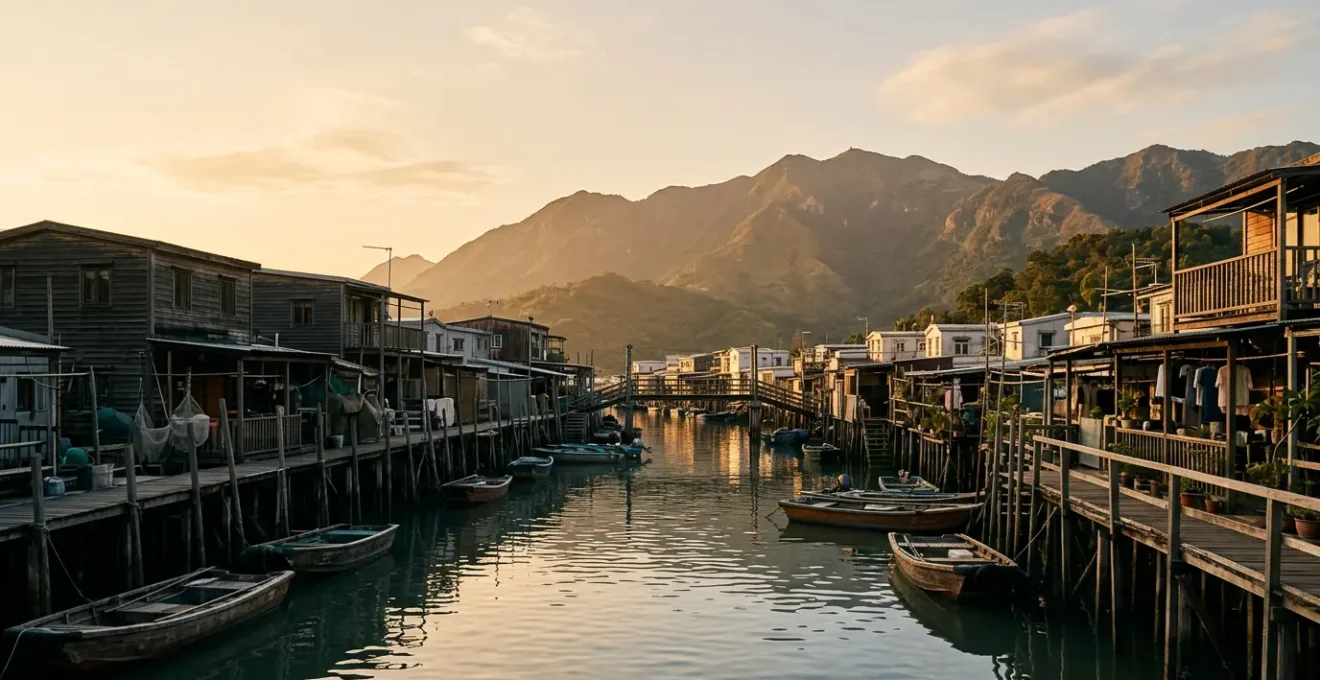
Visiting Tai O is no longer a simple day trip; it’s an intervention in a community at a critical tipping point.
- The iconic stilt houses face an existential threat from rising sea levels, with some residents already spending life savings on flood mitigation.
- The famous pink dolphins are being silenced by marine traffic, and “authentic” souvenirs often mask a story of economic decline and cultural erosion.
Recommendation: Your choices matter. This guide shows you how to be a conscious traveler whose presence supports the preservation of Tai O’s living heritage, not its demise.
The image of Tai O is a potent one: a maze of traditional stilt houses (pang uk) suspended over tidal flats, a world away from the neon canyons of downtown Hong Kong. It’s marketed as a step back in time, a charming relic of a bygone era. This narrative is not only simplistic; it is dangerously incomplete. To visit Tai O today is to walk along the front line of a battle being fought on two fronts. One is the visible, existential threat of climate change, with rising sea levels and ever-stronger typhoons threatening to swallow the village whole. The other is a more insidious erosion from within, driven by economic pressures and the hollowing-out effects of mass tourism that prizes kitsch over culture.
Most guides will tell you what to see. This one tells you how to look. It is a call to action for the heritage lover, the concerned traveler who understands that a place is not just a collection of sights, but a living, breathing ecosystem of people, traditions, and environment. We will not just look at the charming facade. We will examine the complex reality behind the shrimp paste, the dolphin tours, and the souvenir shops. The romanticized idea of Tai O is disappearing because it never truly existed. But the real Tai O, a resilient community with a deep history, is also vanishing. Your visit can be another step towards its erasure, or a conscious act to help it endure. The choice is yours.
Summary: A Conscious Traveler’s Guide to a Vanishing Tai O
- Why Are the Pang Uk Stilt Houses Built Above the Water?
- How to Choose a Pink Dolphin Boat Tour That Respects Wildlife?
- Shrimp Paste and Salted Fish: What to Buy in a Fishing Village?
- The Souvenir Trap: Distinguishing Authentic Crafts from Mass Production
- When to Visit Tai O for the Best Tide and Sunset Views?
- Staying at the Tai O Heritage Hotel: How to Book This Ex-Police Station?
- Why Is the ‘Barren Rock to Metropolis’ Narrative Considered Simplistic?
- Why Is Hand-Carved Mahjong a Dying Art and Where to Buy It?
Why Are the Pang Uk Stilt Houses Built Above the Water?
The iconic pang uk are not a design choice; they are a historical necessity. They are the architectural footprint of the Tanka people, a community of boat-dwellers who for centuries were forbidden from living on land. These houses, built on wooden stilts rammed into the muddy tidal flats, represent a life lived in harmony with the rhythm of the sea. They allowed families to live on the shore, close to their fishing grounds, while navigating the daily ebb and flow of the tides. This ingenious adaptation is the very heart of Tai O’s identity. But the very element that birthed this unique culture now threatens to destroy it.
The climate crisis is no longer an abstract concept in Tai O; it’s a terrifying reality. According to recent projections, sea levels in western Hong Kong including Tai O are projected to rise by 0.2 to 0.3 meters by 2050, a catastrophic prospect for a low-lying village. For residents, this means the struggle to protect their homes is a constant, expensive battle. The cost to elevate a single stilt house can range from HK$300,000 to over HK$800,000, a fortune for families in a declining fishing economy. As Professor Johnny Chan of City University of Hong Kong warns, the future is grim. He states:
If global warming, the melting of the Arctic sea ice, and sea-level rise are continuing at a faster pace… There is a possibility that in places like Tai O, if sea-level continues to rise and if we have more of these typhoons, it could become uninhabitable in the future.
– Johnny Chan, Professor at City University of Hong Kong
Understanding this context changes your perspective. You are not just looking at quaint houses; you are witnessing a community on the front lines of a global crisis, holding back the tide with their life savings.
How to Choose a Pink Dolphin Boat Tour That Respects Wildlife?
The promise of seeing a rare Chinese white dolphin, with its distinctive pink hue, is a powerful lure for visitors. But this has created a frenetic, unregulated industry of boat tours that often prioritize a quick tourist dollar over the well-being of these magnificent creatures. The consequences have been devastating. Data from the Agriculture, Fisheries and Conservation Department shows the Chinese white dolphin abundance has fallen by almost 80% over the last 18 years in Hong Kong waters. A major culprit is the constant disruption from human activity.
These dolphins rely on echolocation to navigate, hunt, and communicate. The noise from high-speed ferries and swarms of tour boats creates a form of acoustic smog that is crippling their ability to survive. As Doris Woo, a conservation expert at WWF-Hong Kong, explains, “Fast ferries can reduce the ‘listening space’ of pink dolphins by up to 45 per cent. That could prevent them from performing some critical behaviours, for example, looking for food, communicating.” As a conscious traveler, your choice of boat tour is a direct vote for either contributing to this problem or supporting a more sustainable solution. Avoid operators who promise to get you “up close”, chase the dolphins, or use high-speed boats. Look for smaller, slower boats that emphasize respectful viewing from a distance.
An ethical operator will cut their engine or keep it at a low idle when dolphins are near. They will explain the rules of responsible wildlife watching and prioritize the animals’ welfare above all else. By choosing these operators, you send a clear market signal that there is demand for responsible tourism, helping to protect the very creatures you have come to see.
Shrimp Paste and Salted Fish: What to Buy in a Fishing Village?
The pungent, earthy aroma of shrimp paste (haam ha) and drying salted fish is the unmistakable scent of Tai O. For generations, these were not just food products; they were the backbone of the local economy, made from the daily catch of the village’s fishermen. Buying a jar of shrimp paste felt like taking home a piece of Tai O’s soul. However, the story behind these products has become far more complicated, reflecting the immense pressures on the village’s traditional way of life. The 2012 government-mandated trawling ban in Hong Kong waters, aimed at protecting marine ecosystems, had a devastating and ironic effect on traditional fishing communities like Tai O.
The ban effectively cut off the supply of local shrimp and fish that were the lifeblood of these artisanal producers. One local fisherman reported his catch fell by 70% after the ban. The cruel twist is that many producers, to survive, are now forced to import frozen shrimp from mainland China to make “Tai O” shrimp paste. The product sold in the jar may be made in Tai O, but its ingredients are no longer of Tai O. This is the tragic reality of cultural erosion. So, how can a visitor support the few remaining truly authentic producers? It requires being an informed consumer, not a passive one.
Your Checklist: How to Identify Authentic Tai O Shrimp Paste
- Color and Scent: Look for a darker, purplish-grey color, not a uniform pink. The aroma should be complex and fermented, not just salty. This indicates traditional, longer sun-drying.
- Texture: Authentic paste should be thick, coarse, and slightly grainy from the hand-grinding process, not smooth and homogenous like factory-produced versions.
- Seasonality: Ask when it was made. True artisanal producers work with the seasons, mainly producing in the hot summer months. Year-round availability can be a red flag.
- Traceability: Look for sellers who are proud of their process. They often display photos of their family’s own drying racks and can tell you the story of their production.
- Price: Be wary of cheap prices. Authentic, hand-made paste using traditional methods is labor-intensive and costs significantly more. Paying the premium supports the craft.
By taking the time to seek out the genuine article, you are not just buying a condiment; you are casting a vote for the preservation of a tradition that is on the verge of extinction.
The Souvenir Trap: Distinguishing Authentic Crafts from Mass Production
The main streets of Tai O are lined with shops selling trinkets, dried seafood, and souvenirs. It’s easy to fall into the trap of buying something that feels local but is, in reality, a mass-produced item imported to cater to tourist expectations. This phenomenon is not unique to Tai O, but it is particularly poignant here, where the authentic cultural fabric is so thin. As one local observer noted, “As Tai O’s population grows older, with much of the younger generation choosing to move to urban areas, the village’s heritage and history are at increasing risk of being forgotten.” When you buy a generic, factory-made souvenir, you are inadvertently contributing to this cycle of decline.
Supporting authentic craftsmanship means bypassing the brightly lit shops filled with identical items and seeking out the smaller, family-run workshops or stalls. It means asking questions, showing interest in the process, and being willing to pay a fair price that reflects skilled labor and local materials. An authentic craftsperson can tell you the story behind their work; the seller of a mass-produced item can only tell you the price. This simple distinction is your most powerful tool as a conscious consumer. The table below, based on insights from local conservation efforts, provides a clear guide.
| Feature | Authentic Local Craft | Mass-Produced Item |
|---|---|---|
| Price | Higher (reflects labor and materials) | Lower (economies of scale) |
| Consistency | Slight variations and imperfections in each piece | Identical, flawless copies |
| Materials | Local, traditional, or natural materials | Synthetic or generic imported materials |
| Seller Knowledge | Can explain the production process and story | Limited product information beyond price |
| Location Sold | Small family shops, individual workshops, artist stalls | Multiple, large, identical tourist shops |
Choosing an authentic, locally made item—be it a hand-woven basket, a piece of calligraphy, or a truly local food product—does more than give you a better souvenir. It provides direct economic support to the people who are the living keepers of Tai O’s heritage, giving them a reason to stay and a means to pass on their skills.
When to Visit Tai O for the Best Tide and Sunset Views?
The “best” time to visit Tai O depends entirely on what you want to witness. For the classic golden-hour photograph, the late afternoon on a clear day is unbeatable. As the sun dips towards the horizon, it bathes the village in a warm, ethereal light, creating stunning silhouettes of the pang uk against a dramatic sky. This is the view that graces postcards and Instagram feeds. Weekdays are generally better than weekends to avoid the densest crowds, allowing for a more contemplative experience as you watch the village transition from day to night.
However, a conscious traveler should also consider visiting with the tides in mind. Seeing the village during a “king tide”—the highest tides of the month—offers a dramatic and sobering perspective. You’ll see the water lapping just below, or sometimes even across, the floorboards of the homes, a visceral reminder of the daily reality and future threat of flooding. Conversely, visiting during a neap or low tide reveals the intricate web of stilts and foundations that support the village, showcasing the engineering ingenuity of its builders. Timing a visit for the annual Dragon Boat Festival in June offers a unique cultural spectacle, the Tai O Dragon Boat Water Parade, a tradition with over a century of history.
But be aware that the beauty of the water hides a powerful threat. During Typhoon Hagupit, a terrifying storm surge saw a maximum sea level rise of 3.77 meters recorded in nearby waters. When you watch the sunset over the tranquil sea, remember its dual nature: it is both Tai O’s lifeblood and its greatest existential danger.
Staying at the Tai O Heritage Hotel: How to Book This Ex-Police Station?
The Tai O Heritage Hotel stands on a small hill overlooking the village, a gleaming white example of successful adaptive reuse. This Grade II historic building, the former Tai O Police Station built in 1902 to combat piracy, was meticulously restored and converted into a nine-room boutique hotel in 2012. It operates as a non-profit social enterprise, with proceeds contributing to local conservation and community support. Booking a stay here is more than a hotel reservation; it’s a direct investment in a successful model of heritage preservation. Due to its limited number of rooms and unique status, booking well in advance—often several months—is essential, directly through the hotel’s official website.
The hotel is a beacon of what’s possible when heritage is valued. It provides employment and draws a type of visitor who is interested in history and culture. However, it is not a silver bullet for the village’s deep-seated economic problems. The success of this single, high-profile project stands in stark contrast to the struggles of the wider community. This reality is captured in the heartbreaking words of a young Tai O resident, Ines Wong, interviewed by CNN when the trawling ban’s effects became clear:
It wrecks my heart to see fishermen forced to sell their large trawlers. Tai O has no job market at all. I don’t see what I can do. Selling salt fish with a degree in marketing?
– Ines Wong, 24-year-old Tai O resident
Staying at the hotel offers a comfortable and historically rich experience. But it is vital to venture into the village, spend money at small family-run eateries and shops, and engage with the community beyond the hotel’s beautifully restored walls. The hotel is a model for saving a building; the larger challenge is saving the living culture of the entire village.
Why Is the ‘Barren Rock to Metropolis’ Narrative Considered Simplistic?
The official narrative of Hong Kong’s history often begins with the British arrival in 1841, framing the territory as a “barren rock” that was transformed into a bustling metropolis. This colonial perspective is not just simplistic; it’s an act of historical erasure that ignores the deep, rich history of places like Tai O. Long before the British flag was raised, Tai O was a vital and strategic settlement. It was one of the five major villages resettled on Lantau Island after the Great Clearance coastal evacuation was lifted in 1669, a sign of its importance in the Qing dynasty. A fort was even built nearby at Fan Lau in 1729 to protect the crucial shipping lanes of the Pearl River Delta.
Far from being a sleepy backwater, Tai O was a significant industrial center. Its most important industry was salt production. The village’s vast salt marshes were legendary. At its peak, historical records show that Tai O’s salt marshes covered 70 acres and produced 25,000 piculs (over 1,500 metric tons) of salt in a single year (1938). This was a major commercial enterprise that supplied the entire region. The legacy of this industry is still visible in the landscape for those who know where to look, though the salt pans themselves have long since vanished.
Understanding this pre-colonial history is crucial. It dismantles the myth of a “barren rock” and re-establishes Tai O’s rightful place as a site of long-standing indigenous culture, strategic importance, and industrial significance. When you visit Tai O, you are not walking through a quaint anomaly of Hong Kong’s development; you are walking through the historical heartland from which modern Hong Kong grew. It is a place that existed and thrived for centuries on its own terms, a fact the “barren rock” narrative conveniently forgets.
Key Takeaways
- Tai O faces a dual threat: climate change (rising seas) and commercialization (loss of authenticity).
- Your choices as a visitor—from boat tours to souvenirs—directly impact the community’s survival and cultural integrity.
- Authentic heritage is found by looking beyond the tourist facade, asking questions, and supporting small, family-run businesses and artisans.
Why Is Hand-Carved Mahjong a Dying Art and Where to Buy It?
In the quiet back alleys of Hong Kong, a unique sound is fading into silence: the rhythmic scratch and tap of a steel knife carving intricate symbols onto blank tiles. This is the sound of hand-carved mahjong, an art form that is on the brink of extinction. In the 1960s, there were dozens of carvers; today, you can count them on one hand. The decline is stark: recent reports estimate the number of mahjong tile carvers in Hong Kong has declined from over 20 to fewer than 5. The reasons are simple and brutal: cheap, mass-produced plastic sets have flooded the market, and the economics of the craft are unsustainable.
The testimony of artisans like Ho Sau-Mei, one of the last female carvers, paints a grim picture of the financial reality. She speaks of the passion for her craft but is unflinchingly honest about the impossibility of making a living from it in one of the world’s most expensive cities. “Living in Hong Kong is tough,” she says. “HK$10,000 ($1,280) per month isn’t enough to make a living in this city… And I barely make HK$10,000 a year doing this kind of work.” Her story is a microcosm of the challenges facing so many traditional crafts in Tai O and across Hong Kong. Without direct support from those who value heritage, these skills, passed down through generations, will vanish forever.
But there is still a chance to be a witness, and a patron, to this dying art. Supporting them doesn’t just mean buying a set—a hand-carved set is a significant investment. It can also mean visiting their workshops, taking a class, or simply sharing their story. Here are some of the last bastions where this craft can be seen:
- Visit Kam Fat Mahjong in Hung Hom to see Ho Sau-mei at work.
- Stop by Biu Kee Mahjong on Temple Street at night to watch Uncle King carve.
- Check for workshops at Karen Aruba Studio (JCCAC) or classes with Glocal Mahjong.
Seeking out these experiences is an act of cultural preservation. It is a declaration that this living heritage has value beyond its market price.
Your visit to Tai O is a powerful act. Choose to be more than a tourist. Be a witness, a patron, and an advocate. Seek out the stories behind the storefronts, ask questions, and spend your money with intention. By doing so, you can cast your vote for a future where Tai O’s living heritage doesn’t just survive, but has a chance to thrive.
Frequently Asked Questions about Visiting Tai O
When is the Dragon Boat Water Parade held in Tai O?
The parade typically occurs in June during the Dragon Boat Festival period, featuring traditional boat processions and cultural rituals that have been practiced for over a century. It’s a unique and powerful display of living heritage.
What are the best hours for photography in Tai O?
Early morning and late afternoon’s “golden hour” provide optimal lighting and fewer crowds. Sunset views are particularly stunning from the western coastline, but these times are also when you can feel the quiet, authentic rhythm of village life returning after the day-trippers have left.
How do tides affect visiting Tai O?
Tides fundamentally shape the experience. Visiting during a “king tide” offers dramatic views of water levels reaching the floors of the stilt houses, a visceral illustration of the flooding threat. Conversely, a neap or low tide reveals the intricate wooden foundations, showcasing the traditional engineering of the pang uk.