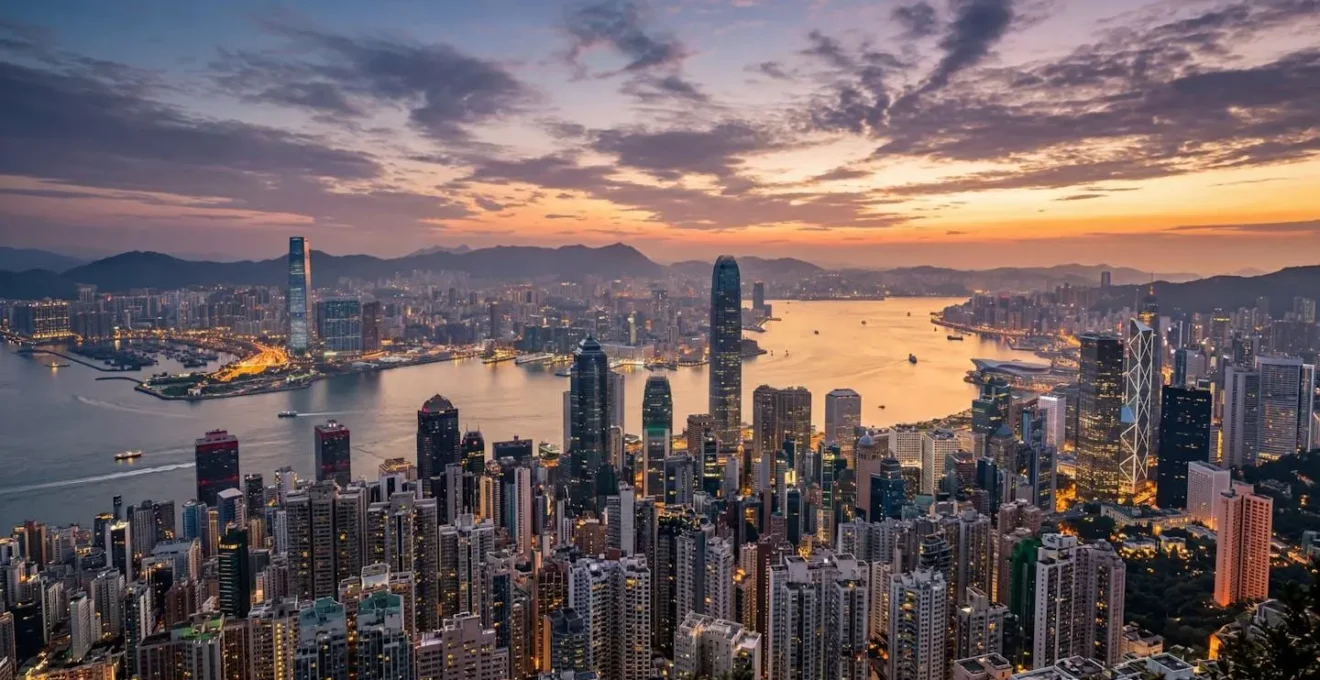
The biggest challenge for a first-time visitor to Hong Kong isn’t what to see, but how to handle the city’s overwhelming density and energy. This guide reframes your trip planning away from a simple checklist and towards a strategy for managing your energy and senses. You’ll learn to structure your days, navigate like a local, and use the city’s rhythm to your advantage, ensuring you experience its incredible intensity without the burnout that ruins most first visits.
Staring at a map of Hong Kong for the first time is a unique form of vertigo. A dense web of MTR lines connects dozens of districts, each packed with towering skyscrapers, neon-lit markets, and ancient temples. The immediate feeling is one of overwhelm. The typical advice—a long list of “must-see” attractions like Victoria Peak, the Big Buddha, and Temple Street Market—often makes it worse, presenting your trip as a frantic race to check off boxes.
But what if the key to a successful first trip wasn’t about seeing more, but about experiencing it better? As someone who has navigated this city for years, I can tell you that the secret isn’t in a perfectly packed schedule, but in mastering the city’s rhythm. It’s about understanding how to manage your own energy against the city’s relentless pulse. This isn’t just another travel guide; it’s a strategic blueprint for enjoying Hong Kong’s intensity, not just surviving it.
In the following sections, we will dismantle the sources of overwhelm and build a practical framework for your visit. We’ll cover how to structure your itinerary for balance, choose the right home base, master the art of pacing, and navigate the world’s best public transport system like a seasoned pro. By the end, you won’t just have a plan; you’ll have the confidence to truly immerse yourself in one of the world’s most electrifying cities.
Summary: A Strategic Guide to Your First Hong Kong Trip
- Why Hong Kong Feels Overwhelming for First-Time Visitors?
- How to Structure a 3-Day Itinerary Without Burnout?
- Kowloon vs Hong Kong Island: Which Side Should You Choose?
- The Mistake of Overpacking Your Schedule That Ruins the Experience
- When to Visit Popular Districts to Beat the Crowds?
- How to Master Hong Kong Public Transport and Save $500 on Taxis?
- The 15sqm Shock: How to Mentally Prepare for Tiny Hong Kong Rooms?
- Navigating the MTR: How to Reach Any District in Under 45 Minutes?
Why Hong Kong Feels Overwhelming for First-Time Visitors?
The feeling of being overwhelmed in Hong Kong is not just in your head; it’s a physical and psychological response to the city’s core characteristics. First, there’s the sheer density of people. Recent tourism statistics show that over 44.5 million visitors arrived in a single year, all packed into a surprisingly small territory. This creates a constant, humming energy that you feel from the moment you step out of your hotel.
Then there’s the sensory overload. Hong Kong is a city of perpetual sound and light. The cacophony of Cantonese chatter, minibus warnings, and endless commerce blends with the glare of neon signs, giant video billboards, and the shimmering harbor. It’s a feast for the senses, but one that can quickly lead to fatigue if you’re not prepared for it.
Finally, there’s a phenomenon I call “vertical overwhelm.” Unlike many cities that spread horizontally, Hong Kong grows up. You are constantly surrounded by buildings that seem to touch the sky, creating canyons of concrete and glass. Your brain, unaccustomed to processing so much vertical information, can feel disoriented. Understanding that these feelings are a normal reaction to an extreme environment is the first step toward managing them and turning potential anxiety into awe.
How to Structure a 3-Day Itinerary Without Burnout?
The key to a burnout-free itinerary is not to plan less, but to plan smarter by balancing the city’s intensity. Think of your energy as a finite resource. A day spent entirely in high-intensity zones like Mong Kok will leave you exhausted by evening. The solution is to consciously mix high-energy activities with moments of calm and decompression.
Start by categorizing districts and activities by their “intensity level.” A morning visit to the tranquil Po Lin Monastery on Lantau Island is low-intensity, while an evening navigating the Temple Street Night Market is very high. By alternating between these, you give your senses a chance to recover. This approach allows you to experience the city’s vibrant chaos without it consuming you. For a practical breakdown, this table helps visualize how to balance your days.
| District | Intensity Level | Best Time to Visit | Decompression Options |
|---|---|---|---|
| Mong Kok | Very High | After 10:30 PM | Kowloon Park nearby |
| Central | High (weekdays) | Weekend mornings | Hong Kong Park, Botanical Gardens |
| Lantau Island | Low | Weekdays | Po Lin Monastery, beaches |
| Stanley | Low-Medium | Weekday afternoons | Beach areas, waterfront |
| Tsim Sha Tsui | High | Early morning (9 AM) | Waterfront promenade |
Case Study: A Perfectly Balanced 3-Day Structure
A well-structured itinerary might look like this: Day 1 (Old Meets New): Start with a low-intensity morning at Man Mo Temple, have lunch in bustling Central, then escape the heat in an air-conditioned mall before taking the Peak Tram for sunset. Day 2 (Nature & Neon): Dedicate the morning to the serene Big Buddha on Lantau, explore the relaxed Tai O fishing village, and then dive into the high-intensity Temple Street Night Market. Day 3 (Harbor Life): Begin with a scenic Star Ferry crossing, explore Tsim Sha Tsui’s waterfront, find peace at the Chi Lin Nunnery in the afternoon, and conclude with the Symphony of Lights. This structure ensures every intense experience is balanced by a period of calm.
A crucial part of this strategy is actively scheduling “decompression zones.” These are urban oases like Kowloon Park or Hong Kong Park, where you can escape the crowds and noise for an hour. Building these breaks into your schedule is not a waste of time; it’s the very thing that will give you the energy to enjoy the rest of your day.
As you can see, finding tranquility amidst the urban jungle is not only possible but essential. These pockets of green offer a vital sensory reset, allowing you to recharge before diving back into the city’s vibrant energy. They are as much a part of the Hong Kong experience as the towering skyscrapers.
Kowloon vs Hong Kong Island: Which Side Should You Choose?
One of the first major decisions is where to base yourself: on the Kowloon peninsula or on Hong Kong Island. First-timers often get stuck trying to figure out which side is “better,” but that’s the wrong way to think about it. As one travel expert puts it:
It’s important to know that Hong Kong is made up of two sides — the Hong Kong Island side and the Kowloon side. No side is better than the other and both offer amazing attractions, shopping, nightlife and views.
– Travel Expert, Live Like It’s the Weekend Travel Guide
The real question is not which is better, but which vibe is right for you. Your choice of base will define the background rhythm of your trip. Hong Kong Island, particularly in areas like Central, Admiralty, and Wan Chai, offers a more polished, corporate, and modern feel. It’s home to upscale dining, luxury shopping, and sleek architecture. It feels international and efficient.
Kowloon, on the other hand, especially in Tsim Sha Tsui, Jordan, and Mong Kok, is grittier, more chaotic, and arguably more “local.” Here you’ll find sprawling street markets, a higher concentration of traditional eateries, and a palpable, raw urban energy. Accommodation on this side often offers better value. The best strategy is to choose the side that best reflects the experience you’re seeking, knowing you can easily visit the other. The iconic Star Ferry, costing less than HK$3, turns the commute between the two into one of the best attractions in the city.
The Mistake of Overpacking Your Schedule That Ruins the Experience
The most common mistake first-time visitors make is trying to do too much. You see the endless list of attractions and feel a pressure to conquer them all. This approach is a recipe for burnout and will leave you with a blurry memory of rushing from one place to another. The irony is that Hong Kong is a city best experienced in the moments in between the big sights.
Consider this: tourism data reveals that visitors staying an average of just 3.2 nights still report a sky-high 94% satisfaction rate. This proves you don’t need a week to have an amazing and fulfilling trip. The key is quality over quantity. A relaxed afternoon spent sipping milk tea in a local cha chaan teng and watching the world go by can be far more memorable than a rushed visit to a third temple.
Resist the urge to create a minute-by-minute itinerary. Instead, embrace a more flexible framework built around a few simple but powerful rules. These principles will help you leave room for the serendipity and spontaneous discoveries that are the true magic of Hong Kong.
Your Action Plan: The Anti-Burnout Hong Kong Travel Rules
- The 2-3 Rule: Plan a maximum of 2-3 main activities per day. This leaves essential buffer time for rest, travel, and stumbling upon unexpected alleyway food stalls or hidden shops.
- The True Transit Time Formula: For any MTR journey that Google Maps says is ’20 minutes’, budget 45 minutes in reality. This includes the walk to the station, navigating the massive underground interchanges, waiting for the train, the ride itself, and the walk from your exit.
- The 2-for-1 Serendipity Rule: For every two planned activities, schedule one hour of dedicated ‘Wandering Time’ with no goal. Pick a neighborhood, put your phone away, and just walk. This is where you’ll find your best stories.
- The 90-Minute Decompression: Schedule a mandatory, unplugged rest period every day between 3:00 and 4:30 PM. Use this time to retreat to a quiet park, a public library, or even the air-conditioned lobby of a large mall to simply sit and recharge.
When to Visit Popular Districts to Beat the Crowds?
Trying to avoid crowds entirely in Hong Kong is a fool’s errand, especially during peak season when visitor statistics indicate that months like August can see over 4.4 million arrivals. The smarter strategy is not to avoid crowds, but to understand their rhythm and move against the current. Every district has its own pulse, with predictable peaks and lulls. Visiting a popular spot during its quiet window doesn’t just mean fewer people; it offers a completely different, often more authentic, experience.
For example, visiting The Peak at sunset guarantees you a magnificent view shared with thousands of other people. Visiting at 9 AM, however, often provides clearer, smog-free views and a sense of tranquility that’s unimaginable later in the day. Similarly, the famous night markets in Mong Kok and Temple Street are chaotic and overwhelming at 8 PM but become much more manageable and interesting after 10:30 PM when the tourist buses have departed and the locals come out for late-night snacks.
Learning to read the city’s schedule is a key skill for any visitor. The Star Ferry at sunrise offers a peaceful, almost meditative journey across the harbor, while at 8 PM, it’s packed with crowds jostling for a view of the Symphony of Lights. The table below provides a cheat sheet for timing your visits to some of the most popular districts.
| District | Peak Vibe Time | Quiet Window | Best Experience |
|---|---|---|---|
| Mong Kok | 8 PM – 11 PM | 10 AM – 2 PM | Night markets after 10:30 PM |
| Central | 12 PM – 2 PM (lunch) | 9 AM – 11 AM | Weekend mornings |
| The Peak | Sunset (5-7 PM) | 9 AM – 11 AM | Morning for clear views |
| Temple Street Market | 7 PM – 9 PM | 10:30 PM onwards | Late night with locals |
| Victoria Harbour | 8 PM (Light Show) | Early morning | Morning Star Ferry |
How to Master Hong Kong Public Transport and Save $500 on Taxis?
In Hong Kong, taking a taxi is a rookie mistake. It’s not just that they are expensive; they are often the slowest way to get around the perpetually congested city. The public transport system—comprising the MTR (subway), buses, ferries, and trams—is not just a utility; it’s a world-class, clean, efficient, and affordable attraction in itself. Mastering it is the key to unlocking the city and can easily save you hundreds of dollars.
Your first purchase upon arrival should be an Octopus Card. This contactless payment card is your golden ticket to the city. It works on every form of public transport and can also be used at convenience stores, supermarkets, and even some restaurants, eliminating the need to fumble for cash. The system is designed for seamless movement.
Beyond the hyper-efficient MTR, make sure to embrace the more scenic options. The “Ding Ding” trams on Hong Kong Island offer a slow, charming tour of the northern shore for a flat fare of just HK$3.3. And no trip is complete without a ride on the iconic Star Ferry. The short journey across Victoria Harbour, with its breathtaking skyline views, is frequently cited as one of the best-value tourist experiences in the world.
Case Study: A Perfect Transport Day for Under HK$50
Imagine a day of exploration. You start by taking the MTR from your hotel to Central Station. From there, you ride the historic Peak Tram up to Victoria Peak. After descending, you hop on a “Ding Ding” tram for a leisurely tour along the island’s coast. To cap it all off, you take the Star Ferry across the harbor to Tsim Sha Tsui for sunset. The total cost for this entire day of transport would be under HK$50. The same route via taxis could easily exceed HK$300, most of which would be spent stuck in traffic. For your airport transfer, the Airport Express train whisks you to Central in 24 minutes for HK$115, a far more efficient option than a HK$400 taxi ride.
The 15sqm Shock: How to Mentally Prepare for Tiny Hong Kong Rooms?
Let’s address the elephant in the (very small) room: your hotel room will likely be tiny. Hong Kong is one of the most densely populated places on earth, and real estate is astronomically expensive. This reality is often a shock for first-time visitors used to more spacious accommodations. As one travel blogger bluntly puts it:
Hong Kong is NOT cheap, so get that out of your head. The prices are close to European or USA cities.
– Travel Blogger, Nerd Nomads Hong Kong Guide
Getting a small room for a high price can feel like a bad deal, but the key is a mental shift. You must reframe the purpose of your room. It is not a living space; it is a “Recharge Pod.” Its sole functions are to provide a safe place for your luggage, a clean shower, and a comfortable bed for sleeping. That’s it. The small size is not a bug; it’s a feature that pushes you out into the city, which is your real, sprawling, multi-billion-dollar living room.
Embrace the “City as Living Room” strategy. Instead of retreating to your room to relax or plan your next move, use the city’s “third spaces.” These are comfortable, often free, and air-conditioned public areas. The tranquil lobbies of high-end malls like IFC, the quiet corners of Hong Kong Park, the waterfront promenades, or any of the city’s excellent public libraries are your new lounge. Need to make a video call? Find a quiet cafe, not the cramped corner of your room. This simple change in mindset transforms a potential source of frustration into a reason to explore even more of the city.
Key Takeaways
- Plan for balance, not just sights: Limit yourself to 2-3 main activities per day to avoid burnout and leave room for spontaneous discovery.
- Choose your base for the vibe: Select Kowloon for gritty, local energy and value, or Hong Kong Island for a more modern, polished experience.
- Embrace public transport as an attraction: Master the Octopus card and use the MTR, trams, and ferries to save money and experience the city like a local.
Navigating the MTR: How to Reach Any District in Under 45 Minutes?
The MTR is the circulatory system of Hong Kong. It’s an underground marvel of efficiency that can whisk you from one end of the city to the other with astonishing speed. With color-coded lines and clear English signage, it’s incredibly user-friendly. However, to truly navigate it like a pro, you need to go beyond simply reading the map. The secret is to understand the “personality” of each line.
Thinking of the lines as characters helps you build a mental map of the city. The blue Island Line is the corporate corridor, the red Tsuen Wan Line is the chaotic heartbeat of Kowloon, and the orange Tung Chung Line is your gateway to adventure on Lantau Island. This approach turns a confusing tangle of lines into a logical network of distinct zones.
| Line | Color | Personality | Key Stations | Connect To |
|---|---|---|---|---|
| Island Line | Blue | Corporate & Colonial Corridor | Central, Admiralty, Causeway Bay | Business, shopping, Peak Tram |
| Tsuen Wan Line | Red | Chaotic Heartbeat of Kowloon | Tsim Sha Tsui, Mong Kok, Jordan | Markets, nightlife, museums |
| Tung Chung Line | Orange | Gateway to Adventure | Tung Chung, Kowloon | Airport, Big Buddha, Lantau |
| East Rail Line | Light Blue | Mainland Connection | Hung Hom, Sha Tin | New Territories, border |
| Airport Express | Teal | Speed & Efficiency | Airport, Kowloon, Central | 24-min airport transfer |
The next level of mastery involves understanding the station itself. Stations like Central or Tsim Sha Tsui are vast underground cities spanning multiple blocks with over a dozen exits. A pro-tip is to always check your optimal exit letter and number *before* you leave the train. The MTR Mobile app and in-station maps are your best friends here. Choosing Exit D2 at Central takes you to the heart of Lan Kwai Fong, while Exit D1 lands you in a completely different area. This simple habit can save you ten minutes of confusing underground wandering.
Pro-Level MTR Navigation Trick: The Correct Car Strategy
The ultimate expat trick is the “Correct Car, Correct Door” strategy. At major interchanges, boarding the right train car can position you directly in front of the escalator or exit you need, saving you precious minutes and avoiding the human traffic jams. For example, when transferring at Central Station to the Tsuen Wan Line, boarding car 3 of the Island Line train will align you perfectly with the connecting escalator. The MTR Mobile app actually provides this information, showing the optimal car position for every station and exit—a tool that separates the tourists from the locals.
You now have the strategic framework to transform a potentially overwhelming trip into an unforgettable adventure. Armed with an understanding of the city’s rhythm, a plan for managing your energy, and the insider knowledge to navigate like a local, you are ready. Go explore with confidence.